



Dangote Refinery price hike raises PMS to ₦1,350 per litre as Atiku Abubakar backs the refinery’s concerns over government-controlled petrol prices and renews his call for a production subsidy.
Dangote Refinery price hike has pushed Premium Motor Spirit (PMS) to ₦1,350 per litre, reopening a heated debate over petrol pricing, refinery costs and the role of government in Nigeria’s downstream oil market. The ₦85 increase from the previous ₦1,265 gantry price was reported on September 11, 2026, as international crude prices and petroleum product replacement costs continued to rise.
The latest adjustment has also drawn political attention, with former Vice President and African Democratic Congress (ADC) presidential candidate Atiku Abubakar backing Dangote Refinery’s objection to government-imposed petrol prices. Atiku said the refinery’s warning supports his argument for a production-based subsidy aimed at reducing the cost of domestic refining rather than forcing private refiners to sell below cost.
Dangote Refinery raises PMS price to ₦1,350

The new Dangote refinery price represents a ₦85 per litre increase, or about 6.7 per cent, taking the refinery’s ex-gantry price from ₦1,265 to ₦1,350.
The move is the latest in a series of price adjustments that have kept Nigeria’s fuel market under pressure. In August, Dangote raised its PMS gantry price several times, moving from ₦1,165 to ₦1,185, then ₦1,200 and eventually ₦1,265 per litre. The August increases amounted to ₦100 in less than two weeks.
Industry reports have linked the latest increase to higher international crude oil prices and rising replacement costs. Petroleumprice.ng data cited by Nigerian news outlets put the current petrol landing-cost benchmark at roughly ₦1,311 per litre, meaning Dangote’s latest gantry price is now above that benchmark.
The distinction between the gantry price and the final pump price is important. Dangote’s ₦1,350 figure is a wholesale loading price at the refinery, not necessarily the amount motorists will pay at every filling station. Transport, depot charges, distribution expenses and local market conditions can all affect the final retail price.
Why petrol prices keep changing
The renewed pressure on petrol prices is tied closely to the global oil market, where crude prices have been affected by geopolitical disruptions and uncertainty around supply.
Dangote Refinery has previously defended its pricing decisions by pointing to the timing and cost of crude purchases. The refinery explained in August that crude could be bought weeks before it was processed and delivered, meaning changes in international prices were not always reflected immediately in the domestic market.

That explanation matters because the refinery does not operate in isolation from the global market. Even though it is producing petrol locally, the economics of refining still depend heavily on crude costs, logistics and international product values.
Reuters reported this week that Dangote Refinery had secured at least 16 million barrels of Nigerian crude for October, equivalent to roughly 520,000 barrels per day for the month. The report said the refinery has been increasing its local crude intake as it expands production, although it has also sourced crude internationally in the past.
Atiku backs Dangote’s warning on price controls
Atiku Abubakar’s intervention has added a political dimension to the latest fuel-price controversy.
In a statement issued through his Senior Special Assistant on Public Communication, Phrank Shaibu, Atiku said Dangote Refinery had raised a legitimate commercial concern by warning against government policies that could effectively force private refiners to sell fuel at uneconomic prices. He argued that his own proposal for a production subsidy should not be confused with ordering refineries to absorb losses.
Atiku’s position is that government support should focus on lowering the cost of crude feedstock supplied to Nigerian refineries. In his view, that would help domestic producers lower their production costs while protecting their commercial viability.

He has contrasted this approach with the traditional fuel subsidy system, which subsidised the consumption of petrol regardless of whether it was produced locally or imported.
Atiku argues that a production-linked model would direct government support towards Nigerian refining capacity and make cheaper domestic fuel possible without simply imposing an artificial pump price.
Dangote warns against subsidy and pricing intervention
The debate gained momentum after Dangote Refinery outlined the risks it sees in renewed government intervention in the petrol market.
According to reporting on the refinery’s IPO prospectus, Dangote warned that reintroducing fuel subsidies, price controls or similar interventions could affect domestic pricing dynamics and refining margins. The company said unpredictable changes in subsidy policy could also make financial forecasting and business planning more difficult.
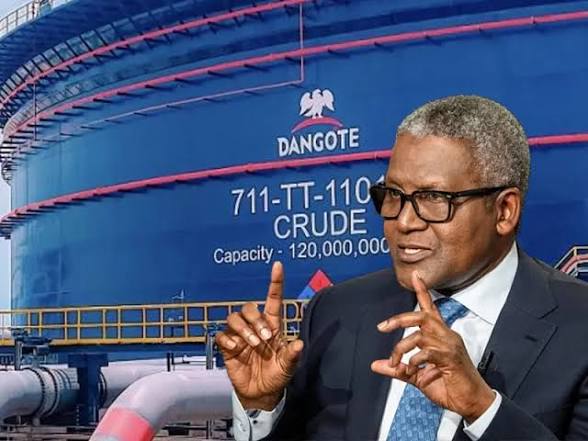
That warning comes at an important moment for the company. Dangote Refinery is preparing for a major initial public offering, with Reuters reporting that the company plans to raise about ₦2.15 trillion and use the funds partly to finance a broader expansion programme. The refinery also plans to double its processing capacity to about 1.4 million barrels per day by 2029, according to the company’s latest plans.
For Dangote, the argument is therefore not limited to the price motorists pay today. The company is also concerned about whether the wider policy environment gives investors enough certainty to commit money to large-scale refining projects.
The bigger question for Nigerian consumers
For Nigerians, however, the immediate concern remains the cost of petrol.
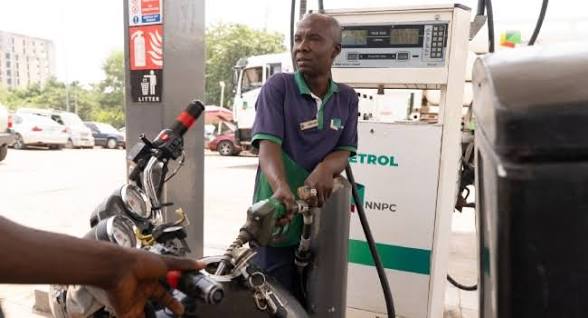
The latest increase comes after a difficult period in which pump prices have repeatedly moved upward, putting additional pressure on transport operators, households and businesses. Earlier in September, petrol was selling around ₦1,310 to ₦1,350 per litre in several markets, depending on location and supplier.
The central issue now is how Nigeria can balance affordable fuel with a viable domestic refining industry.
Atiku says the answer lies in supporting production rather than forcing refiners to sell below cost. Dangote, meanwhile, is warning that arbitrary price controls could damage margins and weaken investment confidence. The Federal Government has continued to defend the broader market-based direction of its petroleum reforms, while the debate over whether targeted intervention is necessary has intensified.
With the Dangote Refinery price now at ₦1,350 per litre, the argument is no longer theoretical. The latest hike has once again placed petrol prices, refinery economics and government policy at the centre of Nigeria’s economic conversation.