
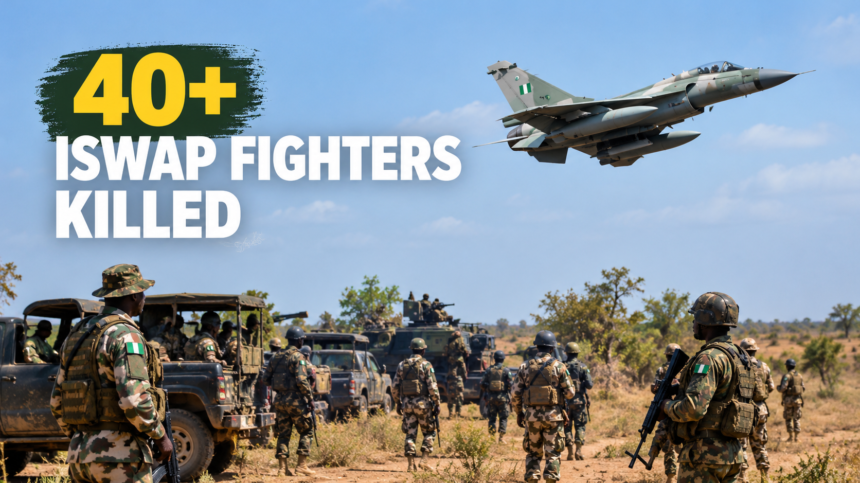
A Borno air strike has killed more than 40 Islamic State West Africa Province (ISWAP) fighters, including a prominent commander, after military intelligence reportedly indicated that the group was preparing coordinated attacks on troops in the state.
The operation, carried out on October 10, 2026, targeted a suspected terrorist enclave at Badu Village, south of Gudumbali in Guzamala Local Government Area of Borno State. The military said the strike also destroyed two vehicles and approximately 20 motorcycles allegedly used by the fighters for movement, logistics and offensive operations.
The development was disclosed on Monday, October 12, by Captain Mohammed Goni, the Military Information Officer at the Headquarters of the Joint Task Force (North East), Operation Hadin Kai.
Borno Air Strike Targets ISWAP Fighters in Guzamala
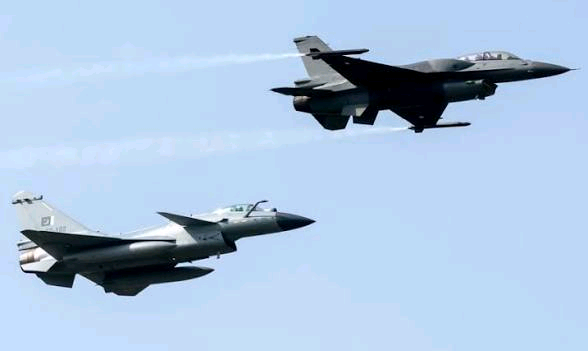
According to the military, the operation followed credible intelligence reports that a concentration of ISWAP fighters had gathered to prepare coordinated attacks on troops operating within Sector 3 of Operation Hadin Kai’s area of responsibility.
Acting on the intelligence, the Air Component of the Joint Task Force conducted aerial surveillance to identify the fighters‘ movements around suspected hideouts and logistics facilities.
The surveillance reportedly led to the identification of a building occupied by the suspected insurgents, which was subsequently targeted in a precision air strike.
In a statement reported by Channels Television and Punch Newspapers, the military said: “Acting swiftly on the intelligence, the Air Component conducted targeted aerial surveillance, identified terrorist movements around suspected hideouts and logistics facilities, and subsequently executed a precision strike on a building occupied by the terrorists.”
The operation was conducted as part of ongoing military efforts to disrupt insurgent activities and prevent attacks on security personnel and surrounding communities.
Military Reports Over 40 ISWAP Fighters Killed
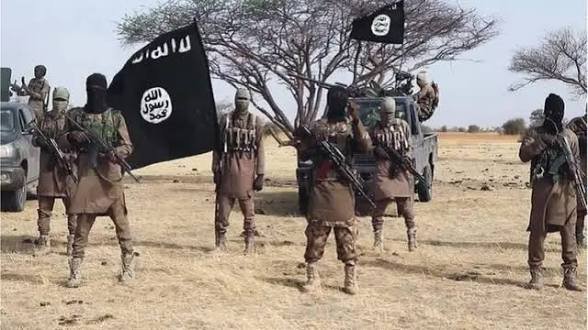
Preliminary assessments indicate that more than 40 fighters were killed during the strike, according to the military.
Goni said the initial findings were based on human intelligence and battle damage assessment. The military also reported that a prominent ISWAP commander, described as a Qaid, was among those killed.
A Qaid is a commander or leader within the group’s organisational structure.
However, the military’s figures remain based on preliminary assessments. The statement did not publicly identify the commander or provide independently verified details about the identities of those killed.
The military also said the strike destroyed two vehicles and approximately 20 motorcycles associated with the fighters.
These assets, according to the statement, were used for mobility, logistics and offensive operations. Their destruction was expected to reduce the group’s ability to move personnel and supplies and coordinate further attacks in the area.
The military said further assessments were ongoing to establish the full extent of the damage.
What the Strike Means for Operation Hadin Kai
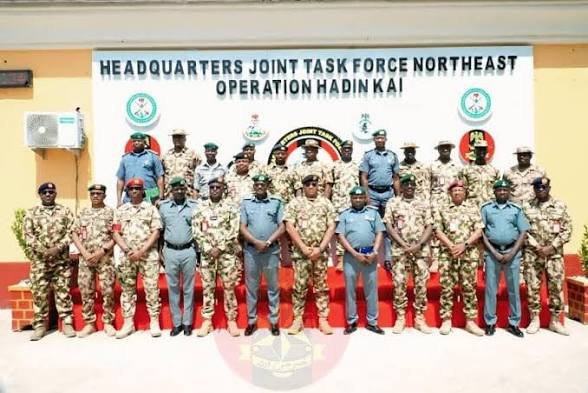
Operation Hadin Kai is the military’s counter-insurgency operation in Nigeria’s North-East, where security forces have continued efforts to contain Boko Haram and ISWAP.
The latest operation highlights the role of intelligence gathering and aerial surveillance in identifying suspected insurgent concentrations before attacks are launched.
According to the military, the fighters belonged to ISWAP’s Murabitun element, described in its statement as a specialised mobile fighting unit involved in patrols, coordinating attacks and sustaining the group’s activities in the area.
The military said the destruction of the enclave and associated equipment represented a setback for the group’s operational capacity in the Lake Chad region.
It also said the operation disrupted the planned attacks on military positions and surrounding communities.
However, the longer-term impact will depend on whether the strike significantly weakens the group’s ability to reorganise, replace lost equipment and continue operating in the area.
The military has not publicly provided further details about the broader intelligence operation or the extent of any follow-up ground operations connected to the strike.
Why Borno Remains a Security Concern

Borno State has remained at the centre of Nigeria’s prolonged insurgency, with Boko Haram and ISWAP responsible for years of attacks on military installations and civilian communities.
The conflict has affected livelihoods, disrupted farming and trade, displaced residents and placed continuing pressure on security forces across the North-East.
ISWAP, which emerged from a split within Boko Haram, has maintained an operational presence around the Lake Chad Basin. Its activities have included attacks on military positions and efforts to sustain its networks across remote areas.
Military operations against the group have therefore focused not only on fighters but also on locations, vehicles, supplies and other resources believed to support its activities.
The latest strike fits into that broader campaign, with the military saying it acted on intelligence about a planned attack rather than waiting for the reported threat to develop into an assault on troops.
Nevertheless, a single operation does not establish that the threat has been eliminated. The group’s ability to regroup and the security situation in surrounding communities will remain important measures of the operation’s longer-term effectiveness.
Military Promises Sustained Operations Against Insurgents

The Joint Task Force said it would continue coordinated air and ground operations aimed at eliminating security threats and protecting vulnerable communities.
In its statement, the military described the operation as evidence of the effectiveness of intelligence-led and technology-enabled air operations in disrupting terrorist networks and limiting their freedom of movement.
It also reaffirmed its commitment to ongoing efforts to restore peace and stability across the North-East.
For residents of Borno, the immediate significance of the reported strike lies in the military’s claim that it disrupted preparations for attacks on troops and nearby communities.
However, the full outcome will become clearer as further assessments are completed and the military establishes the extent of the losses inflicted on the group.
For now, the military’s reported toll stands at more than 40 ISWAP fighters killed, including a prominent commander, with two vehicles and about 20 motorcycles destroyed in the October 10 operation at Badu Village.
The military has said its assessment is continuing.