


Nigeria’s Senate plans to pass the state police bill this week.
The Nigerian Senate is racing to pass the state police bill this week, with Senate Leader Opeyemi Bamidele telling reporters Monday that the constitutional amendment will reach a vote before the week ends. No more delays. That is the message from Abuja.
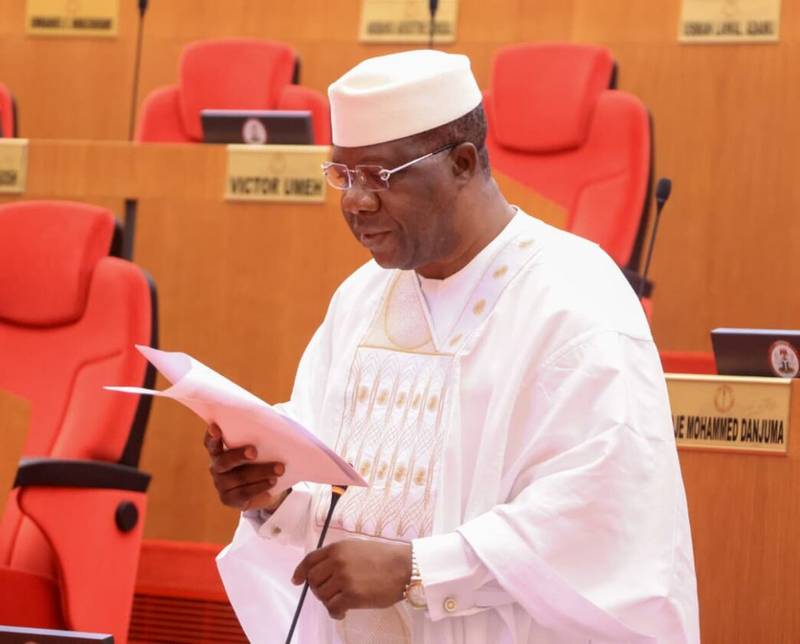
“The Senate has resolved to accelerate the constitutional amendment process for the establishment of state police,” Bamidele confirmed, speaking to journalists in Abuja. His language was unambiguous. “If I can tell you as of today, that will come to fruition this very week because there is no need to allow any further delay,” he told reporters.
The urgency is not manufactured. The Christian Association of Nigeria called on the Federal Government to declare a national security emergency last week, warning that killings, kidnappings, and terrorist attacks continue to spread across the country. Just days after coordinated attacks on schools across three communities in Oyo State, in which gunmen abducted 39 pupils and seven teachers, the same marauders decapitated a 57-year-old mathematics teacher, Michael Oyedokun. The southwest is no longer watching the north burn from a safe distance.
The Nigerian Senate resolved to isolate the state police provision from the broader ongoing constitutional amendment and pass it separately, citing national urgency. That is a significant tactical shift. By carving the bill out of the wider constitutional review package, the Senate eliminates the procedural drag that has killed previous attempts to move this legislation.
Bamidele confirmed that extensive consultations have taken place between National Assembly leadership, including the Senate and House Committees on Constitution Review, alongside the Attorney General, Chief of Staff to the President Femi Gbajabiamila, and Inspector General of Police Tunji Disu. That level of executive coordination is unusual and tells its own story about how serious the Tinubu administration is treating this moment. The political alignment is there too. “The president is also with us and cannot wait for the bill to come for assent. The majority of governors are in support of this bill, and their state assemblies are equally waiting for it,” Bamidele added.
Once passed by the National Assembly, the bill will be transmitted to the 36 State Houses of Assembly for approval by at least two-thirds before being forwarded to President Bola Tinubu for assent. Section 214(1) of the 1999 Constitution currently provides that the Nigeria Police Force remains the only police structure in the country, meaning this amendment would rewrite one of the foundational pillars of Nigeria’s security architecture.
Not everyone is celebrating. Miyetti Allah Cattle Breeders Association and the Pan-Yoruba group Afenifere have urged the National Assembly to include strong safeguards in the proposed amendment to prevent governors from abusing the powers of state police. Critics fear what happens when a partisan governor in a politically volatile state controls his own armed force. Those concerns have been raised before. They have not gone away.
The state police bill vote, if it happens this week as promised, would mark the single most consequential shift in Nigeria’s policing architecture in decades. The Senate has made that promise before. This time, with bodies in Oyo and the northwest still being counted, the pressure to follow through has never been greater.