

Elon Musk has become the world’s first trillionaire on paper following the record-breaking initial public offering of SpaceX, which was priced at $135 per share and raised about $75 billion.
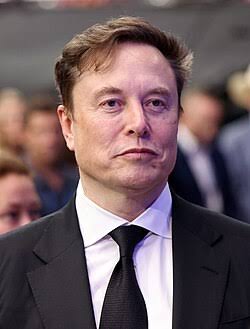
Elon Musk’s Trillion Dollar Net Worth: SpaceX Delivers the Milestone
Forbes had been tracking the milestones, recording Musk’s net worth at $900 billion in June 2026, with a projected crossing of $1 trillion tied directly to the SpaceX initial public offering on this date. The math closed on Friday morning on the Nasdaq trading floor in New York. SpaceX set its IPO at a fixed $135 per share, targeting a valuation of $1.77 trillion, which places it above Tesla itself, a company with a market capitalization of approximately $1.6 trillion.
SpaceX plans to sell 555.6 million shares in the offering, a fundraise amounting to $75 billion. Nothing about the structure was standard. SpaceX bypassed the traditional pricing process entirely: heading into its roadshow, the company declared $135 as the share price and $1.77 trillion as the anticipated market cap, take it or leave it. The listing raises $75 billion at a $1.77 trillion valuation, the largest IPO in financial history. Saudi Aramco’s 2019 offering raised $25.6 billion and held the previous record. SpaceX is nearly three times that size. Musk owns 42 percent of SpaceX, according to Pitchbook. After the offering, he will retain over 82 percent voting control, according to the company’s SEC filing. Goldman Sachs is the lead banker, followed by Morgan Stanley, Bank of America, Citigroup, and JPMorgan Chase.
The Empire Behind Musk’s Trillion Dollar Net Worth
The wealth did not arrive quietly. In addition to rockets, SpaceX owns Starlink, the world’s largest satellite communications company, and recently absorbed social media platform X, formerly Twitter, and artificial intelligence business xAI, in a controversial transaction in which both seller and buyer were controlled by Musk. Starlink’s commercial operations perform well, but the xAI business recorded a $2.5 billion operating loss in the first quarter of 2026 alone, according to the IPO filings, as it pursues plans to build AI data centres in orbit.
Not everyone on Wall Street is convinced. Morningstar pegs the fair value of SpaceX near $780 billion, less than half the IPO target, noting that only Starlink is currently profitable while xAI is projected to burn roughly $10 billion in 2026. Short seller Jim Chanos told reporters this week that the valuation is driven by “hopes and dreams.” Akademikerpension, a major Danish pension fund, blacklisted SpaceX, arguing that the company’s actual value “cannot reasonably exceed USD 1 trillion” even under the most optimistic assumptions.
Political Turbulence and Tesla’s Drag on the Trillion Dollar Fortune
Tesla, meanwhile, has been bleeding. During trading on June 12, Tesla shares reached a daily high of $404.38 and a low of $394.79. The company’s earnings trajectory is far grimmer. First-quarter 2026 profits dropped 71 percent. A working paper from Yale University economists found that Musk’s “polarizing and partisan actions” cost Tesla between 1 million and 1.26 million vehicles in U.S. sales over three years, while boosting rivals’ sales by 17 to 22 percent. Lead researcher Kenneth Gillingham, a professor at Yale School of the Environment, told reporters the findings measured what many analysts long suspected but could not quantify.
The political noise did not stop at research papers. Senator Elizabeth Warren called for the SEC to delay the SpaceX IPO, citing concerns about valuation and governance, and flagged conflicts of interest surrounding Musk’s “uniquely unchecked” power as SpaceX’s majority shareholder. SpaceX is targeting a valuation of roughly $1.75 trillion while posting $18.67 billion in annual revenue, a price-to-revenue multiple of approximately 93.7 times, and reported a net loss of $4.94 billion in 2025.
The SEC did not respond to Warren’s request. Trading opened on schedule. Only 20 countries on earth have economies larger than $1.1 trillion, according to the International Monetary Fund, meaning the vast majority of the world’s nations have economies worth less than Musk. Among them: Taiwan at $977 billion, Ireland at $779 billion, and Musk’s native South Africa at $480 billion. Elon Musk’s trillion dollar net worth is no longer a projection. As of this morning on Broad Street and Wall Street in Lower Manhattan, it is a market fact, written in the opening price of a stock called SPCX.