


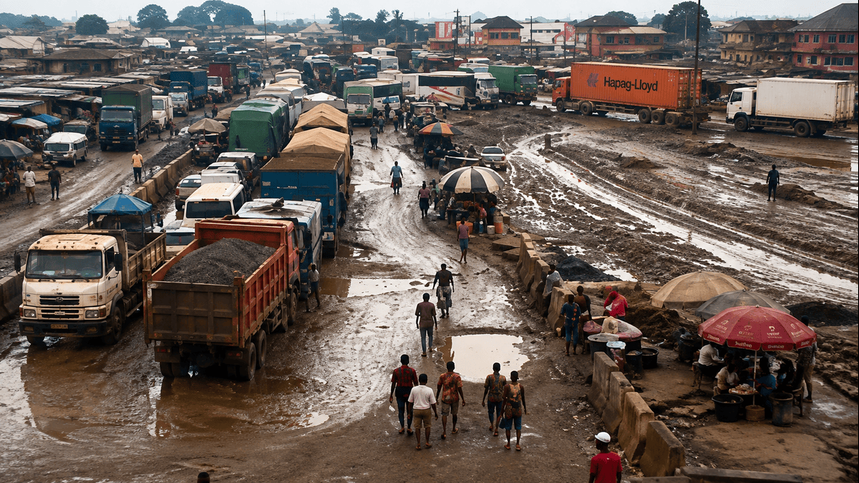
Hundreds of travelers stranded on Nigeria’s federal roads took matters into their own hands, patching potholes themselves as gridlock on the Ifaki-Oye-Ilupeju-Kabba road in Ekiti State and the Benin-Asaba expressway stretched beyond 72 hours, trapping motorists and spoiling perishable goods.
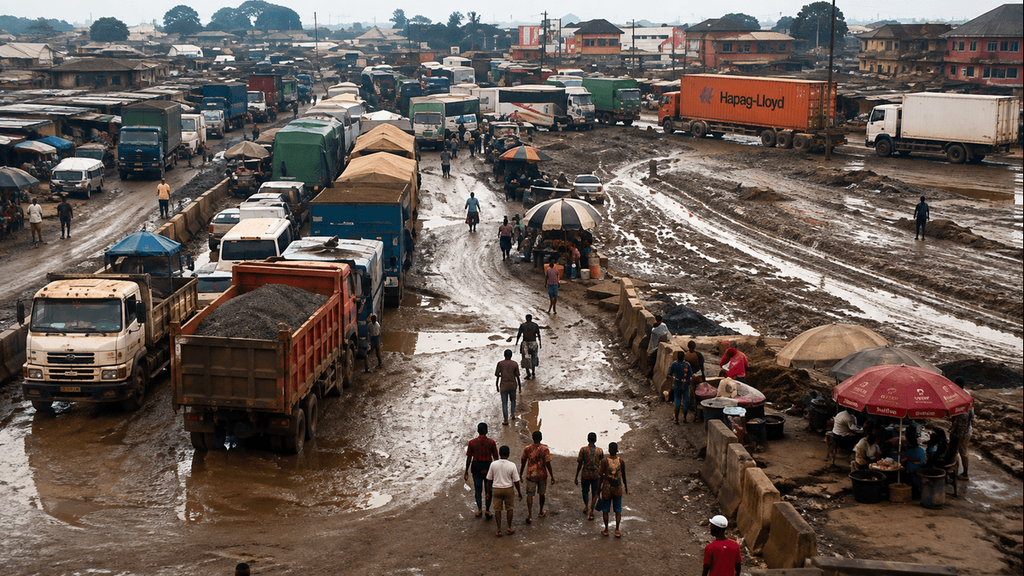
The blockages affected multiple categories of road users, including commercial drivers and traders transporting perishable cargo such as catfish. The extended standstill caused significant losses as goods spoiled inside stationary vehicles during the prolonged stoppage on both federal routes.
Travelers reported spending nights inside their vehicles on the affected roads. Security concerns compounded the situation, with motorists expressing fear of kidnapping as darkness fell and they remained unable to move on the gridlocked federal expressways.
Some stranded drivers refused to wait for government intervention and carved alternative routes through surrounding bush paths to escape the blockades. Others turned to patching the road potholes themselves in an effort to restore movement along the damaged federal corridors.
Drivers expressed anger over the state of Nigeria’s federal road infrastructure. Those stuck on the Ifaki-Oye-Ilupeju-Kabba road and the Benin-Asaba expressway vowed to hold the government accountable at the next election over the condition of the roads.
Federal Works Minister Dave Umahi responded publicly to the crisis. Umahi apologized for the conditions on the two federal roads and stated that he accepted full responsibility for the deterioration and the failure to prevent the extended gridlock that trapped hundreds of travelers.
Umahi disclosed that he planned a site visit on Tuesday to assess conditions on the affected routes. The minister stated that repair teams had been dispatched to carry out quick fixes on the most damaged sections of the Ifaki-Oye-Ilupeju-Kabba road and the Benin-Asaba expressway.
The crisis on the two federal roads raised broader concerns about the state of road infrastructure across Nigeria. The events on the Ekiti corridor and the Benin-Asaba expressway brought renewed attention to what travelers described as long-term neglect of federal highway maintenance.
The Ifaki-Oye-Ilupeju-Kabba road connects communities across Ekiti State and into Kogi State, making it a key federal route for commerce and travel. Disruption along the corridor affects the movement of goods and people across a large section of southwestern and north-central Nigeria.
The Benin-Asaba expressway serves as a primary artery linking Edo State and Delta State, two of Nigeria’s major economic zones. Extended gridlock on that route carries significant consequences for trade, logistics, and the movement of perishables between southern Nigerian markets.
Catfish traders were among those identified as suffering direct losses from the gridlock. Catfish, which requires cold storage or rapid delivery to remain marketable, spoiled during the more than 72-hour stoppage on the two federal roads, compounding the financial hardship faced by traders who depend on the routes for their livelihoods, according to the source accounts.
Umahi’s apology and announcement of a site visit on Tuesday came as public anger over federal road conditions remained high. The minister’s acceptance of responsibility represented a direct official acknowledgment of the government’s role in the infrastructure failures on both routes.
Repair teams dispatched by the ministry were assigned to conduct emergency work on the roads. The quick-fix approach drew attention to questions about whether short-term patching addresses the scale of deterioration on Nigerian federal roads that has accumulated over an extended period.
Stranded travelers who expressed political frustration directed their anger specifically at elected officials and appointed ministers responsible for federal road maintenance. Vows to vote against the government at future elections reflected the intensity of frustration among those trapped for more than three days.
Nigeria’s federal road network has faced sustained criticism over poor maintenance and inadequate funding. The events on the Ifaki-Oye-Ilupeju-Kabba road in Ekiti and the Benin-Asaba expressway placed federal roads, Minister Dave Umahi, and Nigeria’s infrastructure challenges at the center of national attention.