
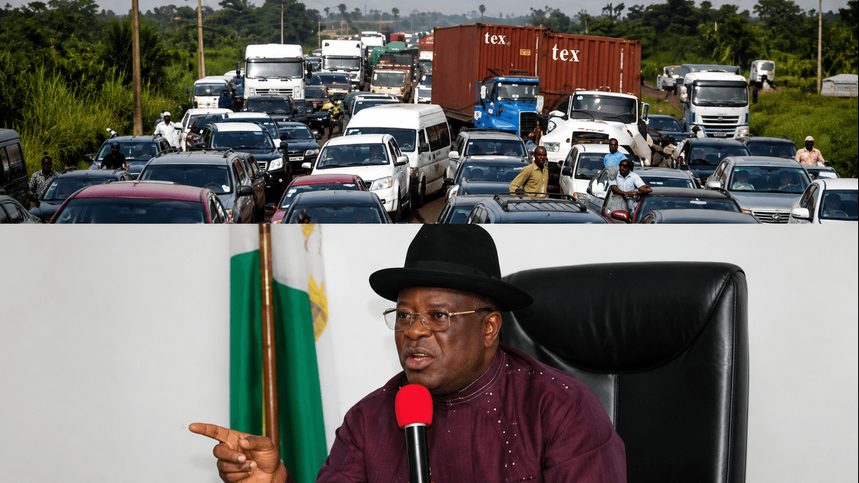
President Bola Tinubu has directed the Federal Ministry of Works to carry out urgent intervention on the Benin-Agbor-Asaba road and the Ifaki-Kabba-Ado Ekiti road, which spans Ekiti and Kogi states, after motorists spent hours and days stranded on both corridors.
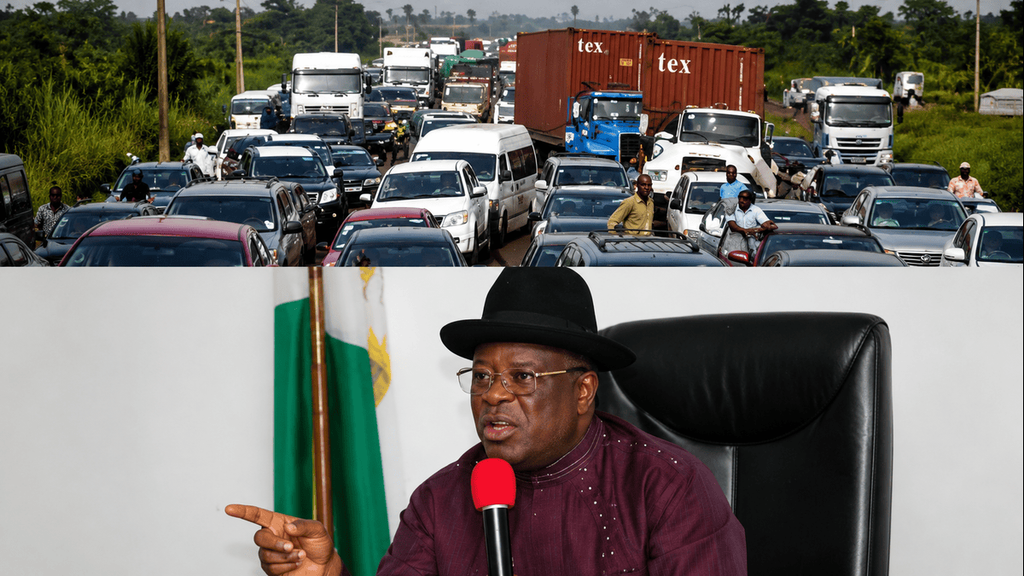
Francis Nwaze, spokesperson to the minister of works, David Umahi, disclosed Tuesday that Umahi expressed deep concern over the condition of the roads and the hardship road users faced on both routes, some of whom remained trapped for multiple days.
“President Tinubu, GCFR, has directed the Federal Ministry of Works to urgently intervene and ensure that necessary corrective actions are taken to restore movement on the affected roads as quickly as possible,” Umahi stated, according to the spokesperson.
Nwaze confirmed that Umahi moved quickly to set machinery in motion for immediate action following the presidential directive, with coordinated teams assigned to the two separate road corridors on Tuesday to begin simultaneous interventions on both routes.
Umahi directed the Minister of State for Works, Bello Goronyo, to lead a team of ministry officials to the Ifaki-Kabba-Ado Ekiti axis to carry out a physical assessment of the situation and begin urgent remedial works along that corridor.
The ministry confirmed that Goronyo’s assignment was already underway as of 10 a.m. on Tuesday, with officials on the ground to begin the intervention on the Ekiti-Kogi road and attend to conditions that had held up motorists for extended periods along the route.
While Goronyo’s team moved into Ekiti and Kogi states, Umahi himself travelled to Benin, Edo State, alongside members of the National Assembly Works Committees, to begin a parallel coordinated intervention on the Benin-Agbor-Asaba road.
The Benin meeting, according to Nwaze, is expected to bring together representatives of the Edo and Delta state governments and the Niger Delta Development Commission, known as the NDDC, with the goal of finding immediate solutions for motorists on that corridor.
The Benin-Agbor-Asaba road is a strategic corridor connecting several southern states, and the gridlock that developed on the route forced motorists to remain on the road for hours and, in documented cases, for days before the federal intervention was announced.
Nwaze stated that Umahi also accepted responsibility for the situation on the affected roads and apologized to commuters who had been stranded or delayed, acknowledging that the conditions had caused serious disruption and significant economic losses to those travelling the routes.
Umahi assured road users that the federal government’s response would go beyond temporary relief, with the ministry pursuing immediate measures alongside permanent solutions designed to restore the affected roads and improve their long-term reliability and capacity for traffic flow.
The Federal Government confirmed it was determined to take immediate corrective measures on both the Benin-Agbor-Asaba road and the Ifaki-Kabba-Ado Ekiti road while simultaneously working toward solutions that would address the underlying structural problems on the routes.
The involvement of National Assembly Works Committee members in the Benin visit signals legislative-level attention to the Benin-Agbor-Asaba corridor, with federal lawmakers joining Umahi and ministry officials in the effort to coordinate a response with state and agency representatives.
The inclusion of the NDDC in the Benin stakeholder meeting reflects the road’s location within the Niger Delta region, where the commission holds a development mandate, and points to the government’s intention to draw on multiple institutional resources to address the corridor’s problems.
Nwaze said the ministry would pursue both short-term relief and lasting infrastructure improvements on the Benin-Agbor-Asaba road and the Ekiti-Kogi highway, with Tinubu’s directive serving as the basis for the intervention launched on Tuesday across both corridors.
The dual approach reflects an acknowledgement that emergency patching alone will not resolve what are, in both cases, longstanding deterioration problems that predate the current administration. Commuters and commercial operators on both routes have absorbed the costs of poor road conditions for long enough that anything short of a commitment to permanent fixes is unlikely to satisfy the communities most affected. corridors.