

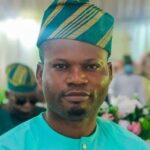

Students who studied for their NECO examinations were competing against classmates who had already bought the questions for as little as N3,000, the Minister of Education disclosed Thursday, describing the scale of examination malpractice in Nigeria as one that had been normalised across the entire education system.

Dr Tunji Alausa made the disclosure at a meeting with the National Association of Proprietors of Private Schools and other education sector actors in Abuja, where he said the problem extended well beyond students to include parents, teachers, school principals, invigilators and examination officials.
The figure N3,000 is not a hypothetical. Alausa, who named the former NECO Registrar Ibrahim Wushishi directly, said question papers were sold through channels connected to Wushishi before candidates sat for their examinations.
“They bought his question for N3,000,” the minister told the gathering. “Before the examination. They called him Wushishi and bought the questions for N3,000 before the examination.”
Wushishi’s name, Alausa confirmed, had become slang among those seeking leaked papers, a reference to accessing what he called a “dark website” where examination materials were made available ahead of scheduled tests, allowing candidates to study precise answers before entering examination halls.
During the 2025 examination period, the minister said, he personally received questions sent to him by an unnamed official who had obtained them before the papers were administered. Each time, he confirmed, he forwarded the materials to examination authorities to verify.
“I would send it to the HNO and ask, ‘HNO, is this correct?'” Alausa said. “And the answer I got was, ‘Unfortunately, that’s the question we’re doing today.'”
That sequence repeated itself across multiple subjects, including English and Chemistry, throughout what Alausa described as the most difficult examination period of his tenure.
The minister said the pattern revealed something the public debate on examination malpractice consistently misses: students are the smallest part of the problem. Adults who hold positions of responsibility inside the examination system are, in many cases, the ones making leakage possible.
“When we have an ecosystem where parents, schools, teachers, invigilators and principals are in full connivance,” Alausa told the briefing, “the students are the smallest players.”
His concern, he confirmed, was not only about fairness to students who prepared without access to leaked materials. Over time, he said, honest students face pressure to join the system they cannot beat, which gradually pulls even prepared candidates toward malpractice.
Minister of State for Education Prof. Suwaiba Ahmad, who also addressed the meeting, noted that tighter controls would initially expose gaps in the preparation of students who had grown dependent on leaked questions before sitting for external examinations.
Ahmad confirmed that serialised examination papers were being introduced as part of the government’s response, a measure designed to reduce the value of any single leaked document and make it harder for candidates to use pre-obtained materials during the examination.
She urged private school owners to ensure that curricula were completed on schedule and that students were adequately prepared to sit examinations without access to advance materials. The ministry, she confirmed, would continue engaging private education providers as the changes are put in place.
Alausa said the Federal Government would press ahead with measures to protect the credibility of public examinations, framing the reforms as part of the Tinubu administration’s broader effort to reposition the education sector and ensure that certificates reflected actual learning rather than the ability to purchase questions in advance.
The minister’s remarks connect to a wider pattern of concern about NECO and other public examination bodies in Nigeria, where question-paper leakages, impersonation and invigilator collusion have drawn repeated scrutiny. What Thursday’s meeting added was a named official, a specific price, and a minister who said he watched it happen in real time, receiving leaked NECO questions on his phone while the examination was already under way.


