


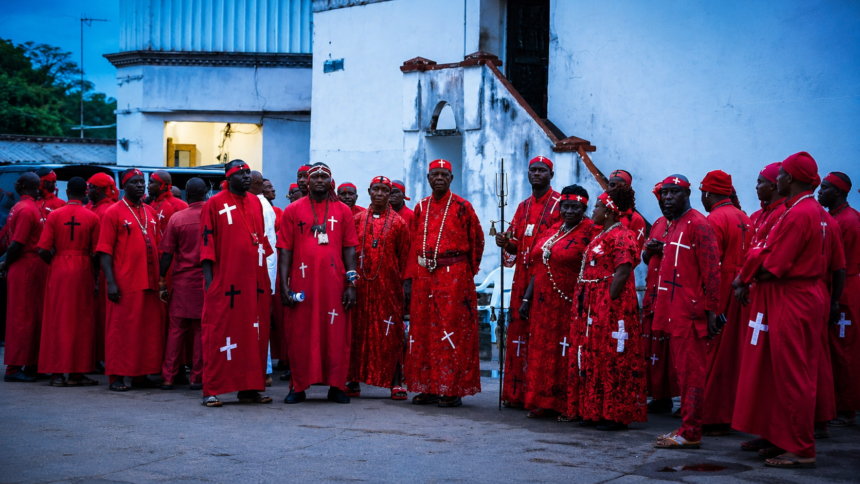
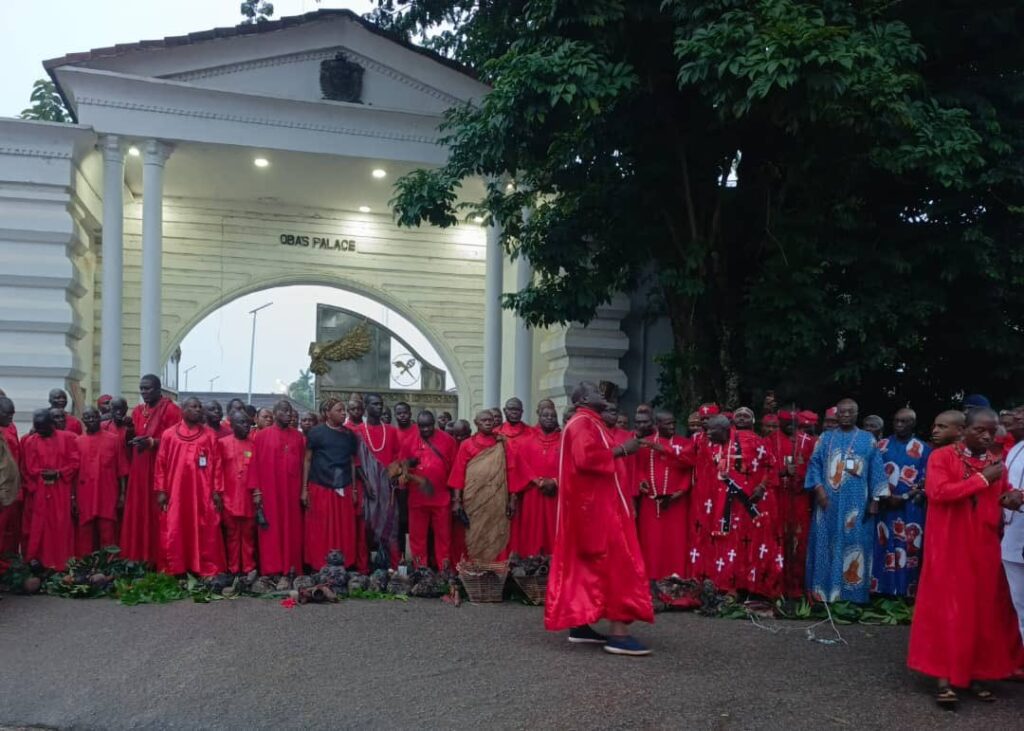
On July 2, 2026, the ancient walls of the Benin Palace witnessed a rare gathering of priests, priestesses, native doctors, and traditional societies as His Royal Majesty, Omo N’Oba N’Edo, Uku Akpolokpolo, Oba Ewuare II, led a spiritual exercise to place ancestral curses on kidnappers, armed robbers, cultists, and their sponsors across Edo State.The ritual, held in the early hours of the day, marked a deliberate return to indigenous methods of social control amid rising insecurity, and signaled the palace’s determination to complement government efforts with spiritual authority.
A Ceremony Rooted in Ancient Benin Practice
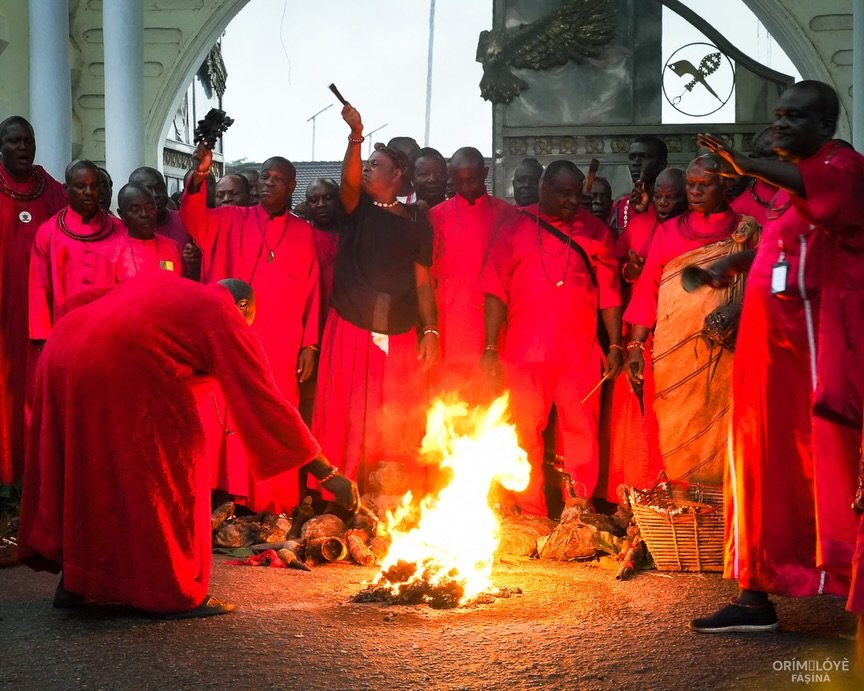
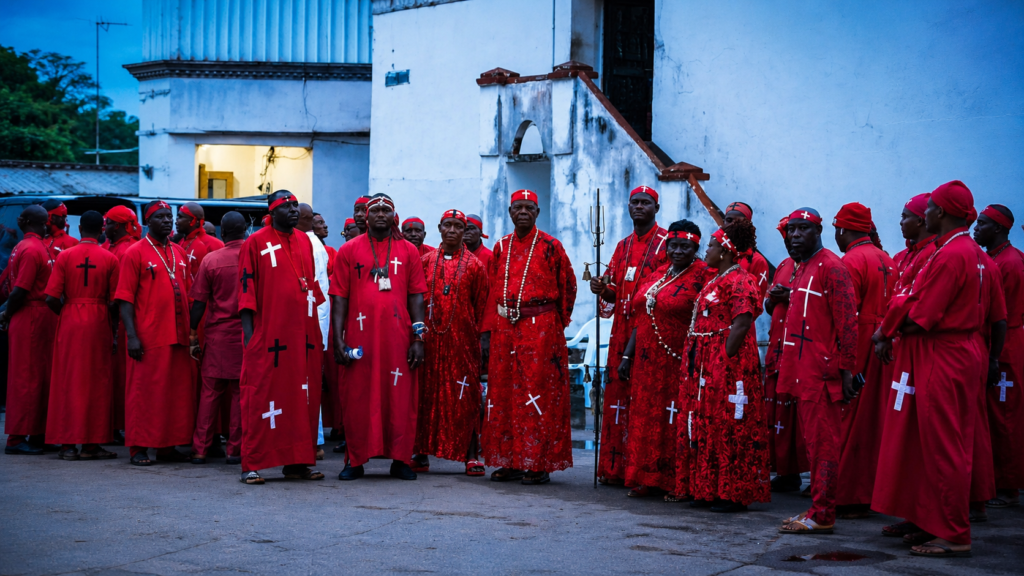
The exercise was announced days earlier after the Oba summoned traditional worshippers to discuss the worsening security situation in Edo South and across the state. On the chosen day, a solemn procession moved from the palace grounds to the main entrance gate. Participants, dressed in traditional “Ododo” regalia, carried symbolic objects and poured libations as they invoked the ancestors to bear witness.
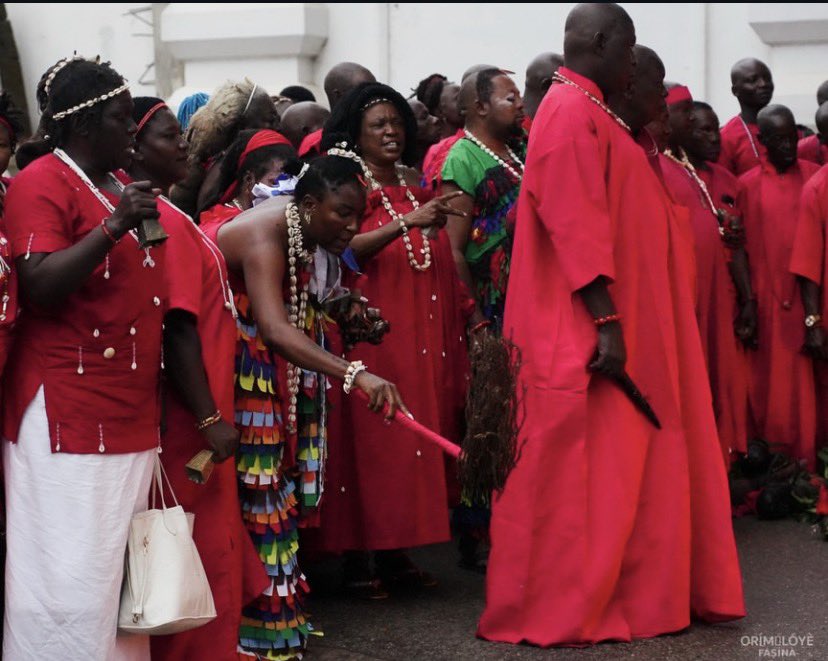

The curse was placed through the priests and priestesses of all shrines in the kingdom, the palace physicians known as Ewaise, the Iwebo society, and the Aiyelala deity. Chief Priest of the Ayelala deity, Chief Clement Edegbe, and Head of the Ewaise Palace Group, Chief Osemwonta Iguezigbon, were among those who led prayers and propitiations.
The Oba declared that the spiritual intervention was necessary because “many things that are not supposed to be happening are happening in this state” and warned that “God Almighty and our ancestors will not allow their evil to prevail in Edo”.
Targeting Kidnappers, Bandits and Their Backers
The curses were specifically directed at kidnappers, armed robbers, murderers, ritual killers, bandits, cultists, and those who sponsor or shield them. The palace also extended the invocation to persons seeking the downfall of the Benin Kingdom and the royal household.
In addition to the curses, prayers were offered for the peace, progress, and fortification of Edo State and Nigeria against further criminal invasion. The monarch emphasized that the exercise was not intended to replace security agencies, but to support ongoing government efforts to restore normalcy.
Why the Palace Turned to Spiritual Intervention
Edo State has faced a surge in kidnapping, violent attacks, and cult-related crime in recent months, prompting concern from traditional leaders and residents alike. During a meeting with native doctors and youth representatives, the Oba condemned the trend and directed that traditionalists across Edo South be fully involved in the spiritual response.
Oba Ewuare II said it was “time to revert to the ancient traditional ways of resolving security challenges in the State”. The move echoes a similar action taken previously against human traffickers and oath-taking native doctors, an initiative the palace said yielded results as some cult members renounced membership and land racketeers returned occupied lands.
Chief Edegbe lamented the breakdown of respect for elders and the rising cases of kidnapping, stating that the spiritual exercise was meant to help curb the menace and expose collaborators.
Public Reaction
The ceremony has drawn mixed reactions. Supporters describe it as a vital cultural defense and a reminder that traditional institutions still hold moral authority in Edo society. For many in Benin Kingdom, ancestral curses are seen as a deterrent with deep psychological and social weight.
Skeptics, however, question how effective spiritual measures can be alongside policing, prosecution, and structural reforms. The palace itself has positioned the rite as complementary, not alternative, to state action. The event also followed broader palace directives, including calls for youth leaders to form community security committees and for traditionalists to actively deploy spiritual means against banditry.
A Kingdom’s Message to Criminals and Diaspora
Speaking through the Akenuwa of Benin, Osaigbovo Osamwonyi, the Oba sent a direct message: “The message is from the ancestors. Edo people at home and in the diaspora should hear this”. He warned that the consequences of the curses would be far-reaching for anyone who continues in criminal activities.
The July 2 gathering capped a week of spiritual mobilization and reinforced the Benin monarchy’s role as both custodian of culture and stakeholder in public safety. As Edo navigates current security challenges, the palace’s invocation blends faith, tradition, and a call for collective responsibility.
Whether viewed as symbolic or substantive, the ceremony has placed traditional authority back in the public conversation about crime and justice in Edo, reminding citizens that in Benin, the ancestors are still believed to watch.