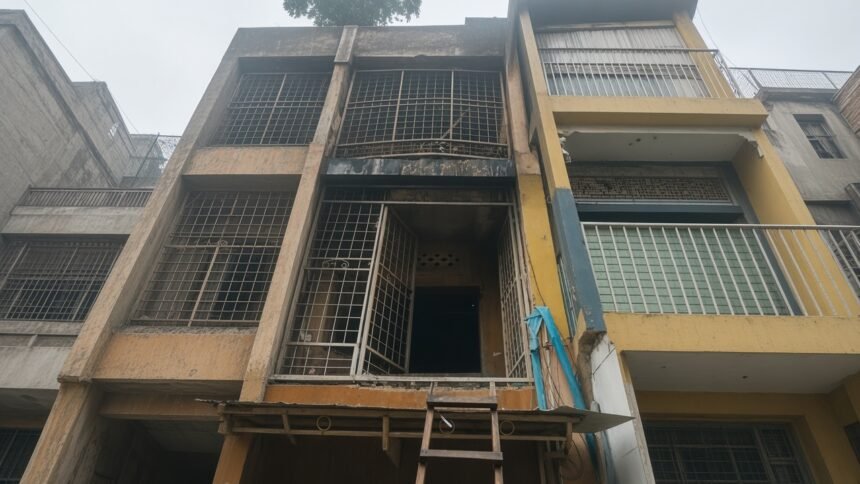
A fire outbreak has destroyed six houses, several shops and stores at Kofar Wanbai Market in Kano State, with firefighters preventing the inferno from spreading to other sections of the busy commercial centre.
The incident occurred at about 9:43pm on Friday at Babban Layi, Yan Robobi section of Kofar Wanbai Market, according to the Kano State Fire Service.
The outbreak affected a two-storey building being used for plastic shops and storage facilities, with the fire spreading across different sections of the structure before firefighters brought it under control.
The Public Relations Officer of the Kano State Fire Service, ACFO Saminu Yusif Abdullahi, disclosed this in a statement issued on Saturday, giving details of the emergency response and extent of the damage.
Abdullahi said the agency’s Emergency Response Unit received a distress call from one of its personnel, Principal Fire Superintendent Usman Idris Fagge, who alerted the service to the fire.
Following the distress call, firefighters from several stations were mobilised to the market to prevent the blaze from spreading further.
He said personnel from the Service Headquarters, Rijiyar Zaki, Sabon Gari, Government House and Bompai fire stations were deployed to the scene.
The deployment of firefighters from multiple stations reflected the scale of the emergency, as the blaze had already affected several portions of the building by the time the response team arrived.
“Upon arrival, they discovered that approximately six houses, identified as Gidan Alhaji Sani, Gidan Sani Muhammad, Gidan Alhaji Kwa Kwa, Gidan Alhaji Shafi’u and Gidan Alhaji Sulaiman, were affected by the fire,” Abdullahi said.
The fire service said the affected structure measured approximately 120 by 125 feet and contained businesses dealing in plastics as well as storage facilities.
The presence of plastic materials and stored goods meant that the fire had the potential to cause extensive damage and spread rapidly to adjoining structures within the market.
According to the statement, the blaze affected shops and stores located on different floors of the building.
“The fire affected two shops on the ground floor, two shops on the first floor, six stores and four temporary stores on the upper floor, all of which were reportedly well alight,” the statement added.
The fire service said the outbreak started from the upper floor of the building before spreading downward to the first and ground floors.
The development caused significant damage to the affected premises and commercial spaces, although the emergency response succeeded in containing the fire within the affected section.
Firefighters, according to the agency, worked to prevent the flames from extending to other portions of the market, where additional shops, stores and other structures could have been exposed to the inferno.
The service said the firefighters eventually succeeded in containing the outbreak and preventing further spread.
“The cause of the fire was traced to a solar system,” Abdullahi said.
The identification of the suspected source of the fire underscores the need for traders and residents operating within markets and other densely populated commercial areas to pay close attention to electrical installations and alternative power systems.
Solar power systems are increasingly used by businesses and households across the country, particularly in response to challenges associated with electricity supply. However, the fire service’s finding in this incident highlights the importance of ensuring that such installations are properly handled and maintained.
The Director of the Kano State Fire Service, Alhaji Sani Anas, subsequently appealed to residents and traders to remain vigilant and take proactive steps to prevent fire outbreaks.
Anas urged members of the public to avoid practices that could increase the risk of fire and to ensure that their business premises and homes were adequately equipped to respond to emergencies.
He specifically advised residents and traders to install fire detectors and keep functional fire extinguishers in their homes, shops and other business premises.
The director also stressed the importance of observing appropriate fire-safety measures at all times.
The appeal is particularly relevant in markets where shops and storage facilities often operate in close proximity, potentially allowing fire to spread quickly from one structure to another if an outbreak is not detected and contained early.
The fire service has repeatedly emphasised the importance of early detection and prompt emergency response in reducing the destruction caused by market fires.
For traders, having functional fire extinguishers and other basic safety equipment can provide an immediate means of responding to a small fire before it develops into a major emergency.
The agency also urged members of the public to remain alert to possible fire hazards and promptly notify emergency responders whenever an outbreak is detected.
In the Kofar Wanbai incident, the rapid mobilisation of firefighters from multiple stations helped to contain the fire and prevent it from extending to other sections of the market.
Although the fire caused extensive damage to the affected building, shops and stores, the containment effort limited the potential scale of the incident.
The Kano State Fire Service did not state whether anyone was injured or killed in the incident in the statement issued on Saturday.
It also did not disclose the estimated financial value of goods and property destroyed in the fire.
The affected traders are expected to assess the extent of the losses following the incident, particularly given that the building contained plastic shops and storage facilities.
Kofar Wanbai Market remains an important commercial area in Kano, with traders and businesses operating across different sections of the market.
The incident again highlights the vulnerability of densely populated commercial centres to fire emergencies and the importance of maintaining effective fire-prevention measures.
For market operators, the incident serves as a reminder that fire safety requires more than emergency intervention after an outbreak. Regular inspection of electrical and solar installations, proper storage of combustible materials, accessible fire extinguishers and functioning fire detection systems can help reduce the risk of major losses.
The Kano State Fire Service therefore advised residents and traders to take fire prevention seriously and ensure that their premises meet basic safety requirements.
The agency also appealed to members of the public to cooperate with firefighters during emergencies by providing accurate information about the location of an outbreak and avoiding actions that could obstruct emergency response.
West Trybe reports that the Kofar Wanbai Market fire occurred at a time when fire outbreaks remain a recurring concern in densely populated commercial areas, where the combination of closely packed structures, stored goods and electrical or alternative power installations can increase the risk of rapid fire spread. The Kano State Fire Service said its personnel successfully contained the latest outbreak and prevented it from extending to other sections of the market, while urging traders and residents to strengthen preventive measures to protect lives and property.