


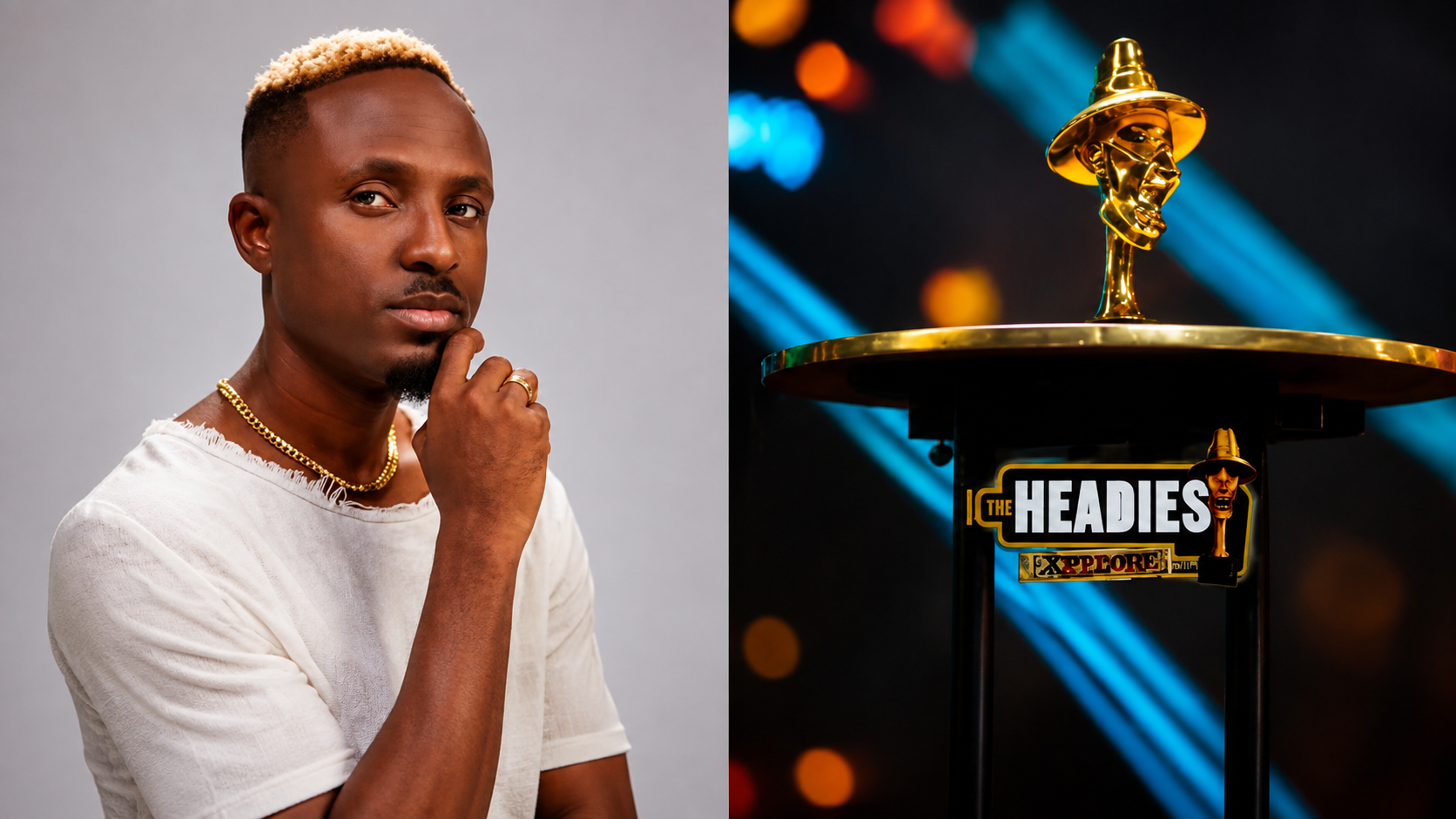
Gaise Baba Headies criticism has sparked a fresh debate over gospel music, mainstream award categories and how faith-based artistes are judged.
Gaise Baba has challenged The Headies over what he described as the sidelining of gospel and faith-based music in major award categories, arguing that artistes should be judged on the quality and impact of their music rather than the message behind it.
The Afrogospel artiste made his position known in an open letter dated August 28, 2026, following the release of nominees for the 18th Headies. The awards are scheduled for October 25 in Toronto, Canada, with 213 nominations across 35 categories.
Gaise Baba Headies Argument: Judge The Music

Gaise Baba, whose real name is Akinade Ibuoye, said his criticism was coming from within the music industry rather than from an outsider looking in.
He recalled attending The Headies for the first time in 2012 after signing with Sanctified Records and said more than 15 years in the industry had given him enough experience to speak about how faith-based music is treated.
His main argument is that genre should be determined by musical craft rather than lyrical subject. “A rap record is a rap record. It does not stop being rap because of what the artiste chose to rap about,” he wrote.
Gaise Baba argued that elements such as songwriting, cadence, delivery, flow and production should determine how a record is judged. In his view, a rap song should not be pushed exclusively into a gospel or inspirational category simply because its message is faith-based.
He said faith-based artistes should also be free to compete across the wider music industry instead of being limited to religious spaces or dedicated categories.
Gospel Music And The Best Inspirational Single
Another major issue raised by Gaise Baba was the treatment of The Headies’ Best Inspirational Single category.
The category was introduced at the 15th Headies in 2022, alongside other new categories. Kcee and Okwesili Eze Group won the inaugural award for “Cultural Praise.”

Gaise Baba said he experienced what he considered poor treatment of the category when he was nominated in a previous edition. He recalled that nominees took part in media activities and attended the ceremony, but said the Inspirational category was not presented on stage during the event.
He described the experience as a sign of disregard for the artistes and creatives involved.
For the 18th Headies, Gaise Baba and Lawrence Oyor are nominated for “No Turning Back 2” in Best Inspirational Single. They are competing against Sunmisola Agbebi featuring Yinka Okeleye, Lawrence Oyor, Sinach, EmmaOMG and Mercy Chinwo.
“We Are Not Asking For Charity” Gaise Baba made it clear that his argument is not about giving gospel musicians an advantage. “We are not asking for special treatment or charity,” he said, arguing that faith-based music should be recognised for its artistic and cultural value.

He pointed to songs including “Favour” and “No Turning Back II” as examples of faith-based records that have connected with large audiences.
For him, the message of a song should not automatically determine the category in which its artistic qualities are considered. “When a Christian Hip-hop artiste drops a solid body of work or single, it is first and foremost a Rap/Hip-hop record,” he argued.
That position goes beyond one award category. It raises a broader question about whether the growing Afrogospel and Christian hip-hop scene should have a bigger presence across Nigeria’s mainstream music awards.
The Headies Respond To Gaise Baba
The Headies has rejected the suggestion that gospel artistes are excluded from major categories.
In a statement shared on its official Instagram account, the organisers pointed to past gospel and faith-based artistes who have competed successfully in general categories.
Among the examples cited was Lara George, who was nominated for Best Female Vocal Performance in 2008 and won the category in 2010 with “Keeper of My Dreams.”
The academy also pointed to Kefee’s 2010 Best Collaboration win with Timaya for “Kokoroko.” The song was additionally nominated in several general categories, including Song of the Year and Best Pop Single.

Timi Dakolo’s “Heaven Please” also won Recording of the Year in 2010, while Nikki Laoye won Best Vocal Performance (Female) in 2013 for “Only You.”
The Headies said the Best Inspirational Single category was created to provide additional recognition for gospel and inspirational artistes, rather than to keep them out of other categories.
The organisers also noted that faith-based artistes remain eligible for general categories when their entries meet the relevant criteria.
Why The Headies Debate Matters
The disagreement exposes a bigger conversation about where gospel music fits within Nigeria’s rapidly changing music industry.
Many Afrogospel artistes now work across hip-hop, Afrobeats, R&B, soul and indigenous sounds. Their music may carry a Christian message, but the production, songwriting and performance can sit comfortably within genres that are already recognised in mainstream awards.
That is the space Gaise Baba is asking The Headies to consider. The Headies, meanwhile, is pointing to its history as evidence that faith-based artistes are not automatically excluded. Its past winners show that gospel-associated performers have won major general categories alongside mainstream acts.

The disagreement therefore appears to be less about whether gospel artistes can win and more about how often their work is considered across the full range of categories.
What Happens Before The 18th Headies
The debate comes less than two months before the 18th Headies, which will be held in Toronto under the theme “Africa to the World.”
Gaise Baba has asked the organisers and the wider industry to consider his concerns in good faith. The Headies has responded by defending its record and explaining that the Inspirational category was created as an additional avenue for recognition.
For now, both positions are clear. Gaise Baba wants faith-based music judged more broadly on craft, creativity and impact. The Headies says gospel artistes already have access to mainstream categories and points to its history to support that position.

As the awards draw closer, the discussion is likely to continue, not only around Gaise Baba’s nomination, but around a bigger question facing Nigerian music: should the message of a song determine where it competes, or should the music itself come first?