

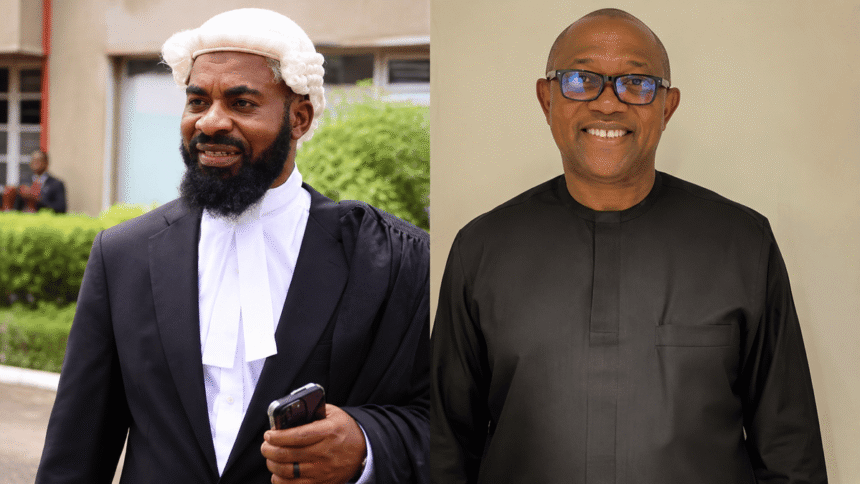
Human rights activist Deji Adeyanju has declared himself bigger than former Anambra State governor and presidential candidate Peter Obi, citing his record of sacrifice and achievement in Nigeria’s human rights and democratic struggles as the basis for the claim.
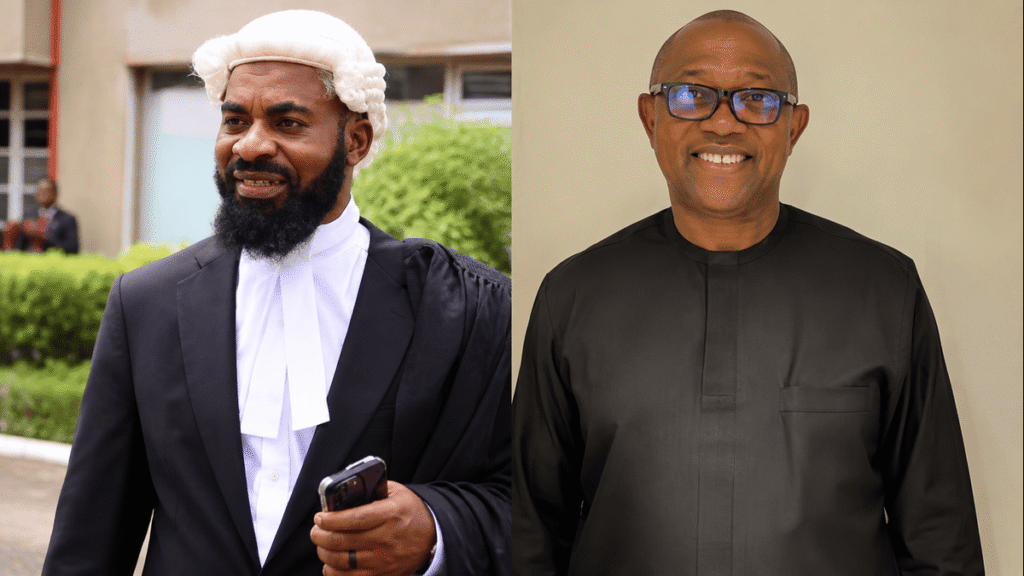
Adeyanju made the statement during an interview with Channels Television anchor Seun Okinbaloye, telling the anchor that his contributions as a human rights activist set him apart from Obi in ways Obi could not replicate.
The activist said his personal sacrifices for Nigeria’s democracy distinguished him from Obi, and he questioned whether the former governor had made comparable contributions to the country’s democratic development over the years, framing the comparison as one between frontline activism and political office-holding.

“I am bigger than Peter Obi,” Adeyanju said during the interview. “The things I have achieved in my life as a human rights activist, he can never achieve,” he told the Channels Television anchor directly.
Adeyanju went further, questioning Obi’s understanding of the democratic system that Nigeria currently operates and asking what personal cost the former governor had paid in service to the country’s political struggles, suggesting that enduring hardship on behalf of ordinary Nigerians was the true measure of democratic commitment.
“Has he ever made any sacrifice for the country? What does he know about the democracy that he is enjoying?” Adeyanju said, directing the questions at Obi’s record and standing within Nigeria’s broader political and democratic history.
Adeyanju identified himself specifically as a human rights activist, framing his contributions in that capacity as the standard against which he was measuring himself against Obi, a two-term former governor and the Labour Party’s 2023 presidential candidate who attracted a significant youth-driven movement known as the “Obidient” movement during the election cycle.

The activist did not detail specific instances of sacrifice during the interview excerpt that circulated publicly but said broadly that his record of achievement in the human rights space represented a legacy Obi could not match.
Obi, who served as Anambra State governor and ran in the 2023 Nigerian presidential election under the Labour Party, had not responded publicly to Adeyanju’s statement at the time the comments began circulating among Nigerians online and in public discourse.
The comments quickly drew reactions from Nigerians, who began debating the respective contributions of both men to the country’s political and democratic development, with the exchange drawing significant attention across public platforms.
Some Nigerians weighed Adeyanju’s record as an activist against Obi’s career in elected office and his 2023 presidential campaign, with the public debate centering on how democratic contribution and sacrifice should be measured and recognized across different spheres of public life.
Adeyanju’s remarks did not target any specific policy position held by Obi, nor did they arise from any stated policy disagreement between the two men. The statement instead focused entirely on Adeyanju’s personal record relative to Obi’s in democratic and human rights terms.
The interview with Seun Okinbaloye on Channels Television served as the platform for the remarks, with the anchor’s questioning drawing out Adeyanju’s assessment of his own standing relative to the former governor and former presidential candidate.
Adeyanju did not outline a political agenda or announcement alongside the remarks, and the statement appeared to arise specifically from questions about his contributions to Nigeria’s democratic history and his standing within the Nigerian public sphere.
The debate sparked by Adeyanju’s comments touches on a broader and recurring question in Nigerian public life about what forms of contribution, whether activism, elected office, or civic sacrifice, carry greater weight in shaping the country’s democratic trajectory.
Adeyanju has maintained a public profile as a human rights activist over a sustained period, and his remarks about Deji Adeyanju, Peter Obi, and Nigerian democracy drew enough public reaction to register as a point of national conversation following the Channels Television broadcast.