


Nigerians React as Police Arrest Suspect Linked to AI-Generated Tinubu Voice Recording
The arrest of a man accused of creating and sharing an AI-generated voice recording that impersonated President Bola Ahmed Tinubu has triggered widespread reactions among Nigerians, many of whom are questioning the country’s security priorities.
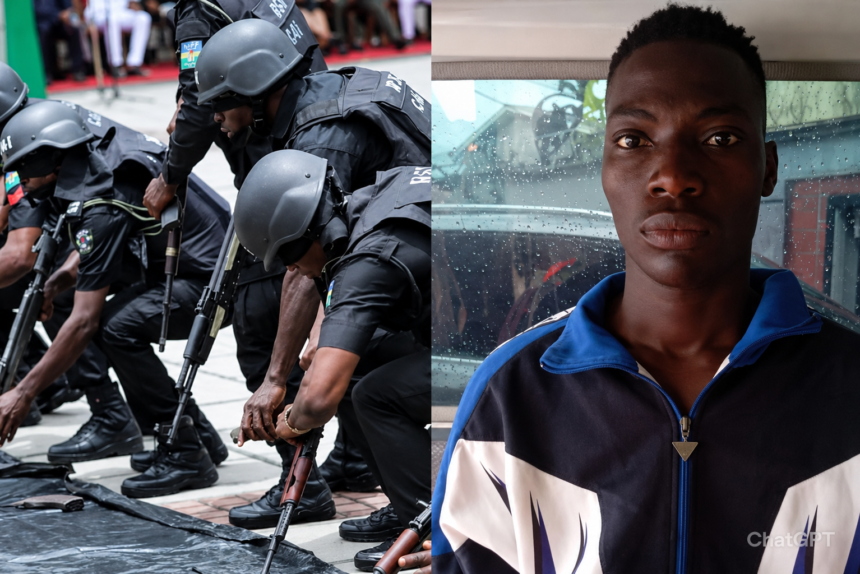
Police arrested Ifechukwu Dennis after investigators linked him to the controversial audio clip that circulated widely on social media in recent weeks. The recording, which allegedly used artificial intelligence to mimic the president’s voice, contained claims about insecurity, governance, and political issues in Nigeria.
Authorities said a special investigative team tracked the source of the recording and identified Dennis as the suspect behind its creation and distribution.
While some Nigerians commended security agencies for successfully tracing the origin of the audio, others expressed frustration over the speed of the arrest compared to the slow progress often seen in cases involving kidnappers, bandits, and other violent criminals.
The development quickly sparked debate online, with many social media users arguing that security agencies should apply the same level of determination and intelligence gathering to tackling violent crimes that continue to threaten lives across the country.
For many Nigerians, the arrest raised a simple question: if investigators could locate a suspect behind a digitally manipulated voice recording, why does the country still struggle to bring many notorious criminal gangs to justice?
Several people pointed to the growing insecurity affecting communities across Nigeria. They argued that families living under the threat of kidnapping and bandit attacks want to see similar results in efforts to dismantle criminal networks responsible for violence and abductions.
The controversy began when an audio recording surfaced online and spread rapidly across social media platforms. Many listeners initially believed it featured President Tinubu’s voice discussing sensitive national issues.
The recording gained even more attention after it appeared alongside a video featuring social media activist Martins Vincent Otse, popularly known as VeryDarkMan. However, investigations later revealed that the activist had no connection to the manipulated version of the content.

Fact-checkers found that someone took footage from an existing video, inserted an AI-generated voice recording, and then shared the altered material online as though it were authentic.
The incident has also drawn attention to the growing influence of artificial intelligence and the challenges that come with its misuse. Technology experts have repeatedly warned that advanced AI tools now allow users to create highly convincing audio and video content capable of misleading the public.
As these technologies become easier to access, concerns continue to mount over their potential use in spreading false information, impersonating public figures, and influencing public opinion, particularly during politically sensitive periods.
Beyond the technology itself, many Nigerians see the incident as part of a larger conversation about security, justice, and public trust. The reactions reflect a broader frustration with the country’s ongoing struggle against kidnapping, banditry, and other violent crimes.
For some citizens, the arrest demonstrates that security agencies possess the expertise needed to investigate complex cases successfully. For others, it serves as a reminder that many communities still await decisive action against criminal groups that continue to operate across the country.
As investigations continue, public attention remains fixed on whether authorities can achieve similar successes in addressing the wider security challenges that affect millions of Nigerians every day
Source: Pulse.ng
Read more news on Westtrybe.