The question was direct: why did Oshiomhole organize nationwide protests against petrol price increases of ₦3 to ₦7 under former President Olusegun Obasanjo, yet now supports President Bola Tinubu’s fuel pricing policies, with petrol prices reaching ₦1,400 to ₦1,500 per liter?
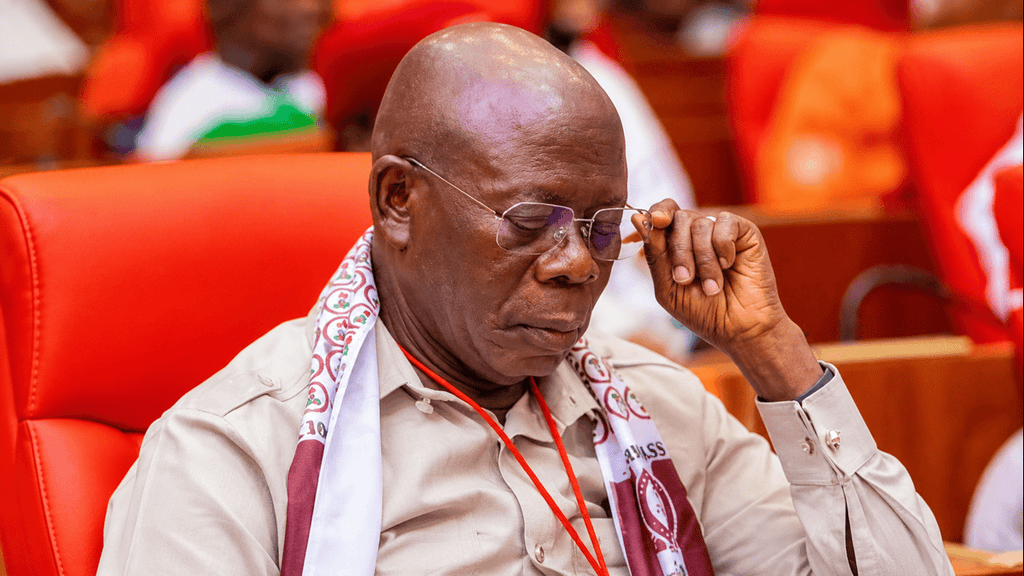
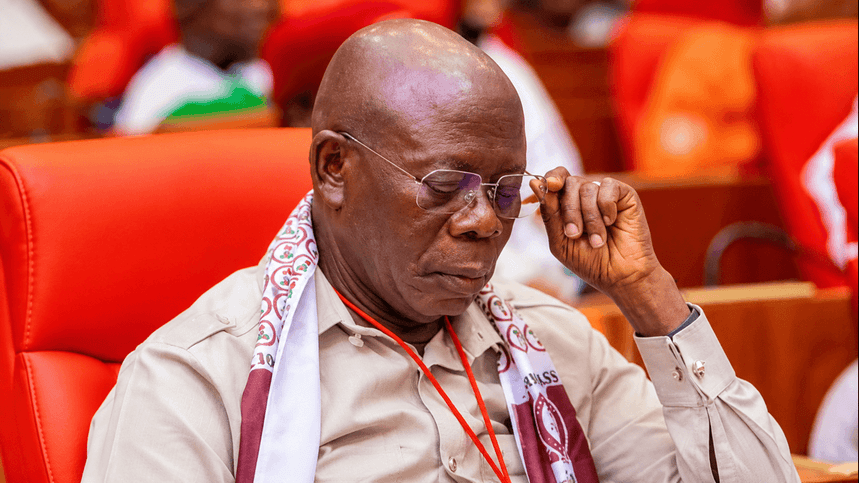
Oshiomhole, who now serves as senator representing Edo North, did not address the comparison directly. He challenged the interviewer’s standing instead, asking, “Who are you?” The exchange did not ease from there. The interview, conducted in English and widely circulated online, lasted several minutes before the senator moved to shut down the line of questioning entirely.
Rather than engage the substance of the question, Oshiomhole invoked his past record of confronting military dictators, presenting it as evidence that he had never shied away from powerful figures. The interviewer pressed the same line of questioning regardless.
By the time the exchange ended, Oshiomhole had questioned the interviewer’s knowledge, rejected the premise of the comparison, and told the interviewer to change the topic. No direct answer to the core question was given.
The contrast at the center of that exchange is not new, but it has resurfaced sharply. As NLC president, Oshiomhole mobilized Nigerians in multiple states to resist what was then described as an unacceptable burden on workers, all over a price movement that is now a fraction of current pump prices.
He travelled to Abeokuta, Ogun State, during the Obasanjo era and got residents there to participate in strike action against the subsidy removal plan. Workers and students at the University of Lagos joined those protests. The NLC under his leadership called and suspended at least three general strikes between 2000 and 2004, each time winning concessions or reversals from the federal government. That mobilization is now part of his recorded public history.
Oshiomhole has previously offered an explanation for the difference in his positions. He said his opposition to Obasanjo’s subsidy policy was based on his belief that the administration at the time lacked the capacity to ensure that savings from removal would return to ordinary Nigerians. He has maintained that circumstances have since changed under Tinubu.
Critics have not found that explanation sufficient, and the interview clip circulating on social media on Thursday has widened the audience for that debate. The video was shared on the platform X by the account Trending Explained with the description that Oshiomhole “goes wild” on the interviewer over the question.
The tension in that clip sits inside a broader national argument about who bears the cost of fuel subsidy removal. Petrol prices in Nigeria stood at approximately ₦200 per liter before Tinubu took office in May 2023. Those prices have since climbed past ₦1,000 in most locations, reaching ₦1,400 to ₦1,500 in the current period.
Transport fares, food costs, and the general cost of living have followed that trajectory upward. The National Bureau of Statistics reported that Nigeria’s headline inflation rose sharply in the months following the subsidy removal, compounding existing pressure on household incomes. For the Nigerians who remember the NLC-led shutdowns of the early 2000s, the comparisons are not abstract.
What the interview did not resolve is what Oshiomhole believes has structurally changed between the Obasanjo era and now, which makes a ₦1,400-per-litre price acceptable where a ₦7 increase was not. That question was asked. It was not answered.
Oshiomhole’s office had not issued a formal response to the interview clip as of Thursday. His record as an NLC president who led the most visible worker resistance to fuel price increases in Nigeria’s democratic era continues to define the lens through which his current political positions are assessed.
The senator represents Edo North in the National Assembly under the All Progressives Congress. Tinubu is the APC’s presidential candidate going into the 2027 election cycle. Oshiomhole has publicly aligned with Tinubu’s administration on multiple policy fronts, including the removal of the petrol subsidy that now places pump prices at levels his own earlier activism was designed to prevent.