



President Bola Ahmed Tinubu has approved a major restructuring of the Nigerian Army, expanding its formations from eight to 12 divisions in what the Presidency described as a landmark move to strengthen national defense and improve response to security threats.
The announcement was made by the President’s Special Adviser on Information and Strategy, Bayo Onanuga, who said the expansion underscores Tinubu’s commitment to equipping the Armed Forces to address Nigeria’s evolving security challenges.
Four new divisions, nationwide coverage
Under the new structure, the Nigerian Army will operate 12 divisions strategically positioned across the country. Four new division headquarters will be established in Makurdi, Ilorin, Jalingo and Benin City.The full lineup announced by the Presidency is as follows:
1 Division – Kaduna: Kaduna, Kano, Katsina and Jigawa
2 Division – Ibadan: Oyo, Osun, Ekiti and Ondo
3 Division – Jos: Plateau, Bauchi and Gombe
5 Division – Makurdi: Benue, Nasarawa and Kogi
6 Division – Port Harcourt: Rivers, Akwa Ibom and Cross River
7 Division – Maiduguri: Borno and Yobe
8 Division – Sokoto: Sokoto, Kebbi and Zamfara
9 Division – Ilorin: Kwara and Niger
10 Division – Jalingo: Taraba and Adamawa
81 Division– Lagos: Lagos and Ogun
82 Division – Enugu: Enugu, Anambra, Abia, Ebonyi and Imo
83 Division – Benin City
The Presidency said the creation of the new divisions in Makurdi, Ilorin, Jalingo and Benin City is designed to improve military coordination and response time across regions that have experienced persistent security pressures.
Part of a broader security overhaul
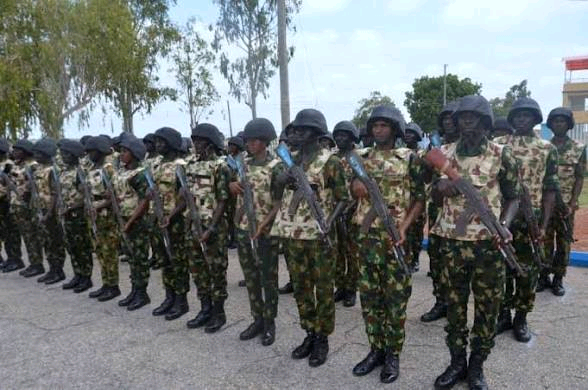
The army expansion is not happening in isolation. Onanuga noted that it “builds on the Administration’s sustained investments in the Armed Forces”.
Those investments include the approval for the recruitment of 28,000 additional personnel, the acquisition of critical military platforms and equipment, improvements in troop welfare, and ongoing support for operational readiness and force modernisation.
Chief of Army Staff, Lieutenant General Waidi Shaibu, has also disclosed that the Army has established new brigades, battalions and operational units across six states to enhance operational posture.
These include the 15 Brigade in Anambra and Imo, the 12 Battalion in Anyigba, Kogi, the 226 Battalion in Ganye, Adamawa, the 247 Reconnaissance Battalion in Mubi, Army Logistics Base 4 in Gusau, and Army Logistics Base 5 in Ilorin.
Shaibu said the measures were aimed at expanding military presence in volatile areas and improving rapid response to emerging threats. He added that Nigerian Army aviation has played an increasing role, with assets for the first time supporting troop insertion and extraction in difficult terrains in the North-East theatre.
Why the expansion matters now
Nigeria’s security environment remains complex, with the Army contending with insurgency in the North-East, banditry in the North-West, farmer-herder clashes in the North-Central, and criminality in other regions.
Officials say the current eight-division structure was stretched thin, limiting the speed of deployment and area coverage. By creating four additional divisions, command and control will be decentralized, allowing formations to be closer to flashpoints.
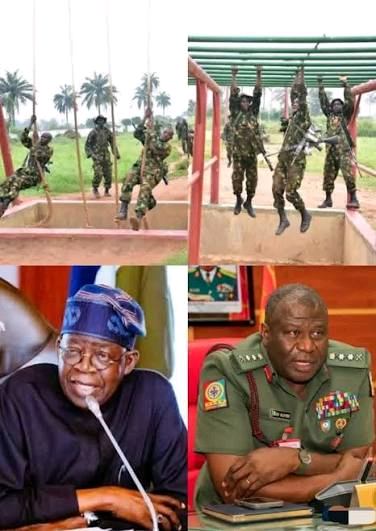
The choice of locations reflects that logic. Makurdi sits at the heart of North-Central crises and hosts Operation Whirl Stroke. Ilorin provides coverage for Kwara and Niger, both of which have seen spillover from banditry. Jalingo gives the Army a dedicated hub for Taraba and Adamawa, border states with transnational security challenges. Benin City in the South-South strengthens presence in a region critical to oil infrastructure and maritime security.
Governor Hyacinth Alia of Benue has commended the federal government for strengthening the Army’s operational capability, noting during a recent visit by the COAS that new weapons and equipment provided through presidential support are expected to enhance effectiveness against armed groups.
Troops, equipment and welfare
Alongside the structural expansion, the administration has approved the recruitment of 28,000 additional troops. The Chief of Army Staff said the recruitment and training exercise will take place within one year.
The Presidency emphasized that force modernisation is also ongoing, with acquisitions of critical platforms and improved welfare for personnel. In Benue, for instance, the Army has deployed an additional battalion to Kwande LGA and is pursuing non-kinetic strategies, including engagement with traditional rulers to improve intelligence gathering.
Shaibu has urged commanders to maintain close engagement with troops to ensure they remain motivated and mission-ready, stressing that leadership must embody “decisiveness, resilience, empathy and unwavering commitment”.
A shift in military architecture
The move from eight to 12 divisions represents the most significant reorganization of the Army’s ground structure in years. It signals a shift from a centralized model to one that pushes headquarters closer to operational areas.
For communities in Makurdi, Ilorin, Jalingo and Benin City, the new division headquarters are expected to bring more military presence, logistics support, and faster response capabilities. For the Army, it means wider coverage with smaller areas of responsibility per division.
As Onanuga put it, the approval “underscores the President’s unwavering commitment to equipping the Armed Forces to address Nigeria’s evolving security challenges effectively and to strengthen national defence capabilities further.”
With recruitment, new equipment, and now new formations coming online, the next phase will be how quickly the Army can operationalize the four new divisions and integrate them into ongoing operations across the country.


