Major General Samaila Uba, the Defense Headquarters spokesperson, described the move as a routine adjustment tied to specific operational objectives rather than a termination of bilateral defense relations. He spoke at a security briefing in Abuja.
“The Armed Forces of Nigeria wishes to clarify that the reported withdrawal of about 200 United States personnel should not be interpreted as a breakdown or termination of the Nigeria-United States security partnership,” Uba said.
The briefing was organized by the National Counter Terrorism Center. Uba confirmed he had received numerous press inquiries before the event and had prepared a statement specifically to address them.
The planned drawdown is expected to be completed by the end of September, following months of increased US-Nigeria military cooperation, particularly in intelligence gathering, counterterrorism training, and operations targeting senior leaders of Islamic State-linked groups in the Lake Chad Basin. The cooperation unfolded across northeastern Nigeria, a region that has faced persistent insurgent violence for more than a decade.
Last month, AFRICOM commander Dagvin Anderson said many US troops had already been pulled back from Nigeria following a May 2026 operation that killed Abu-Bilal al-Minuki, the second-in-command of ISIS in the Lake Chad Basin. Anderson said the strike dealt a significant blow to ISIS leadership both in Nigeria and globally, describing it as one of the most consequential counterterrorism actions carried out in the region in recent years.
Small teams of US military trainers and intelligence analysts are expected to remain in Nigeria after the withdrawal to sustain the bilateral intelligence and security partnership. Uba confirmed on Tuesday that those elements of the cooperation remain active.
The troops were deployed to northeastern Nigeria in February 2026 after US President Donald Trump criticized Nigeria’s handling of terrorist violence, particularly attacks affecting Christian communities. The deployment was described at the time as a “small team,” though it ultimately grew to approximately 200 personnel embedded alongside Nigerian forces.
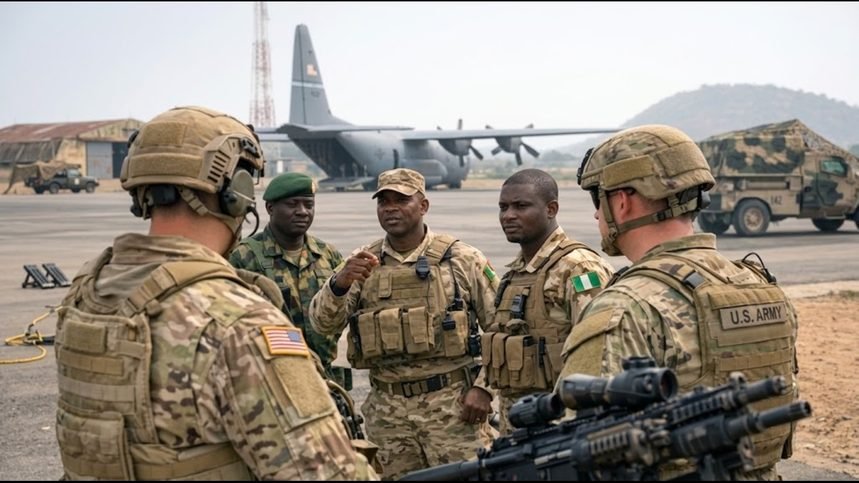
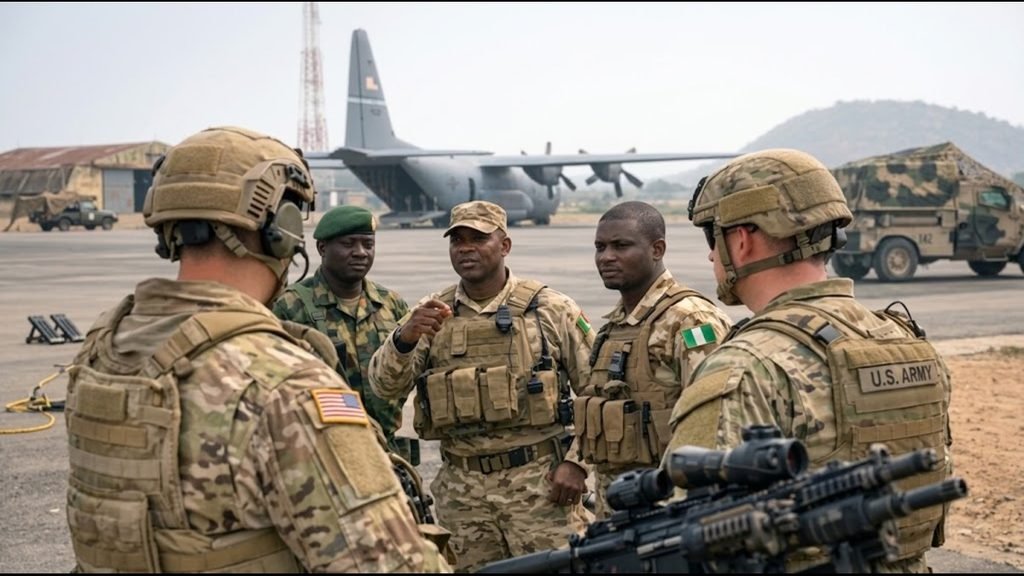
Members of the Army’s 503rd Parachute Infantry Regiment, 173rd Mobile Brigade Combat Team, were in Nigeria’s northeast this spring, training Nigerian troops on topics including casualty care, explosive ordnance disposal, small-unit tactics, and drones.
Uba said the defense relationship between Nigeria and the United States remains “strong, enduring, and mutually beneficial.” According to him, the deployment was always linked to specific operational and counter-terrorism missions, making this drawdown part of how military cooperation naturally evolves.
“Our cooperation with the United States is designed to strengthen our capabilities through intelligence sharing, training, technical assistance, and other forms of professional military cooperation,” he told the briefing. Key aspects of the partnership remain in place, he confirmed.
The current withdrawal raises questions about why American troop levels apparently remained near the same scale after AFRICOM announced an earlier reduction in July. Officials have not publicly explained what operational requirements delayed or altered that initial drawdown.
US officials reportedly described the Nigerian deployment as a potential model for future American counterterrorism operations in Africa. That framing, if sustained, suggests Washington views the Nigeria mission as a template rather than a retreat and could inform how the United States structures similar partnerships across the continent.
Uba maintained that responsibility for defending Nigeria rests primarily with Nigerian security forces, while foreign partnerships are intended to enhance local capabilities. He added that cooperation in areas of mutual interest would continue beyond the September withdrawal deadline.
“We equally call on the media and the Nigerian public to avoid interpreting a routine or mission-specific adjustment in foreign military presence as evidence of a collapse in Nigeria’s security cooperation or national defense capability,” he said. The US troops’ withdrawal from Nigeria, by his account, is a mission conclusion, not a rupture.