


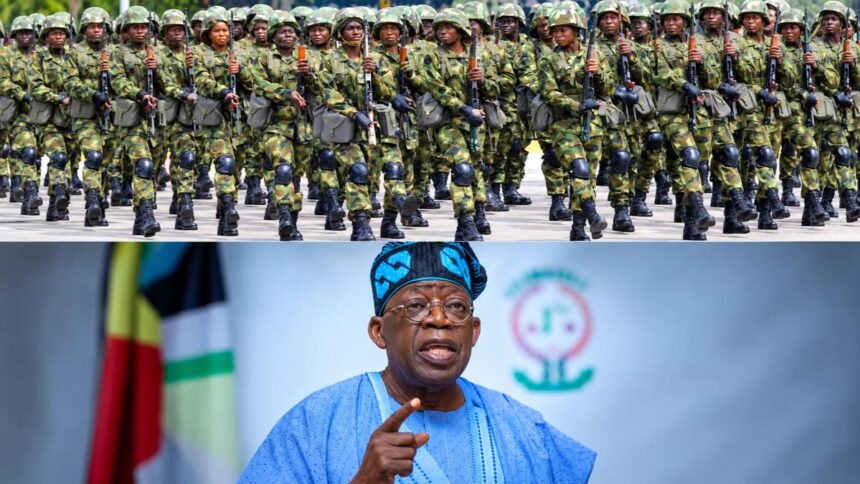
The new formations are designed to position troops closer to communities considered vulnerable to attacks and other security challenges. For communities in Zamfara and Kebbi particularly, that distinction carries weight. The Nigerian Army operationalized those formations this week, according to the president.
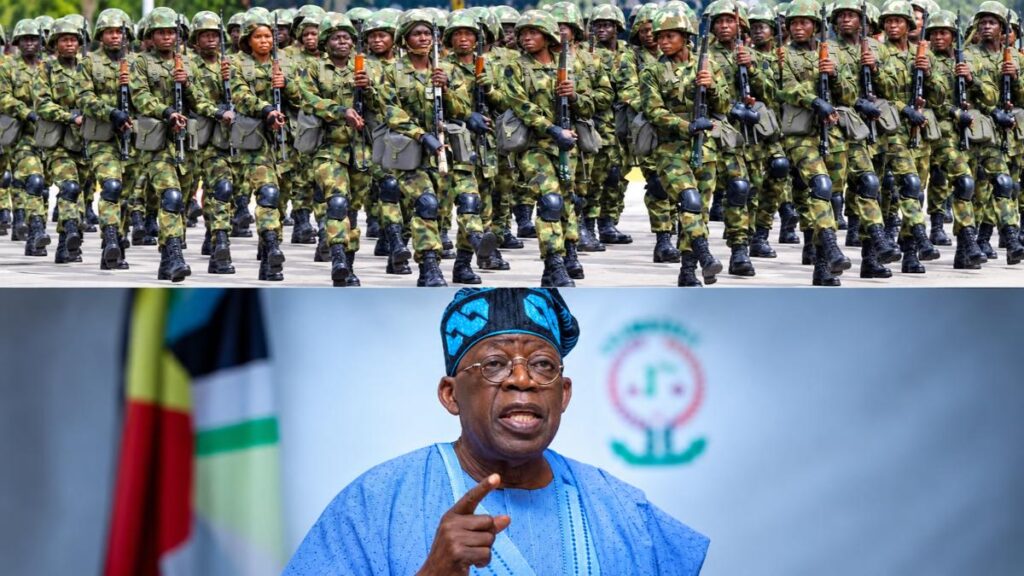
Tinubu disclosed this in a post on his official X handle, saying the development would enhance the military‘s capacity to respond quickly and decisively when Nigerians are threatened. His words were direct. “Our troops are now closer to vulnerable communities in these areas,” he said, “strengthening our ability to respond swiftly and decisively when our people are threatened.”
Zamfara and Kebbi have recorded persistent attacks by armed bandits and kidnappers across the North-West region. Several communities there have faced abductions and the disruption of farming activity, leaving residents unable to work their land safely. Zamfara alone has been identified by security analysts as one of Nigeria’s most heavily affected states in the decade-long banditry crisis. The new formations are intended to close the gap between soldiers and the communities they protect.
Beyond troop deployments, the president said the government is speeding up the construction of barracks and military depots in Abuja, Ekiti, Ebonyi, and Kogi. He added that the facility in Osun has already been completed.
Tinubu linked the ongoing construction of military facilities to the need to provide better working and living conditions for personnel. “As we demand more from our men and women in uniform, we must do more to support them and their families,” he said.
Sunday’s announcement connects to a broader restructuring of the Nigerian Army that Tinubu approved earlier in the year. The federal government was fast-tracking construction of new barracks and depots across multiple states as part of that wider push. The new formations announced Sunday are expected to complement that restructuring by increasing the Army’s presence at the community level.
That earlier expansion created new divisional headquarters in Makurdi, Ilorin, Jalingo, and Benin City. The 5 Division based in Makurdi covers Benue, Nasarawa, and Kogi states. The 9 Division in Ilorin covers Kwara and Niger states, and the 10 Division has its headquarters in Jalingo, covering Taraba and Adamawa states.
The Army is also expected to establish the 83 Division in Benin City to cover Edo, Delta, and Bayelsa states, extending the restructuring to the South-South. Other existing formations have been reorganized to improve coordination between commands and the areas under their responsibility.
Tinubu also spoke on Sunday about a recent salary increase for military personnel. He said the pay increase was making a difference in the lives of servicemen, women, and their families. “Over the past few days, servicemen and women of the Armed Forces have shared what the recent pay increase means for them and their families. I am glad it is making a difference,” he said.
He stressed that the sacrifices made by members of the Armed Forces also affected their families. “Every deployment is a sacrifice made by a family too,” the president said.
He said his responsibility as Commander-in-Chief was to ensure that the Armed Forces had the resources and support required to perform their duties and that Nigeria must stand firmly behind the families of military personnel who remain at home.
The expansion to 12 Army divisions forms part of the administration’s broader security program, which also includes the recruitment of additional personnel and investment in military platforms and operational equipment. Tinubu said the new deployments bring soldiers physically closer to communities that are at risk, improving the military’s ability to act quickly when lives are endangered. Chief of Army Staff Lieutenant General Oluyemi Oyewole has been publicly identified as the officer overseeing the implementation of the divisional expansion.
What remains unaddressed is a timeline for completing the barracks and depots in Abuja, Ekiti, Ebonyi, and Kogi. No commissioning date has been announced for any of the four outstanding facilities. The Nigerian Army formations now active in Zamfara, Kebbi, Oyo, and Osun begin operating without a stated strength figure or command structure made public.