


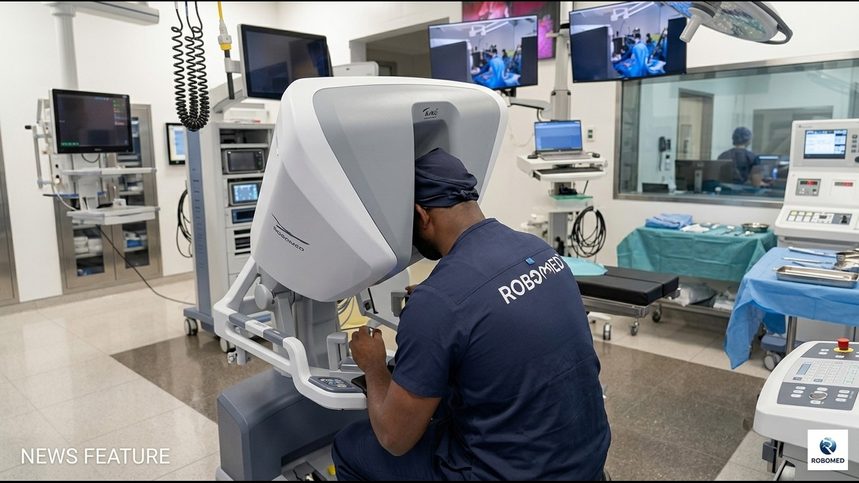
A kidney cancer patient in Abuja received a successful operation while the surgeon performing it sat at a console 500 kilometers away in Mowe, Ogun State, and never entered the same room.
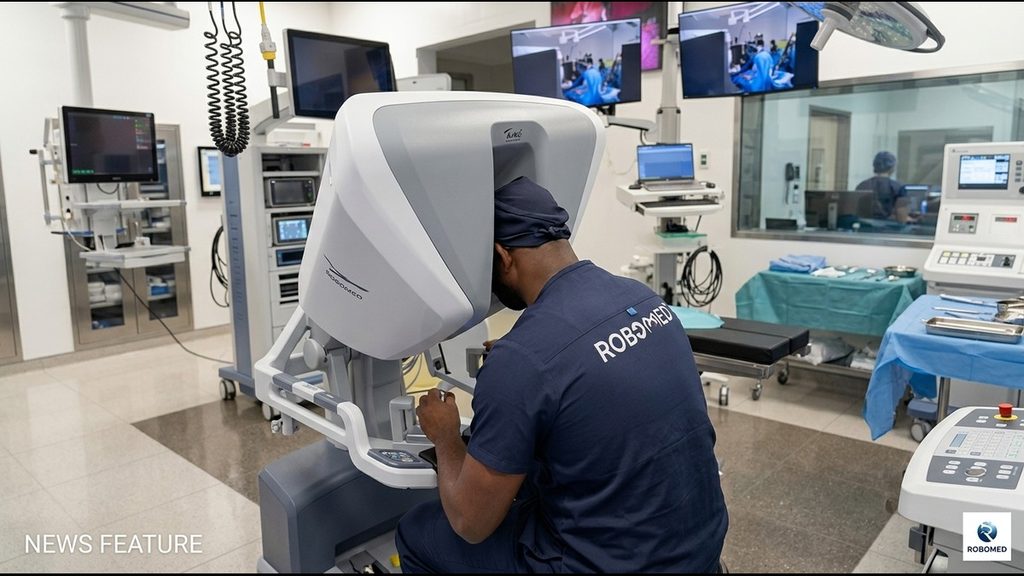
The procedure was a robot-assisted right radical nephrectomy, which involved removing a cancerous tumor from the patient’s kidney. Redeemer’s Health Village and RoboMed Global carried it out in collaboration, with the patient at Nisa Premier Hospital in Abuja while the surgeon controlled a Toumai robotic system from Mowe.
Redeemer’s Health Village described the development as the first telesurgery procedure in West Africa. For Nigeria, it marks territory no surgeon in the country had previously covered.
Professor Obi Ekwenna-Davis, a professor of urology and transplantation and co-founder of RoboMed Global, led the operation.
Davis confirmed the scope of what was done: “The procedure we did was a telesurgery procedure where we were able to operate on a patient in Abuja, 500 kilometers away.”
The operation, which lasted approximately three hours, was carried out using the Chinese-made Toumai robotic surgical system. A multidisciplinary team worked across both locations throughout the procedure, with medical and operations personnel at Redeemer’s Health Village collaborating with staff at Nisa Premier Hospital and technology partners.
Starlink provided the primary internet connection for the procedure, while MTN broadband served as a backup. Stable communication was essential because the surgeon’s commands needed to reach the robotic system in Abuja in real time. The surgery included brief pauses to check the equipment and ensure the system was functioning properly.
Ekwenna-Davis said the patient was in good condition after the operation and was expected to be discharged within 24 hours. That outcome is among the details most outlets placed deep in their coverage.
Davis, a US-based surgeon, said the technology could allow Nigerians to access specialised expertise without travelling abroad and could also create opportunities for Nigerian medical professionals in the diaspora to contribute their skills remotely. “This is just the beginning,” he said. “It is a test, a pilot, of how innovation and technology can really help patients.”
Dr. Adedamola Dada, Chief Executive Officer of Redeemer’s Health Village, described the procedure as the first telesurgery in West Africa and said the initiative was designed to demonstrate how modern healthcare technology could improve access to specialized treatment in Nigeria and help reduce medical tourism.
The Toumai robotic system received approval for clinical use from NAFDAC, Nigeria’s drug and medical-device regulator, at the end of December 2025, an approval the operators presented as the first for a robotic surgery platform in West Africa.
Ekwenna-Davis acknowledged that connectivity disruptions and weather conditions could pose challenges as the technology develops. Those constraints remain unresolved for any future rollout across Nigeria’s wider hospital network, where reliable high-speed internet access cannot be taken for granted.
According to Ekwenna-Davis, the technology could allow Nigerians to receive specialist surgical expertise without having to travel abroad, removing a barrier that has historically made advanced medical care the preserve of those with the financial means to seek it elsewhere. It could also create opportunities for Nigerian medical professionals in the diaspora to provide expertise to patients back home remotely, keeping their skills and knowledge connected to a healthcare system that needs both.
Dr. Dada called for government support in developing local expertise through scholarships and training programs for surgeons, nurses, and biomedical engineers. The appeal was practical rather than aspirational. Without a pipeline of trained local professionals who can operate, maintain, and build on the technology, the gains demonstrated on Saturday risk remaining a one-off achievement rather than the foundation of something replicable at scale.
Saturday’s tele-robotic surgery in Abuja demonstrated that the gap between a specialist and a patient no longer has to be measured in distance. What it now needs to demonstrate, with time and investment, is that it does not have to be measured in occasion either.