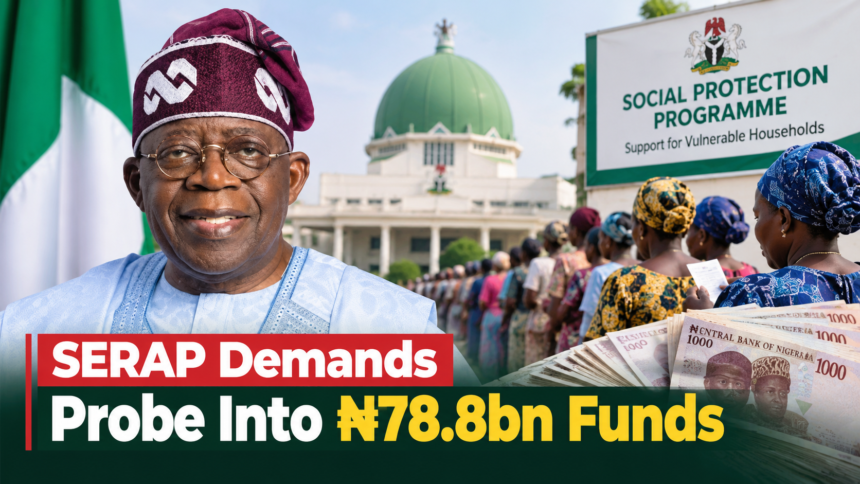
SERAP N78.8bn probe: The Socio-Economic Rights and Accountability Project has urged President Bola Tinubu to order an immediate investigation into more than ₦78.8 billion linked to Nigeria’s federal cash transfer and social protection programmes.
The demand follows findings in the 2024 Annual Report of the Auditor-General of the Federation, which raised concerns about missing records, weak financial controls and payments that auditors could not adequately verify.
SERAP’s demand came in a letter dated September 5, 2026, signed by its Deputy Director, Kolawole Oluwadare. The organisation called on the President to direct the Ministry of Humanitarian Affairs and Poverty Reduction, the National Cash Transfer Office (NCTO) and the National Social Safety Nets Coordinating Office (NASSCO) to account for the funds and make relevant records available to the public.
The organisation has also given the government seven days to respond to its demands, warning that it could consider legal action if the issues are not addressed.
What the SERAP N78.8bn probe is about
The figure of more than ₦78.8 billion comes from several financial issues highlighted by the Auditor-General and subsequently raised by SERAP.
The audit findings cover transactions from different periods between January 2023 and December 31, 2024.
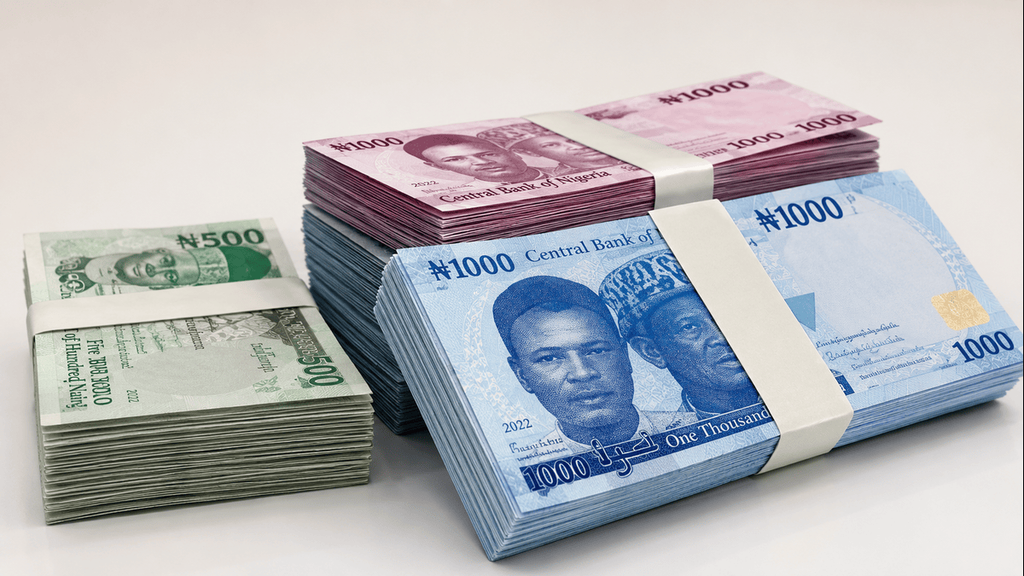
One of the biggest concerns involves ₦33.751 billion in electronic cash transfers reportedly made to 3,295,207 households and beneficiaries across 35 states in 2023.
According to the audit concerns cited by SERAP, the NCTO did not provide sufficient evidence showing that the beneficiaries actually received the money. Auditors also reportedly could not obtain the relevant REMITA statements needed to authenticate and reconcile the payments.
That has prompted SERAP to demand a complete audit trail showing who received the funds, how payments were authorised, how beneficiaries were verified and how the transactions were reconciled with government beneficiary databases.
The group wants the government to reconcile the payments with the National Social Register and National Beneficiary Register. It also wants independent verification of beneficiaries to establish whether there were duplicate, fictitious, deceased or otherwise ineligible recipients.
Auditor-General findings raise wider questions
The cash transfers are only one part of the concerns.
SERAP also pointed to ₦36.744 billion in payments made without prepayment or internal audit checks, saying the transactions raised questions about compliance with financial regulations.
Another ₦4.616 billion was reportedly spent without adequate supporting documentation. SERAP said the Auditor-General expressed concern that the money could have been diverted, although any allegation of diversion would still require proper investigation and evidence before responsibility can be established.
The audit findings also included ₦350.182 million reportedly released to state coordinators for the enrolment of unbanked beneficiaries without adequate beneficiary lists, acknowledgements or other supporting records.
There was also a reported ₦89.511 million in payments for store items that auditors could not verify as properly delivered or entered into the relevant store ledger. SERAP said the audit noted that the store ledger had not been updated since 2020.
In addition, ₦17.422 million was reportedly spent through cash advances to staff for diesel purchases, while concerns were raised about other payments and advances connected to programme implementation.
SERAP wants NCTO and NASSCO records published
SERAP is asking the Federal Government to go beyond investigating the transactions. The organisation wants detailed information on beneficiaries, amounts paid, payment dates, verification procedures, authorisations, failed or reversed transactions and funds returned to the Treasury.
It has also called for the publication of sufficiently detailed but anonymised beneficiary information so that transparency can be improved without unnecessarily exposing the personal information of vulnerable Nigerians.
For SERAP, the central issue is whether money allocated to assist poor and vulnerable households can be properly traced from government accounts to the people it was intended to support.
The organisation has also urged anti-corruption agencies to investigate ₦76.24 billion in questionable or unaccounted-for expenditure at the NCTO and another ₦2.55 billion at NASSCO. It wants any money found to have been improperly spent, diverted or lost to be recovered and returned to the Treasury.
Why the social protection investigation matters
Nigeria’s cash transfer programmes are designed to provide financial assistance to vulnerable households, making accountability particularly important when large sums of public money are involved.
For beneficiaries, the controversy is not simply about government accounting procedures. It raises a more practical question: did the money released for social protection actually reach the people it was intended to help?
SERAP has therefore asked the government to establish an independent complaints mechanism for people listed as beneficiaries who say they did not receive payments. It also wants concerns involving bank accounts or identities allegedly used without the knowledge of their owners to be investigated.
At the same time, the audit findings should not automatically be treated as proof that the entire ₦78.8 billion was stolen. The issues identified include unaccounted-for expenditure, missing documentation, weak controls and payments that auditors could not sufficiently verify. Determining whether any money was actually diverted, misappropriated or fraudulently obtained requires further investigation.
Tinubu faces seven-day call for action
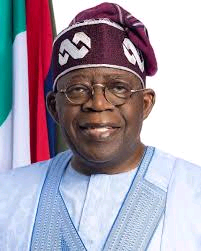
SERAP has asked President Tinubu to ensure that the relevant ministries and agencies provide answers and that appropriate anti-corruption bodies investigate any suspected wrongdoing.
The organisation said individuals found responsible should face sanctions or prosecution where sufficient admissible evidence establishes their culpability, regardless of their position or status.It also wants the government to publish details of any recovered funds, including the amount recovered, date of recovery, institution responsible and Treasury account into which the money was returned.
SERAP said it would consider further legal measures, including possible proceedings before the ECOWAS Court and the World Bank Accountability Mechanism, if the government does not respond to its demands within seven days.
The next step will therefore be closely watched: whether the Federal Government provides the requested records, launches a formal investigation and establishes what happened to the funds identified in the Auditor-General’s findings.
For now, the central demand from SERAP is straightforward, every naira allocated to Nigeria’s social protection programmes should be traceable, properly documented and shown to have reached its legitimate purpose.