



Bosun Tijani has withdrawn from the ITU Deputy Secretary-General race, choosing to focus on Nigeria’s digital transformation projects, including the 90,000km fibre rollout.
Bosun Tijani has withdrawn from the ITU Deputy Secretary-General race, ending Nigeria’s bid for the senior international telecommunications position ahead of the International Telecommunication Union’s 2026 Plenipotentiary Conference in Doha, Qatar.
Nigeria’s Minister of Communications, Innovation and Digital Economy announced his decision on Friday, September 11, saying he reached it after careful consideration. Rather than continue the campaign for the global position, Tijani said he believes his most important contribution at this stage is to remain in Nigeria and focus on major digital transformation projects already underway.
The decision comes months after President Bola Tinubu nominated Tijani for the position. The ITU had formally listed him as Nigeria’s candidate for Deputy Secretary-General ahead of the conference scheduled for November.
Bosun Tijani withdraws from ITU contest

Tijani’s withdrawal brings an early end to what had been a significant international bid for Nigeria.
In his explanation, the minister acknowledged that the ITU position was attractive both personally and nationally. He noted that winning would have given Nigeria the opportunity to have one of its citizens serve as an elected official of the ITU for the first time.
However, Tijani said the demands of his current role in Nigeria outweighed the opportunity to pursue the international position.
His decision was therefore presented not as a rejection of the ITU or a loss of interest in international digital policy, but as a choice to concentrate on projects he believes require his attention at home.
The ITU had listed Tijani as Nigeria’s candidate, with the organisation’s 2026 Plenipotentiary Conference set to determine its next leadership arrangements. The conference will take place in Doha from November 9 to 27, 2026.
Why the ITU position mattered to Nigeria
The Deputy Secretary-General position is one of the senior elected offices within the ITU, a United Nations specialised agency responsible for international cooperation on information and communication technologies.

For Nigeria, Tijani’s candidacy represented more than an individual political or professional opportunity. It offered the country a chance to play a more prominent role in shaping global conversations around telecommunications, digital inclusion, innovation and emerging technologies.
Tijani had also built a growing profile within the ITU during his time as minister.
In 2025, he served as Vice Chair of the ITU Council, while Nigeria also secured a leadership role on the Council after decades without a comparable position, according to reports on his international engagements. He was later appointed to the Digital Innovation Board of the Innovation and Entrepreneurship Alliance for Digital Development.
In April 2026, Nigeria’s Federal Ministry of Communications, Innovation and Digital Economy also announced that Tijani had been appointed Chair of the ITU Council for 2026.
Those roles helped strengthen Nigeria’s visibility within the global telecommunications community.
Tijani chooses Nigeria’s digital projects

The biggest factor behind the withdrawal appears to be the scale of the work still facing the ministry.
Tijani pointed specifically to Project BRIDGE, the Federal Government’s planned 90,000-kilometre open-access fibre network, as one of the programmes requiring his attention.
The project is designed to expand broadband infrastructure and improve connectivity across the country. The government has described the fibre rollout as a major part of its effort to close Nigeria’s digital divide and create stronger foundations for the digital economy.
Tijani also identified the National Universal Connectivity Access Programme as another priority. The programme is aimed at extending mobile coverage to underserved communities through additional telecommunications infrastructure.
Other projects he mentioned include two communications satellites, the development of a national alphanumeric postcode system and Nigeria Web Design Standards.
Together, these initiatives point to the broader challenge facing Nigeria: building the physical and digital infrastructure needed to support a modern economy while ensuring that more Nigerians can access reliable connectivity.
What Bosun Tijani’s decision means
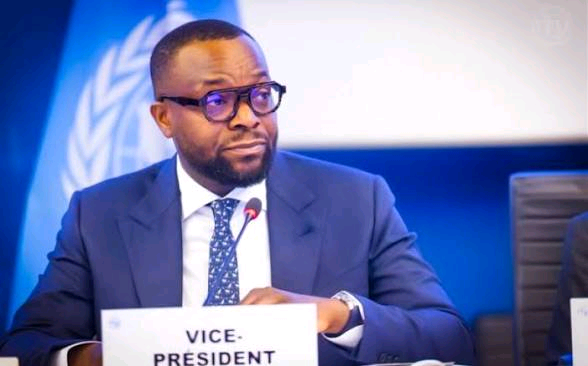
Tijani’s decision means Nigeria will no longer contest the Deputy Secretary-General election with his candidacy.
The withdrawal also shifts attention back to his responsibilities as minister, particularly the delivery of the Federal Government’s digital economy agenda.
For the administration, the immediate challenge will be turning ambitious plans into projects that Nigerians can see and use. Fibre infrastructure, wider mobile coverage, satellite communications and digital standards are not simply policy issues. Their success could affect internet access, business operations, education, government services and the wider technology sector.
That makes Tijani’s decision significant beyond the ITU race itself.
Rather than moving to an international post at a time when Nigeria is pursuing an ambitious connectivity programme, he has chosen to remain involved in the implementation of those domestic plans.
Nigeria’s ITU ambitions continue beyond the race

Although Tijani has withdrawn from the Deputy Secretary-General contest, Nigeria’s engagement with the ITU is not ending.
The country remains a member of the organisation and continues to participate in its Council and other activities. The ITU itself brings together governments and organisations around global telecommunications and digital technology policy, making continued Nigerian participation important to the country’s international technology interests.
Tijani’s withdrawal therefore closes one chapter of Nigeria’s current ITU ambitions, but it does not remove the country from the wider global digital conversation.
For now, the minister’s message is clear: the priority is Nigeria.
With the 90,000-kilometre fibre plan, universal connectivity initiatives, satellite projects and other digital programmes ahead, Tijani has chosen to concentrate on the work already on his desk rather than pursue a new international office.
The ITU race may have ended for him, but the much bigger test will be whether the digital projects he has chosen to prioritise can deliver measurable improvements for Nigerians.