



Minna curfew has been relaxed by Governor Umaru Bago after three days of special prayers for 37 detainees who died in NSCDC custody as investigations continue.
Minna curfew being relaxed by Niger State Governor Mohammed Umaru Bago from Monday, September 21, allowing residents of the state capital to return to normal activities after days of heightened tension over the deaths of 37 detainees in the custody of the Nigeria Security and Civil Defence Corps (NSCDC).
The governor announced the relaxation after attending a three-day special prayer session held in honour of those who died in custody. The development comes as investigations continue into the circumstances surrounding the deaths, which triggered protests and unrest in parts of Minna last week.
Minna Curfew Relaxed After Three-Day Prayers

Bago announced the decision after participating in the three-day Fidau prayers held for the deceased at Tunga Central Mosque in Minna.
According to reports, the prayers were organised to honour those who lost their lives, console their families and pray for peace in Niger State and Nigeria.
The governor said the curfew would be lifted on Monday following what he described as cooperation and compliance by residents during the restriction. The relaxation is expected to allow businesses, transport operators and other residents to resume their regular activities in the state capital.
The initial curfew was imposed on Friday, September 18, after protests linked to the deaths resulted in vandalism and damage to public and private property in parts of Minna.
Bago had ordered residents to remain indoors and directed security agencies to enforce the restriction as the government worked to restore calm.
Why the Minna Curfew Was Imposed
The curfew followed growing tension after 37 people died while being held by the NSCDC following enforcement operations against suspected illegal mining.
The detainees were reportedly arrested during operations conducted around the M.I. Wushishi and Lukoto areas of Niger State on September 15 and 16. Their deaths were discovered on September 17, prompting public anger and protests in Minna.
The unrest reportedly affected areas including Tunga, Maitumbi and Bosso Road. Reports also indicated that government property, vehicles, businesses and other facilities were damaged during the protests. The governor said the curfew was necessary to prevent further destruction and restore order.
The measure was initially announced as a 24-hour curfew, with the governor later indicating that restrictions could move to a dusk-to-dawn arrangement as calm returned. The latest directive now provides for the relaxation of the curfew from Monday.
What Happened to the 37 Detainees?
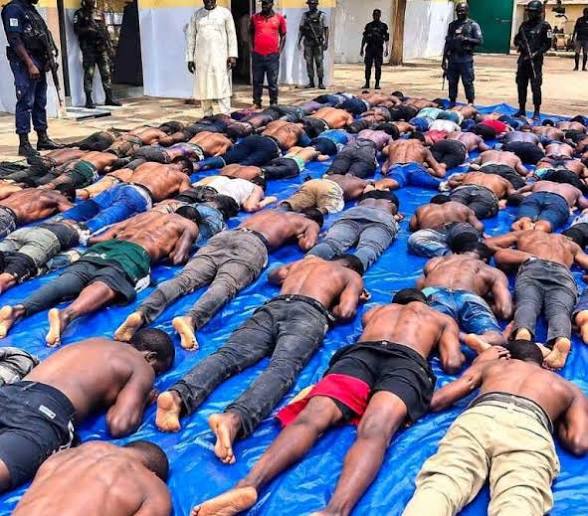
The circumstances surrounding the deaths remain under investigation, and authorities have cautioned against drawing conclusions before the inquiries are completed.
Initial reports from the NSCDC suggested that a suspected disease outbreak could have been involved. However, the agency later acknowledged that the actual cause had not been established and that medical examinations were necessary.
Governor Bago said possible factors being examined included overcrowding and exposure to hazardous substances associated with illegal mining. Forensic and medical examinations, including autopsies, were ordered to help determine what happened.
There have also been conflicting accounts about the identities and circumstances of those who died. During the three-day prayers, Bago disclosed that preliminary information indicated that not all 37 deceased persons were artisanal miners.
He cited the case of another detainee who had reportedly been held over an unrelated allegation, underscoring why authorities are seeking a fuller account of everyone who was in custody at the facility.
Reports have also raised questions about the number of people who were initially detained and the whereabouts of some survivors or other detainees. Those questions are among the issues that investigators are expected to address.
Investigation Into NSCDC Custody Deaths Continues
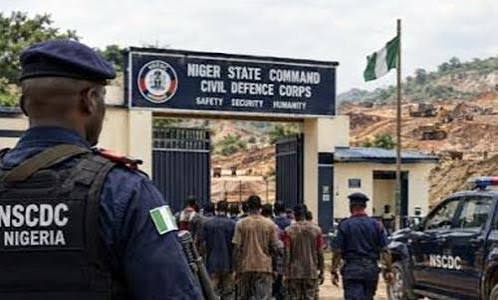
The deaths have prompted investigations at both the state and federal levels.The Federal Government ordered a full investigation, while the Niger State NSCDC Commandant and other officers were suspended to facilitate inquiries. The Interior Ministry also constituted an independent committee to investigate the circumstances surrounding the deaths.
The National Human Rights Commission has also launched a preliminary investigation, stressing that allegations of illegal mining do not remove the fundamental rights of people held in custody.
President Bola Tinubu has directed that the circumstances surrounding the deaths be investigated, while the government has maintained that anyone found responsible should face appropriate consequences.
Bago Promises Support for Bereaved Families
Beyond the investigation, the Niger State Government has indicated that support will be provided to families affected by the tragedy.
Bago said the government would provide palliatives and other assistance to families of the deceased, while survivors receiving medical treatment would also be supported.
The Emir of Minna, Umar Farouk Bahago, was named to oversee the distribution of assistance to affected families.

For Minna residents, the relaxation of the curfew marks a return toward normal daily life after several tense days. But the lifting of the restriction does not bring the wider matter to an end.
The central questions surrounding how 37 people died in NSCDC custody remain subject to investigation, while families and the wider public continue to await clear findings on what happened inside the detention facility.
With the curfew now relaxed, attention is likely to shift increasingly toward the ongoing investigations and the eventual findings of the committees examining the deaths.