

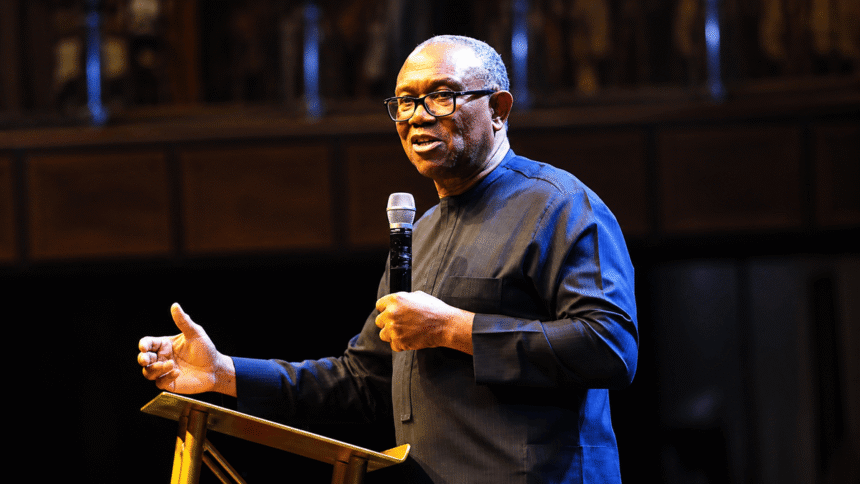
The statement came without theatrical buildup. Obi, a former governor of Anambra State, told the program that he had been petitioned and investigated in multiple places and that he remained uncertain about what could happen to him before the election season closed.
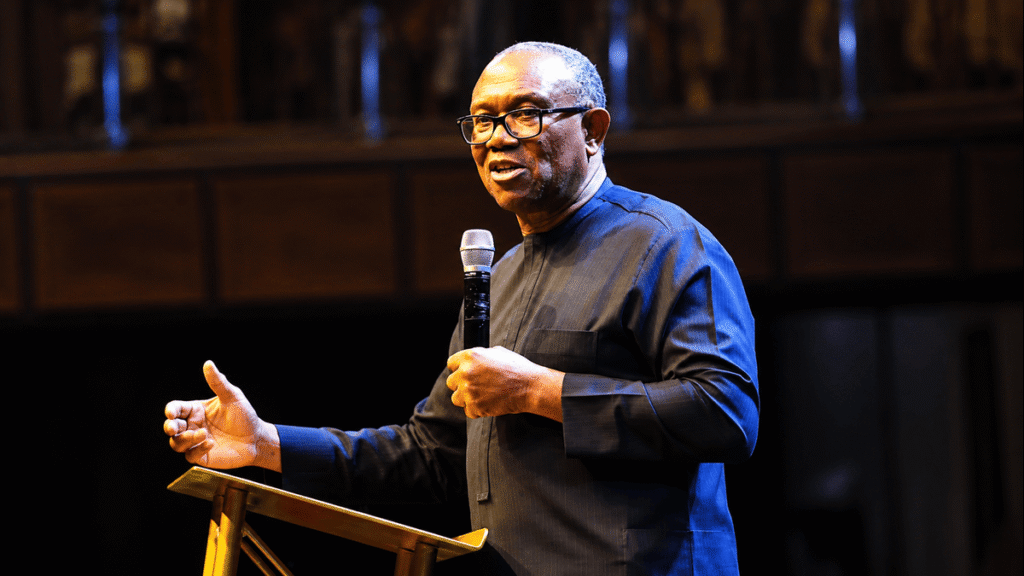
“As I speak to you, I have also been petitioned; I’ve been investigated everywhere,” he said during the interview. “Like I said before, I’m not even sure whether I’ll still be alive at the end of this.”
No names were attached to the petitions. No specific institution was identified as the source of the investigations Obi referenced. The NDC candidate did not say who he believed posed a threat to his safety or his continued participation in the race.
What he did say was where he was placing his trust. Obi confirmed he was relying on divine protection as the campaign period intensified, telling the Arise TV interviewer that he remained unsure of exactly what was unfolding around him. The interview, which aired on Thursday, drew immediate attention on Nigerian social media platforms and among political commentators who noted the gravity of the remarks.
“I’m praying to God for His protection because at this stage, I’m not sure what is happening,” he said. The statement, delivered without visible agitation, left the burden of interpretation entirely with the viewer.
Beyond his own safety, Obi used the Thursday interview to call on Nigeria’s serving governors to allow presidential candidates and other political aspirants to move and campaign without obstruction ahead of the 2027 polls. He acknowledged that governors had the right to back candidates of their choosing but said that right should not translate into blocking others from reaching voters in their states.
“Some of them will be campaigning for the presidency tomorrow. They will be campaigning for other offices tomorrow. Let’s have peace,” he told the program. The appeal was directed at political actors across party lines.
To illustrate the standard he was proposing, Obi pointed to his own record. During his time as Anambra governor, he said, politicians from rival parties were allowed to campaign in the state even when those campaigns were targeted at unseating him. He offered this as the template he expected others to follow now that he was the candidate seeking access, not the incumbent controlling it.
The interview covered ground that will matter to Nigerians watching the 2027 race take shape. A presidential candidate raising personal safety concerns in a nationally televised setting is not a routine moment. It places a question on the table that the political environment has not yet answered: whether campaigning in Nigeria ahead of 2027 carries physical risk for those outside the circle of incumbency. Obi ran on the Labour Party platform in the 2023 presidential election, finishing third in the official results behind Bola Tinubu of the APC and Atiku Abubakar of the PDP, a contest that itself produced protracted legal disputes before the courts.
Obi has been petitioned and investigated, by his own account, in multiple locations. He did not disclose the nature of those petitions or identify which agencies or courts had been drawn into the process. That absence of detail is itself a data point for voters tracking how the pre-election period is developing.
His call for peace and free access for all candidates is one that governors, security agencies, and the Independent National Electoral Commission will each have reason to respond to before the election season advances further. None of them had responded publicly to Thursday’s remarks by the time this report was filed.
What remains on record is what the NDC candidate said in his own words on Arise TV. Peter Obi, running for the presidency of Nigeria in 2027, said he does not know for certain that he will be alive to see that election. He said he has been petitioned and investigated everywhere. And he said he is praying.