
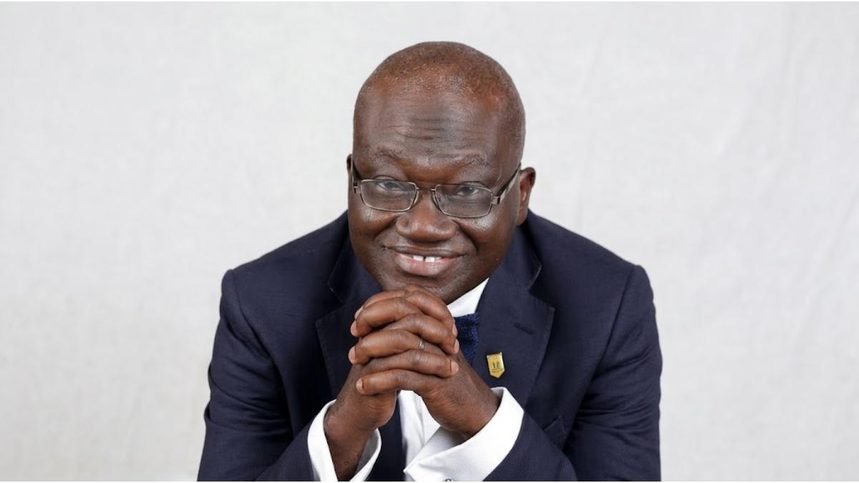
Aremu told Arise TV Morning Show that the figure signals a measurable shift in economic activity across both public and private sectors, with modular refineries, manufacturing expansion, and backward integration by industries all contributing to increased hiring in different parts of the economy.
“Today unemployment is about 5% officially,” Aremu said. “And that’s quite remarkable. You discover that unemployment dropped compared to what it used to be in double digits, which means there’s an increasing level of activity and employment, both in public and private sectors.”
Alongside the employment data, the Federal Government has paid N758 billion in intervention bonds to clear inherited pension liabilities dating back to 2007, with payments reaching 957,045 beneficiaries across Nigeria, Aremu confirmed during the same interview.
Five percent is a number that would have been difficult to project three years ago. The NBS, applying the ILO framework rather than the older national methodology, now records that figure as the official rate, Aremu noted, adding that the shift in methodology also reflects a more internationally comparable standard that allows Nigeria’s labor data to be assessed alongside peer economies in Africa and beyond.
On the downstream sector, Aremu said modular refineries coming on stream have created new employment. Manufacturing, he told the program, has reported positive job creation prospects, though he tied sustainable industrial growth directly to solving Nigeria’s power problem. He pointed to consistent power supply as the single most immediate constraint facing factory operators seeking to expand their workforce.
“You can’t have sustainable industrialization without electrification,” Aremu said, identifying energy access as the central variable that will determine whether current employment gains hold or reverse as industrial activity scales up across the country.
Industries engaging in backward integration, sourcing raw materials locally because of exchange rate pressures, are also generating jobs at the production input level, Aremu noted at the briefing. That dynamic, he said, was not policy-driven but market-driven, and its sustainability depends on the exchange rate environment remaining stable. He cited agriculture-linked manufacturing as one area where local sourcing has visibly expanded headcount in recent months.
The “Nigerian First” policy, Aremu said, is beginning to gain traction, and he welcomed it as a structural tool for directing economic activity toward local producers. Sustained job creation, he added, “has to be deliberate” and must be anchored by state-level industrial policies, not federal interventions alone.
On pensions, Aremu, who also sits on the presidential campaign council, commended the N758 billion intervention bond as a resolution of a liability that had accumulated since 2007. The payment, he confirmed, covered 957,045 pension beneficiaries and was described as an inherited obligation the current administration chose to settle rather than defer to a subsequent government.
Aremu, speaking in his role as MINILS Director General, also called for a job- and wage-led economic recovery, telling the program that organized labor must engage the government for a negotiated new minimum wage rather than waiting on executive decisions. He acknowledged that the Tinubu administration has initiated two minimum wage reviews in three years.
Labour issues, he said, would shape the 2027 election cycle. All leading candidates, Aremu told the program, should present scorecards on decent and secured jobs rather than promises. Voters, he argued, have enough basis now to demand accountability on employment, wages, and pension delivery.
President Tinubu’s reform record, Aremu said, differed from previous administrations in one specific way: it did not rely on mass retrenchment and downsizing to achieve fiscal targets. Job retention in the public sector, alongside expansion, was presented as a distinguishing feature of the current approach to economic reform.
The five percent unemployment figure, measured by NBS under the ILO standard, remains the central claim. Aremu did not present projections or forward guidance, and the NBS has not independently issued a new labor force report at the time of the interview.