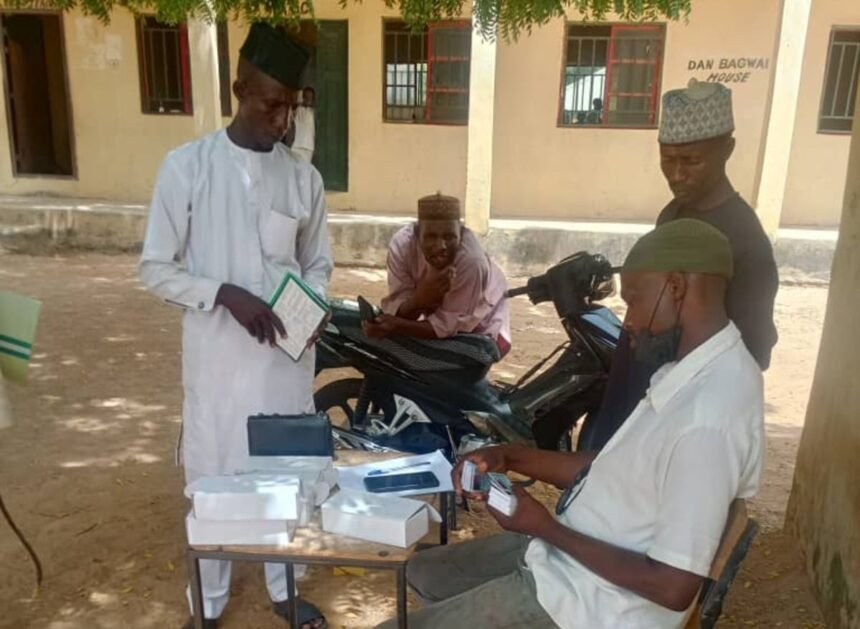
The Independent National Electoral Commission has opened a fresh opportunity for registered voters in Kano State to collect their Permanent Voter Cards and verify their personal details, with the exercise now underway across the state’s 44 local government areas.
The exercise, which was ongoing on Friday, October 9, 2026, combines PVC collection with the public display of the preliminary register of voters, allowing eligible citizens to check their records and raise claims or objections where necessary.
The initiative is part of the commission’s efforts to improve the accuracy of the voter register and address discrepancies before the register is finalised for electoral purposes.
The display of the preliminary register gives voters an opportunity to confirm that their names and other relevant details have been correctly captured. It also allows them to identify omissions, incorrect entries and other errors that may require official attention.
For registered voters who have yet to collect their PVCs, the ongoing exercise provides an opportunity to obtain their cards in preparation for future elections.
INEC is conducting the exercise throughout Kano State, which has 44 local government areas. However, the information available did not specify the closing date, collection hours or the precise arrangements at individual registration and collection centres.
The commission’s activities come as preparations for future electoral exercises make voter records, card collection and the verification of personal information important issues for eligible citizens.
The preliminary register is a key component of the electoral process because it gives voters an opportunity to identify possible errors before the register is finalised. Such discrepancies may include misspelt names, incorrect personal information, missing entries or other details that do not accurately reflect a voter’s registration records.
By allowing claims and objections during the display period, the process provides a mechanism for eligible voters to draw attention to problems requiring correction through the commission’s established procedures.
Voters who discover errors in their records are expected to follow INEC’s official instructions for submitting claims or objections rather than assume that the discrepancies will be corrected automatically.
Similarly, those who have completed registration but have not collected their PVCs need to establish the applicable collection arrangements and comply with the commission’s requirements.
The exercise also highlights the distinction between verifying voter information and collecting a PVC. While the display of the preliminary register allows voters to inspect their records and raise concerns, PVC collection enables registered voters who have yet to receive their cards to obtain them through the commission’s designated process.
Although the exercise covers all 44 local government areas, further details on the specific locations, documentation requirements and deadline were not included in the information available.
Eligible voters are therefore advised to rely on official INEC announcements for confirmation of collection points, operating arrangements and the period within which claims or objections may be submitted.
The accuracy of the voter register remains important to electoral administration because it helps the commission maintain reliable records of eligible voters and identify discrepancies that may affect the integrity of the process.
The collection of PVCs is also an important part of preparing registered citizens for participation in elections, although collecting a card does not by itself guarantee that every other electoral requirement has been met.
INEC has continued to conduct voter registration and verification activities as part of its broader responsibility for administering elections and maintaining voter records. The Kano exercise brings these responsibilities together by providing for both card collection and scrutiny of the preliminary register.
West Trybe reports that the exercise offers registered voters across Kano State an opportunity to collect outstanding PVCs and check their registration details, with public participation in the verification process important to correcting errors and maintaining an accurate voter register ahead of future elections.