Fake payment alerts are becoming a growing concern for Nigerian businesses as fraudsters exploit the country’s increasing reliance on digital transactions to deceive traders, POS operators and online vendors into releasing goods and services without receiving actual payments.
The scam involves presenting fabricated bank notifications, edited transaction screenshots and fake transfer confirmations to convince unsuspecting business owners that a payment has been completed. In reality, the money never reaches the recipient’s account, leaving merchants with financial losses and little opportunity to recover their goods.
The growing threat has also attracted attention from the National Information Technology Development Agency (NITDA), which has identified fake transfer fraud as a challenge to Nigeria’s cashless economy.
Fake Payment Alerts Target Small Businesses
In Nigeria, bank transfers have become a common payment method for everyday purchases, particularly among small businesses, market traders, online vendors and Point of Sale (POS) operators.
However, the convenience of instant transfers has created opportunities for fraudsters who exploit the gap between displaying payment evidence and confirming that money has actually entered the recipient’s account.
According to NITDA, fraudsters present forged or manipulated payment confirmations to collect goods, cash or other services before any money arrives.

In a challenge brief published on its innovation platform on June 24, 2026, the agency described fake transfer fraud as one of the most common and damaging forms of payment fraud affecting Nigeria’s informal and small business economy.
It explained that a customer could show a merchant a transfer-success screen or fabricated debit alert, creating pressure on the seller to complete the transaction before confirming receipt of the funds.
“Editing apps and fake-alert tools make these forgeries trivial to produce and very hard to spot by eye,” NITDA stated.
The agency identified POS and agent-banking operators, micro and small businesses, and online vendors as particularly exposed to the scheme.
For businesses operating on limited profit margins, even one successful fraudulent transaction could result in significant financial setbacks.
How Fraudsters Exploit Bank Transfer Screenshots
Fake payment alerts work by creating the impression that a transaction has been successfully completed when no corresponding credit has entered the seller’s account.
Fraudsters may present screenshots of supposed bank transfers, fabricated SMS notifications, edited transaction receipts or payment-success pages designed to resemble legitimate banking platforms.
Some also rely on pressure and convincing explanations to make sellers release goods quickly.
A customer may insist that a transfer has been completed, show a debit notification on their phone or claim that the recipient’s bank is experiencing network delays.
In other situations, fraudsters may present payment evidence showing a transaction as successful while the merchant’s account remains unchanged.
The danger is that these materials can look convincing, particularly when business owners are attending to several customers or trying to complete transactions quickly.
NITDA noted that the problem extends beyond individual financial losses because merchants who experience such fraud may become reluctant to accept transfers.
This can weaken confidence in digital payments and undermine efforts to expand financial inclusion among small businesses and underserved communities.
CBN Raises Concerns Over Digital Payment Fraud
The Central Bank of Nigeria (CBN) has also recognised the growing risks associated with fraudulent activities across the country’s digital payment system.
On November 26, 2025, the apex bank issued an exposure draft of its Guidelines for Handling Authorised Push Payment (APP) Fraud, inviting financial institutions and members of the public to submit comments.
The proposed framework addresses situations in which customers are manipulated, deceived or persuaded into voluntarily authorising payments to fraudulent accounts.
The CBN explained that such schemes often rely on social engineering, exploiting people’s trust and the perceived finality of digital transactions.
According to the draft guidelines, the rapid adoption of mobile banking, USSD, internet banking and instant transfers has improved financial inclusion and convenience but has also been accompanied by increased electronic fraud.
The proposed measures include stronger fraud detection systems, early-warning mechanisms, suspicious-account monitoring and improved complaint-resolution procedures.
Importantly, the document was issued as an exposure draft for consultation. Its proposed provisions should therefore not be mistaken for confirmed final regulations.
How Nigerian Businesses Can Prevent Fake Transfer Fraud

For merchants, the most reliable protection against fake payment alerts is independent confirmation of incoming funds.
A screenshot displayed by a customer does not establish that the seller has received payment. Neither does a debit notification on the buyer’s phone.
Business owners should open their own banking applications or use trusted banking channels to check their transaction history and available balance before releasing goods.
Where a transfer is delayed, merchants should wait until the actual credit appears rather than relying on explanations from customers.
Businesses that process frequent transfers can also introduce clear payment-verification procedures for employees, cashiers and delivery personnel.
For online vendors, confirming payment before dispatching orders is particularly important. Transaction references and screenshots can be retained for record-keeping, but they should not replace confirmation through the recipient’s financial institution.
For larger transactions, businesses can contact their banks through officially recognised customer-service channels if a payment cannot be confirmed.
What Victims Should Do After a Fake Alert Scam

Businesses that discover they have been deceived should preserve relevant evidence, including transaction screenshots, conversations, telephone numbers, account details and other information connected to the transaction.
They should also contact their financial institutions promptly and report suspected criminal activity to the appropriate law enforcement authorities.
The CBN’s fraud-awareness guidance advises victims to contact their financial institutions and report suspected fraud to relevant authorities, including the Economic and Financial Crimes Commission (EFCC) and the Nigeria Police Force.
In a May 28, 2024 advisory, the EFCC also warned Nigerians about phishing activities involving fraudulent messages, websites and impersonation of legitimate organisations.
The commission urged the public to verify suspicious communications before sharing sensitive financial information or engaging in transactions.
The CBN further provides a complaints procedure for customers who have unresolved disputes with financial institutions. Customers are expected to approach their banks first before escalating unresolved complaints to the apex bank.
Digital Payment Security Remains a Business Priority
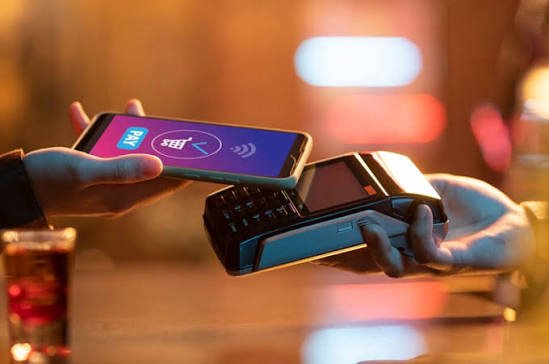
As Nigeria’s digital payment ecosystem continues to expand, protecting businesses from fraudulent transactions will require more than simply encouraging traders to accept bank transfers.
NITDA’s challenge brief highlights the need for accessible payment-verification solutions that can help ordinary merchants confirm incoming funds quickly, including transactions conducted outside banking applications.
The agency is seeking ways to close this verification gap and strengthen confidence in person-to-merchant digital payments.
For Nigerian businesses, the message is straightforward: a successful transfer notification is not the same as money received.
Until the actual credit reflects in the recipient’s account, the transaction should not be treated as completed.