Rice prices have increased across major Nigerian markets, with foreign rice reaching ₦90,000 for a 50kg bag in Abuja, adding fresh pressure to household food budgets as the festive season approaches.
The latest increase has raised concerns among consumers and retailers, particularly after some foreign rice brands reportedly jumped from ₦68,000 to ₦90,000 within one week. Although locally produced rice has remained relatively cheaper in some markets, traders are concerned that increasing demand could eventually push domestic prices higher.
The development comes amid continued fluctuations in food prices, with market figures indicating that the cost of purchasing essential household staples remains a major concern for Nigerians.
Foreign Rice Prices Jump to ₦90,000 in Abuja
The sharpest reported increase has been recorded in Abuja, where some foreign rice brands that previously sold for approximately ₦68,000 per 50kg bag have climbed to ₦90,000.
A provision seller in Lugbe, Abuja, described his surprise after discovering the increase while attempting to restock his shop.
According to the retailer, the product had initially increased from ₦65,000 to ₦68,000 before climbing further within a week.
He said: “I couldn’t buy it as it was beyond my budget, so I had to buy a different brand for N80,000.”
The retailer explained that he eventually purchased another brand because the price of his preferred product had moved beyond his budget.
The increase has also affected smaller quantities. A local measure of foreign rice in Abuja reportedly rose from ₦2,300 to ₦2,800, representing an additional ₦500 for consumers who purchase rice in smaller quantities.
This means the increase is not limited to households buying complete bags. Consumers who depend on daily or weekly purchases are also facing higher costs.
Rice Prices Across Nigerian Markets
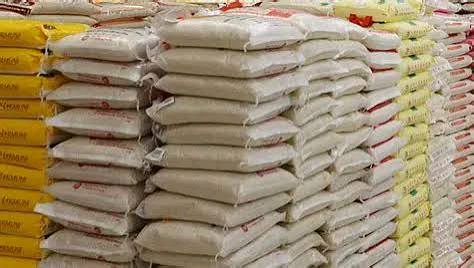
The latest market figures from Useagrios provide another indication of the pressure on rice prices nationwide.
Its November 9, 2026, price report put the average cost of a 50kg bag of rice across 37 Nigerian markets at ₦79,207, representing an 11.8 per cent increase within six days.
Mile 12 Market in Lagos recorded the highest market average at ₦85,744, while Garki Model Market in the Federal Capital Territory recorded ₦84,443.
Other markets also recorded elevated figures.
Oil Mill Market in Rivers State had an average of ₦83,530, while Ogbeogonogo Market in Delta State recorded ₦82,835. Swali Market in Bayelsa State stood at ₦82,797.
Kaduna Central Market recorded one of the lowest averages at ₦74,600.
However, these figures require an important distinction. Useagrios identifies most of its market prices as modelled estimates rather than direct observations. Only two of the 37 market entries were identified as World Food Programme data, while the remaining figures were estimates.
The figures therefore provide an indication of market movements, but should not all be interpreted as prices independently confirmed through physical purchases.
Local Rice Remains Cheaper Than Foreign Brands
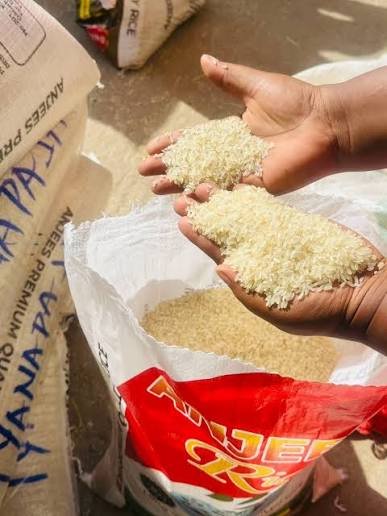
Despite the increase in imported rice prices, locally produced varieties have remained relatively cheaper in Abuja.
Most local rice brands in the market were reportedly selling between ₦63,000 and ₦65,000 per 50kg bag.
This price difference could influence purchasing decisions, particularly among households trying to manage food expenses.
In Lagos, the State Ministry of Agriculture and Food Systems’ October 2026 food price tracker listed imported long-grain rice at ₦53,000 per 50kg bag and imported short-grain rice at ₦51,000.
The figures demonstrate how significantly prices can differ between locations, market conditions and reporting periods.
However, the Lagos government figures are from October and should not be treated as a direct comparison with the November Abuja retail prices.
The growing difference between imported and locally produced rice could also influence demand. If consumers increasingly choose domestic alternatives because of the rising cost of foreign brands, local varieties could experience additional demand.
That possibility has raised concerns among retailers who fear that local rice prices could also increase.
Why Rising Rice Prices Matter Ahead of Christmas
The latest increase comes at a time when households are preparing for increased spending during the Christmas and New Year celebrations.
Rice is one of Nigeria’s major household food staples and is commonly purchased in larger quantities for family consumption, celebrations and social gatherings.
An increase from ₦68,000 to ₦90,000 means consumers now need an additional ₦22,000 to purchase the same 50kg bag of rice at the reported prices.
For families purchasing multiple bags, the difference becomes even more significant.
The increase in smaller measures also means consumers who cannot afford a complete bag may still experience the effect of higher prices.
With food purchases competing against transportation, school expenses, rent and other household obligations, further increases could place additional pressure on family budgets.
Nigeria’s Rice Supply and the Price Challenge

Nigeria has a substantial domestic rice production industry, but local production does not automatically guarantee affordable prices across the country.
The Central Bank of Nigeria’s rice industry overview identifies a gap between domestic production and national consumption demand, highlighting the importance of supply, processing and distribution in meeting the country’s needs.
Transportation expenses, distribution challenges, seasonal supply changes and the cost of processing can all influence the final price consumers pay.
Imported rice prices can also be affected by international supply costs and foreign-exchange movements.
For locally produced rice to remain affordable, increased production must be accompanied by efficient processing, storage, transportation and distribution.
The latest price movement therefore raises a broader question about Nigeria’s ability to maintain affordable staple food supplies despite its domestic agricultural capacity.
As the festive season approaches, consumers will be watching whether the latest increase is temporary or the beginning of another sustained rise in rice prices.