Harry Kane has missed out on the 2026 FIFPRO Men’s World 11 despite winning the Ballon d’Or, making history as the first recipient of football’s most prestigious individual award to be excluded from the players‘ team in the same year since its introduction in 2005.
The Bayern Munich and England striker was among the 26 shortlisted players but failed to secure enough votes to make the final selection, which was announced on Monday, November 9, following voting by professional footballers across the world.
His omission has attracted attention because it breaks a 21-year pattern in which every men’s Ballon d’Or winner had also secured a place in the FIFPRO World 11 during the same calendar year.
Harry Kane’s Ballon d’Or-winning season
Kane’s absence is particularly surprising considering the remarkable campaign that earned him the 2026 Ballon d’Or.
The 33-year-old received the award at the ceremony in London on October 26, becoming the first Englishman to win it since Michael Owen in 2001 and only the fifth English player in history to claim the honour.
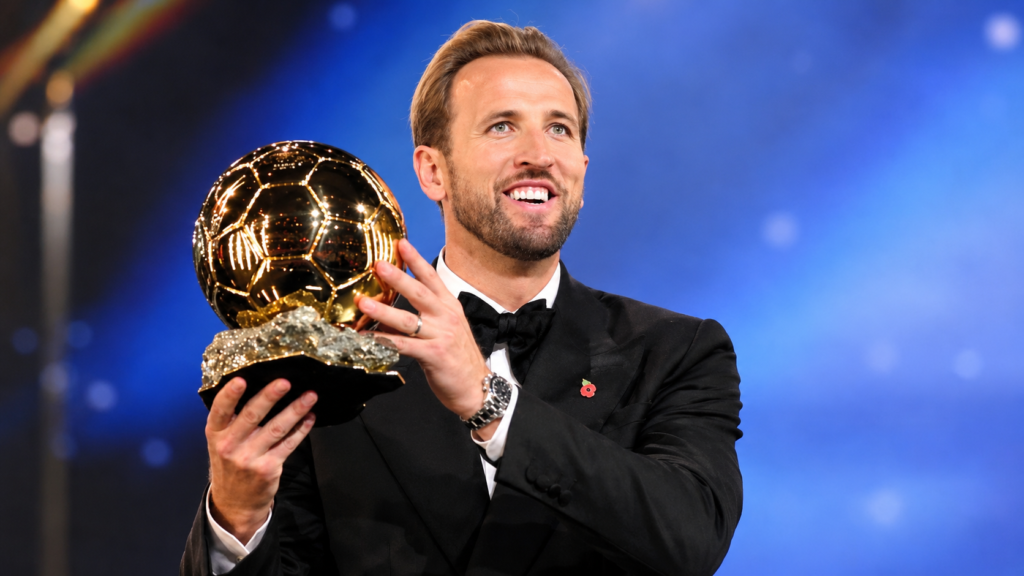
He finished ahead of Real Madrid’s Kylian Mbappe and Barcelona’s Lamine Yamal, who placed second and third respectively.
According to UEFA, Kane scored 73 goals for club and country across all competitions during the 2025/26 campaign.
His performances included 14 goals in the UEFA Champions League, while he also helped Bayern Munich retain their Bundesliga title and secure a domestic treble.
He additionally finished as the German top flight’s leading scorer for the third consecutive season.
The achievements made him one of the standout performers of the campaign and earned him both the Ballon d’Or and the Men’s Striker of the Year award.
However, his individual success was not enough to guarantee recognition in the FIFPRO selection.
Why Harry Kane missed the FIFPRO World 11
The FIFPRO World 11 operates differently from the Ballon d’Or.
Rather than relying on journalists or a panel of selected judges, the team is decided exclusively by professional footballers, who vote for the players they believe delivered the best performances during the assessment period.
According to FIFPRO, 19,806 professional men’s footballers from 73 countries participated in the 2026 men’s selection.
Kane made the final shortlist of 26 players but received 27.6 per cent of the votes from the forwards’ category, narrowly missing out on selection.
Manchester City’s Erling Haaland received 28.4 per cent, while Lionel Messi secured 29.5 per cent. Barcelona’s Lamine Yamal recorded 37.4 per cent, and Mbappe topped the forward voting with 46 per cent.
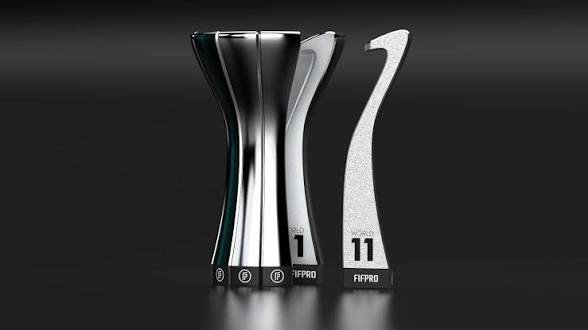
The figures show how competitive the forward category was, with Kane missing out despite receiving a substantial share of the votes.
FIFPRO explained that the selection recognises performances between August 4, 2025, and July 19, 2026. Eligible players must have made at least 30 official appearances during that period.
Voters selected their preferred players across four positions: goalkeeper, defenders, midfielders and forwards. The highest-ranked players in each category earned places, with the remaining position going to the most-voted eligible outfield player.
Who made the 2026 FIFPRO Men’s World 11?
The final team features several of football’s biggest names, including Messi, who returned after missing the previous two editions.
The eight-time Ballon d’Or winner extended his record to 18 appearances in the FIFPRO World 11, having first featured in 2007.
The 2026 selection consists of David Raya in goal, with Pau Cubarsi, Achraf Hakimi and Nuno Mendes forming the defence.Jude Bellingham, Rodri and Vitinha occupy the midfield positions, while Haaland, Mbappe, Messi and Yamal complete the forward line.
Yamal also achieved a remarkable milestone by becoming the first player to receive two FIFPRO World 11 selections before turning 20.
The selection means Kane was left out despite being the reigning Ballon d’Or holder, while Mbappe and Yamal, who finished behind him in the individual award rankings, both secured places.Interestingly, Kane was not the only Bayern Munich player to miss out. His teammates Michael Olise and Dayot Upamecano also failed to make the final team despite being included among the shortlisted candidates.
A historic first for the Ballon d’Or winner
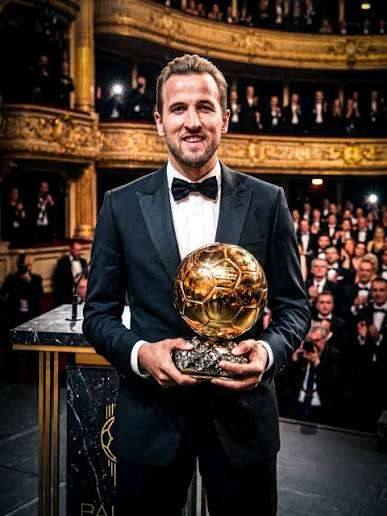
Kane’s omission highlights the difference between individual recognition and peer recognition in football.
Winning the Ballon d’Or reflects a player’s overall standing in the sport, while the FIFPRO World 11 offers a separate assessment based on votes from fellow professionals.
The two honours can recognise different aspects of a player’s performances, and Kane’s situation demonstrates that winning one does not automatically guarantee the other.
For the England captain, the development does not erase an exceptional season or the historic achievement of becoming the first English Ballon d’Or winner in 25 years.
Nevertheless, missing out on the FIFPRO World 11 places his name in an unusual chapter of football history, ending a sequence that had remained intact since the players‘ award was established in 2005.