The Federal Government plans 24-hour electricity supply pilots in the Lagos-Ogun axis and Abuja franchise area as part of a four-pronged strategy to address Nigeria’s persistent power challenges. The initiative, announced by Power Minister Joseph Tegbe, will prioritise major economic centres accounting for more than half of the country’s electricity demand.
Lagos-Ogun, Abuja Selected for 24-Hour Electricity Pilot
The Minister of Power, Joseph Tegbe, disclosed the plan on Thursday, November 12, while speaking at the sixth annual conference of the Power Correspondents Association of Nigeria (PCAN) at Nicon Luxury Hotel, Abuja.
Represented by Martins Olajide, Special Adviser on Administration and Projects at the Ministry of Power, Tegbe explained that the Lagos-Ogun axis and Abuja franchise area would serve as pilot locations for the proposed 24-hour energy zones.
According to the minister, the two areas collectively account for more than 50 per cent of Nigeria’s electricity demand, making them important locations for testing a more reliable electricity supply model.
The government intends to concentrate resources on these high-demand locations by coordinating electricity generation, transmission and distribution around their actual energy requirements.
The initiative is also expected to support businesses, manufacturers and other productive activities that depend on consistent electricity to operate.
Four-Pillar Roadmap to Address Nigeria’s Power Challenges

Beyond the proposed electricity pilots, Tegbe outlined a four-pronged roadmap designed to address the structural problems affecting the Nigerian Electricity Supply Industry (NESI).
The strategy covers grid stabilisation, sector liquidity and sustainability, asset optimisation, and the expansion and enhancement of the national grid.
Grid stabilisation is intended to strengthen the country’s transmission infrastructure and reduce disruptions that affect electricity delivery. This is particularly important because additional electricity generation cannot translate into reliable supply if the transmission network cannot carry it effectively.
The second priority, sector liquidity and sustainability, focuses on addressing financial difficulties within the electricity market. Payment obligations, debts and inadequate revenue collection have continued to affect the ability of operators across the value chain to maintain and expand their services.
Asset optimisation will involve improving the performance and utilisation of existing electricity infrastructure rather than relying exclusively on new projects.
The fourth pillar, grid expansion and enhancement, focuses on strengthening existing infrastructure and extending transmission capacity to meet growing electricity demand.
Together, the four priorities are intended to address problems across the electricity value chain rather than concentrating on electricity generation alone.
Government Begins Technical Audit Before New Investments
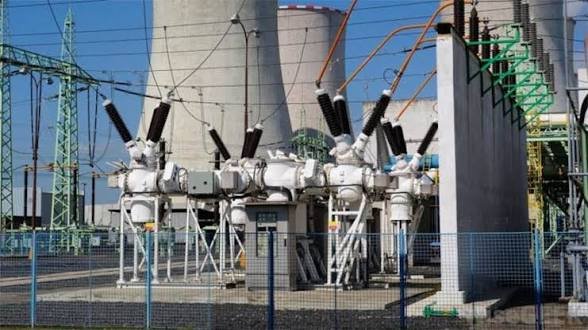
An important part of the proposed reforms is a technical audit commissioned by the Federal Government to establish the actual condition of the country’s electricity infrastructure.
The exercise is expected to identify critical weaknesses, establish a reliable baseline and determine where investments and interventions are most urgently needed.
Tegbe explained that the government wanted its investment decisions to be guided by technical evidence and the actual needs of the electricity system.
This is particularly relevant to the Lagos-Ogun corridor, where industrial centres such as Agbara and Ota require dependable electricity to sustain manufacturing and commercial activities.
Previous infrastructure interventions have included the replacement of a 100MVA transformer at Alausa, the installation of two additional 60MVA transformers at Lekki, and upgrades around Apapa and Ijora.
However, further work is required on electricity lines and feeders to ensure that improvements at major substations translate into better supply for consumers and industrial areas.
The minister’s position is that the ongoing audit will help determine how future investments should be prioritised.
What Happens Before Nigerians Get 24-Hour Electricity?

Although the announcement has raised expectations, the proposed 24-hour supply should not be mistaken for an immediate nationwide rollout.
The government has made it clear that implementation will depend on technical readiness and commercial viability.
In October, the Federal Government and Lagos State Government agreed to collaborate on the Lagos corridor under the 24/7 Energy Zones initiative approved by President Bola Tinubu.
Following a technical meeting between Tegbe and Lagos State Governor Babajide Sanwo-Olu, a joint technical committee was established to resolve outstanding issues and recommend practical steps towards implementation.
The Ministry of Power also disclosed that it had engaged electricity distribution companies operating along the Lagos corridor and secured commitments to take up more electricity and provide steadier supply to customers.
The committee involves representatives of key electricity institutions, including the Nigerian Electricity Regulatory Commission (NERC), Transmission Company of Nigeria (TCN), Nigerian Independent System Operator (NISO) and relevant Lagos electricity agencies.
The Federal Government’s approach also recognises that state governments and private electricity operators will have important roles in delivering the proposed improvements.
Three Phases to Transform Nigeria’s Electricity Sector
The broader power sector roadmap is designed to progress through three phases: stabilisation, scaling and transformation.
The stabilisation phase began in June 2026 and is scheduled to run until February 2027. It focuses on addressing immediate weaknesses within the electricity system.
The scaling phase is expected to run from March 2027 through 2028, with attention shifting towards expanding successful interventions and strengthening infrastructure.
The transformation phase is scheduled to begin in 2028, with the longer-term objective of building a more sustainable and reliable electricity market.
For Nigerians, the most important measure of the initiative will not simply be the number of announcements made or projects commissioned, but whether households and businesses begin to experience more consistent electricity.
The Lagos-Ogun and Abuja pilots will therefore provide an important test of the government’s ability to translate its electricity reform plans into measurable improvements in power supply.