



The Lagos State Government has commenced FarmerMoni registration for smallholder farmers, opening access to the Federal Government’s interest-free, collateral-free agricultural financing scheme designed to help farmers expand their businesses, improve production and strengthen food security.
The exercise, officially flagged off in Lagos, is being implemented through the state’s Ministry of Wealth Creation and Employment in collaboration with the National Social Investment Programme Agency (NSIPA).
The initiative comes under the Federal Government’s Government Enterprise and Empowerment Programme (GEEP), which provides financial support to small businesses and vulnerable Nigerians, including farmers, traders and artisans.
For farmers struggling to access conventional bank loans because of collateral requirements and other financial barriers, the programme offers an alternative source of support.
Lagos FarmerMoni Registration Begins
The flag-off ceremony marked the beginning of the enumeration exercise through which eligible farmers will be identified and captured for the federal intervention.
The National Programme Manager of GEEP, Hamza Baba, disclosed that the Federal Government had made funds available to support farmers, particularly those from poor and vulnerable backgrounds, in expanding their existing agricultural businesses.
He commended Lagos State for its agricultural development initiatives, particularly the introduction of Eko Rice.
Baba also spoke about his experience visiting Ikorodu, explaining that he had previously associated large-scale farming activities mainly with Northern Nigeria until he witnessed the level of agricultural production taking place in the Lagos community.
The Commissioner for Wealth Creation and Employment, Akinyemi Ajigbotafe, represented by the Director of Administration and Human Resources, Kudirat Bello, said the initiative was designed to address farmers‘ limited access to finance and other essential resources.
He described agriculture as an important driver of economic development, employment and wealth creation, adding that improving farmers‘ productivity would strengthen their livelihoods and contribute to food security.
The Permanent Secretary of the ministry, Lolade Aina, represented by the Director of Partnership, Oluyemisi Adeniyi, also commended Governor Babajide Sanwo-Olu for prioritising farmers‘ empowerment.
She encouraged beneficiaries to use the opportunity responsibly to develop their agricultural businesses.
How Much Can Farmers Get Under FarmerMoni?

Under the federal FarmerMoni programme, eligible smallholder farmers can access financing of up to ₦300,000 without interest or collateral.
The official Government Enterprise and Empowerment Programme website describes FarmerMoni as an intervention specifically designed around the needs of smallholder farmers.
Unlike conventional commercial loans, the scheme focuses on providing agricultural support to people who may struggle to secure financing through traditional banking channels.
The programme’s official information identifies essential farming inputs and services, including high-yield seedlings, fertilisers, crop protection products and mechanisation support.
These resources are intended to help farmers improve their operations, increase productivity and expand existing agricultural activities.
However, the maximum amount is not an automatic payment to every applicant. The actual support available depends on eligibility, verification and the programme’s assessment process.
Who Qualifies for the Federal FarmerMoni Scheme?
FarmerMoni is designed for smallholder farmers and agricultural entrepreneurs who need financial assistance to develop their businesses.
According to the National Social Investment Programme Agency’s published eligibility information, the FarmerMoni category covers agribusiness operators and smallholder farmers between 18 and 55 years.
The programme is intended to support productive agricultural activities rather than individuals who have no existing farming business.
The current GEEP programme information also emphasises the identification of genuine beneficiaries through local government structures.
This makes the enumeration exercise particularly important, as it provides an opportunity to identify eligible farmers and establish the information needed for beneficiary verification.
Farmers should seek confirmation of the specific registration requirements and documentation through authorised programme officials rather than rely on unofficial registration agents.
What Happens After the Lagos Enumeration Exercise?
The Lagos flag-off ceremony also featured the symbolic presentation of work tools and capacity-building training for GEEP desk officers drawn from the state’s 20 local government areas.
The training is intended to prepare the officers for their responsibilities in implementing the programme across the state.
Their involvement is important because identifying genuine farmers and collecting accurate information are essential to ensuring that the intervention reaches its intended beneficiaries.
The enumeration exercise is, however, different from receiving a loan. Being registered or captured does not automatically guarantee approval or disbursement.
Eligible farmers will still have to undergo the relevant verification and assessment procedures before support is provided.
The Lagos State Government has not announced a specific disbursement date, the number of farmers expected to benefit or the state’s allocated funding under this exercise.
FarmerMoni Is a Loan, Not a GrantOne important distinction prospective beneficiaries should understand is that FarmerMoni is a loan facility, not free money.
Although the programme carries no interest and does not require collateral, beneficiaries are expected to repay the support according to the applicable repayment arrangements.
The federal programme’s information indicates that repayment is structured around agricultural production cycles, giving farmers time to utilise the support before repayment begins.
The revolving nature of the intervention is also significant. As beneficiaries repay their facilities, the funds can be made available to support other eligible farmers.
The National Programme Manager, Hamza Baba, has described the wider GEEP intervention as a means of providing zero-interest financing to Nigerians who face difficulties accessing conventional credit.
The programme’s official website states: “Through MarketMoni, TraderMoni, and FarmerMoni, we eliminate barriers and provide our market women, artisans, and farmers the dignified capital they need to grow, thrive, and secure sustainable livelihoods.”
Why the FarmerMoni Scheme Matters to Lagos
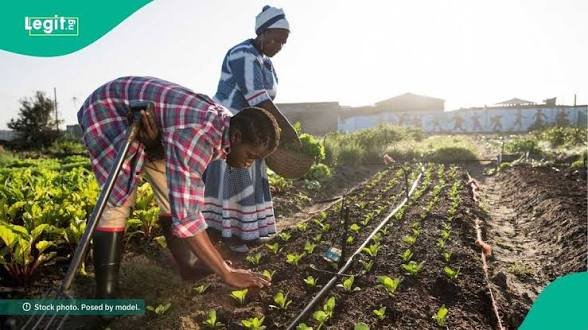
Lagos is widely recognised as Nigeria’s commercial centre, but it also has established agricultural communities and farming settlements involved in crop production, livestock, poultry and fisheries.
Areas such as Epe, Badagry and Ikorodu contribute to the state’s agricultural activities.
The Lagos State Ministry of Agriculture and Food Systems identifies several farm settlements across these areas, supporting different forms of agricultural production.
Providing farmers with better access to financing and essential inputs could help strengthen these existing agricultural activities.
It also aligns with the state’s broader efforts to improve local food production and reduce pressure on food supply chains.
For small-scale farmers, access to improved seedlings, fertilisers, equipment and other essential resources can make a difference in how much they produce and how efficiently they operate.
The success of the Lagos FarmerMoni exercise will ultimately depend on transparent beneficiary selection, effective verification and the timely delivery of the promised support.
For now, the commencement of enumeration marks an important step towards bringing the Federal Government’s agricultural financing intervention to eligible farmers across Lagos State.


