
A former employee of Access Bank Plc is now facing the full weight of the law after the Economic and Financial Crimes Commission arraigned her over allegations of stealing nearly N295 million through unauthorized transactions. The case, which came to light this week in Lagos, has once again thrown a spotlight on insider fraud risks within Nigeria’s banking sector.The development also reignited public conversation online, where photos of the defendant’s court appearance triggered a wave of mixed reactions ranging from outrage to skepticism.
The Charges and Court Appearance
On July 9, 2026, former Access Bank employee Chinonso Akujobi was arraigned before Justice I.O. Ijelu at the Lagos State High Court in Ikeja. The EFCC filed five counts against her, accusing her of stealing N294,595,992 through unauthorized transfers from the bank’s ledger between January and December 2025.
According to the prosecution, the funds were moved without due authorization, representing a breach of trust and a violation of financial regulations governing banking operations in Nigeria.When the charges were read, Akujobi pleaded not guilty to all counts. Following her plea, the court ordered that she be remanded at the Ikoyi Correctional Centre pending a bail hearing scheduled for October 8, 2026.
Public Reaction and the Courtroom Photos

Images of Akujobi in court quickly circulated online. Dressed modestly, her appearance drew immediate commentary across social media platforms.
Some users expressed disbelief that such a large sum could be linked to someone whose public image appeared unassuming, questioning how the alleged funds were moved and where they ended up. Others used the moment to criticize media coverage, arguing that the focus on appearance distracts from the gravity of financial crimes. A number of commenters also called for due process, urging that judgment be reserved until the trial concludes.
The polarized reaction reflects a broader public fatigue with financial crime cases, where large figures are often reported but restitution and convictions remain slow.
Insider Fraud: A Persistent Threat to Nigerian Banks
The Access Bank case is not an isolated incident. Over the past two years, the EFCC has arraigned multiple current and former bank staff over allegations of diversion and theft.In a separate case, the Commission arraigned three men for allegedly stealing N3.5 billion from Access Bank in 2023. The defendants pleaded not guilty and were remanded in Ikoyi Custodial Centre pending their bail application.
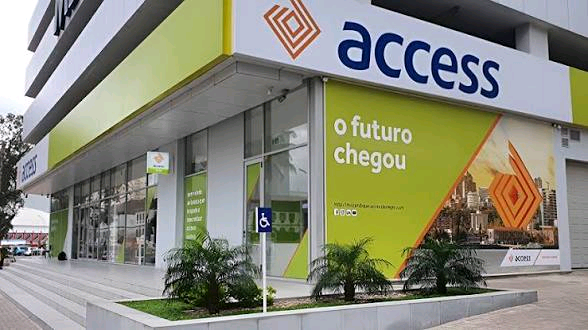
In another matter, a former Head of Operations at Access Bank’s Enugu branch was arraigned for the alleged diversion of a customer’s $510,000 and for forgery related to fund transfer documents. That case is set for trial in March 2026.
Banking experts say insider fraud remains one of the most difficult risks to contain because it often involves individuals with access to core banking systems and customer data. Methods range from unauthorized transfers and falsified documents to collusion with external actors. The EFCC has repeatedly warned that such acts undermine public confidence and cost the economy billions annually.
Regulatory Pressure and Bank Response
The Central Bank of Nigeria and the Nigeria Deposit Insurance Corporation have intensified oversight in recent years, mandating stricter internal controls, fraud monitoring systems, and staff background checks. Banks are also required to report suspicious transactions and cooperate fully with law enforcement.
Access Bank has not issued a detailed public statement on the Akujobi case as of press time, but the bank has previously said it maintains a zero-tolerance policy toward fraud and works closely with regulators and security agencies to investigate and prosecute offenders.
The bank was also named in an earlier petition that led to the EFCC’s investigation of the $510,000 diversion case in Enugu, where the complainant was Lantern Gate Nigeria Limited. In that instance, the bank alleged that funds were moved to six different accounts without customer approval.
With Akujobi’s bail hearing set for October, the court will determine whether she will be released pending trial under specific conditions. Typically, such conditions include substantial sureties, surrender of travel documents, and restrictions on movement.
The EFCC is expected to present forensic evidence, bank records, and witness testimony to support its case when trial begins. If convicted, the offense carries significant penalties under Nigeria’s anti-fraud and money laundering statutes.
Legal analysts note that prosecuting insider fraud is critical not just for recovering funds, but for deterring future breaches. The speed and transparency of the trial will be closely watched by customers, investors, and regulators alike.
A Broader Conversation on Trust

Beyond the courtroom, the case raises important questions about trust in the financial system. Nigerians rely on banks for savings, loans, and digital payments, and each fraud case chips away at that confidence.
At the same time, the public reaction to Akujobi’s arraignment shows how perceptions of guilt and innocence are often shaped by optics as much as evidence. That tension underscores the need for clear communication from both law enforcement and financial institutions as cases unfold.For now, the matter rests with the Lagos State High Court.
As the EFCC pushes forward with prosecution, the banking industry will be watching to see what lessons can be drawn to strengthen controls and prevent the next inside job.
The next hearing on October 8 will determine whether Akujobi remains in custody or is granted bail, as the legal process moves toward trial.