
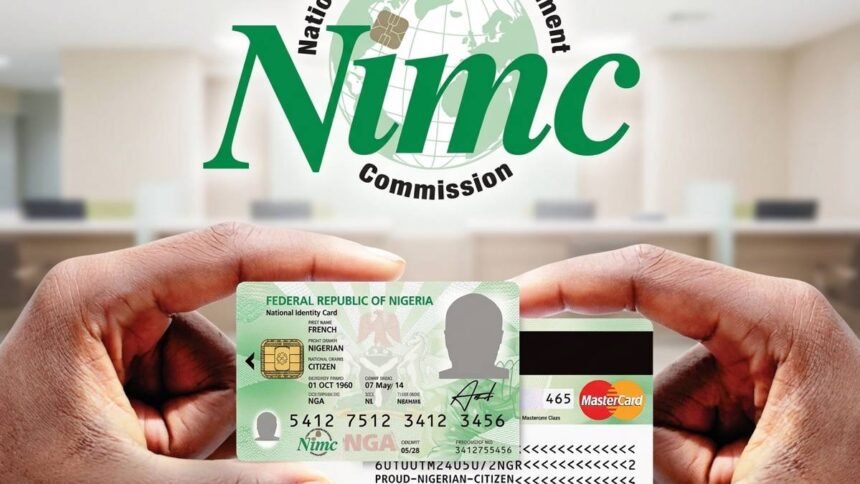
INEC and NIMC pledge closer data sharing after a landmark act ends 19 years of identity reform stagnation.
Nigeria’s two biggest identity agencies are closing ranks. The Independent National Electoral Commission on Wednesday reaffirmed its commitment to deeper cooperation with the National Identity Management Commission, following the enactment of the NIMC Act 2026, at a meeting held at the commission’s Abuja headquarters.
INEC Chairman Prof. Joash Amupitan (SAN) received NIMC Director-General Engr. Abisoye Coker-Odusote and her management team inside the commission’s conference room. And the tone was unmistakably forward-leaning, with both sides framing the visit as the beginning of something more structural than ceremonial.
“Closer cooperation between the two agencies would improve identity verification processes, reduce electoral fraud, and support the conduct of free, fair, and transparent elections,” Amupitan told the gathering, describing the legislation as a landmark reform that expands NIMC’s mandate well beyond routine identity registration.
Amupitan noted that the new law opens fresh opportunities for collaboration across voter registration, data verification, and the elimination of duplicate records. He pointed out that INEC’s newly launched online Continuous Voter Registration platform already requires applicants to submit their National Identification Number for identity verification.
Nigeria has deployed technology aggressively to clean up its elections, rolling out the Bimodal Voter Accreditation System and the INEC Result Viewing Portal in recent cycles. Identity verification has remained central to those reforms.
Yet the legal scaffolding underpinning cross-agency data sharing had lagged behind the technical ambition.
Coker-Odusote addressed that gap directly. “The newly enacted NIMC Act, signed into law by President Bola Ahmed Tinubu, GCFR, on June 26, 2026, marks a historic transformation of the Commission after nearly two decades of reforms,” she disclosed, adding that the law elevates NIMC from database custodian to the nation’s foundational digital identity authority.
NIMC is now home to Nigeria’s Digital Public Infrastructure and Root Public Key Infrastructure under the new framework. “NIMC is ready to support INEC in delivering free, fair, and transparent elections because identity remains the foundation of effective governance and credible electoral processes,” Coker-Odusote confirmed to the assembled INEC officials.
The new Act repeals the NIMC Act of 2007. It designates the commission as the root certification authority for Nigeria’s National Public Key Infrastructure, giving it responsibility for secure digital identity, authentication, and electronic trust services while strengthening personal data safeguards in line with the Nigeria Data Protection Act and international privacy standards.
NIMC’s Director of Strategy and Program Office, Dr. Alba Nkoku, told the gathering that the Act repositions the commission as Nigeria’s national digital trust anchor, establishing a legal framework for digital public infrastructure, reinforcing digital sovereignty, and introducing credentials that go beyond the conventional identity card.
President Tinubu signed the NIMC Act 2026 at the State House, Abuja. Senate President Godswill Akpabio, Deputy Speaker Benjamin Kalu, House Leader Julius Ihonvbere, Attorney-General Prince Lateef Fagbemi, Interior Minister Dr.
Olubunmi Tunji-Ojo, World Bank representative Taimur Samad, and Coker-Odusote were all present for the signing.
Tunji-Ojo said the law will accelerate the harmonization of identity databases and enhance the integrity of the NIN system. But he framed it in security terms too, arguing it would sharpen Nigeria’s capacity to combat identity theft, terrorism, financial crimes, and other threats that exploit gaps between agencies.
NIMC has enrolled over 120 million Nigerians into the national identity database and wired its verification services into key government institutions, financial houses, and telecommunications operators, according to information gathered by Westtrybe.
Coker-Odusote told INEC officials that the reforms would strengthen Nigeria’s digital economy, reduce fraud, and improve access to public and private services. The Federal Government’s push toward integrated identity management has found its clearest expression yet in this partnership, with both agencies expressing confidence that the NIMC Act of 2026 will sharpen democratic accountability.