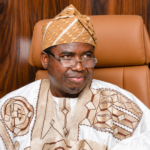
The Emir of Kano, Muhammadu Sanusi II, has said any economic policy that fails to improve the welfare of citizens cannot be regarded as effective, urging Nigerian leaders to prioritise reforms that reduce poverty, improve living standards and promote inclusive economic growth.
Sanusi made the remarks on Thursday in Kano State while delivering a keynote address at a conference organised by PowerShift Africa, themed “Revisiting the Past, Reconciliation and Building the Future.”
Represented by the Danmadamin Kano and Professor of Economics at Bayero University, Kano, Prof. Abubakar Aliyu Sanusi, the Emir described the conference as timely, saying Nigeria was confronting deep socio-economic and political challenges that required sincere reflection and practical solutions.
“Economic policies should be assessed based on their impact on the welfare of citizens. Any economic policy that does not improve the welfare of the people is inherently ineffective,” Sanusi said.
He urged governments at all levels to pursue policies capable of reducing poverty, improving living standards and ensuring that economic growth benefits all segments of society.
The former Governor of the Central Bank of Nigeria also stressed the need for the country to confront its history, strengthen institutions and uphold justice as the foundation for sustainable national development.
“No nation can build a sustainable future without understanding its past and addressing unresolved grievances. More than six decades after independence, Nigeria is still grappling with issues of nationhood, equity, justice, inclusion and development,” he said.
Sanusi identified insecurity, corruption, poverty and poor infrastructure as major obstacles to national progress, calling for a transition from politics driven by domination to one anchored on service, accountability and competence.
“Power-sharing should not only be about geographical rotation but about ensuring that credible, competent and compassionate leaders emerge to serve the people,” he added.
The Emir also urged Nigerians, irrespective of ethnic, religious or political differences, to embrace unity, tolerance and collective responsibility, warning that the country stood at a critical moment requiring sincere reconciliation to build a more prosperous future.
Also speaking, the Eze Igbo of Kano, Igwe Ikechukwu Oliver-Abodo, called for greater national unity, saying Nigerians should see themselves as one people regardless of ethnic or religious background.
“No one can divide Nigeria. We must unite and work together for the progress of the country,” Oliver-Abodo said, urging leaders to focus on improving citizens’ welfare and creating opportunities for young people.
Earlier, the Executive Director of PowerShift Africa, Nso Nnamani, said the conference was organised to promote dialogue on national reconciliation and nation-building, arguing that Nigeria’s greatest challenge was the absence of national cohesion rather than leadership or infrastructure alone.
The conference comes amid ongoing national debates over economic reforms, rising cost of living and governance, with economists and policy experts increasingly emphasising that public welfare should remain the primary measure of successful economic policies.