


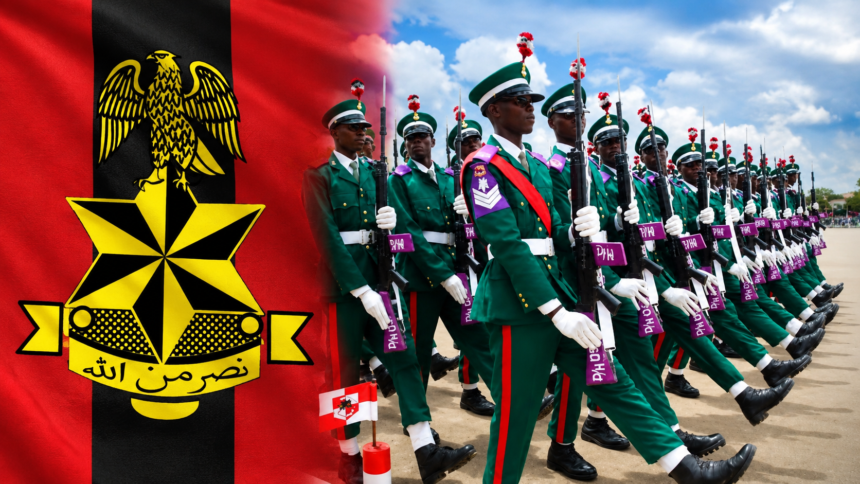
President Bola Tinubu has approved one of the most significant reorganisations of the Nigerian Army in recent years, expanding its operational structure from eight to 12 divisions and authorising the recruitment of 28,000 additional personnel. The move is aimed at improving command and control, strengthening border security, and delivering faster responses to Nigeria’s evolving security threats.
Announced in a statement on July 23, 2026 by the Special Adviser to the President on Information and Strategy, Bayo Onanuga, the restructuring forms part of the administration’s broader push to modernise the Armed Forces and close gaps in national security coverage.
Expanding the Force Structure
Under the new arrangement, four new divisional headquarters will be established: 5 Division in Makurdi, 9 Division in Ilorin, 10 Division in Jalingo, and 83 Division in Benin City. These join the existing eight divisions to create a 12-division Army with a wider geographic footprint.
The deployment under the new structure is as follows:
1 Division – Kaduna: Kaduna, Kano, Katsina and Jigawa states
2 Division – Ibadan: Oyo, Osun, Ekiti and Ondo states
3 Division – Jos: Plateau, Bauchi and Gombe states
5 Division – Makurdi: Benue, Nasarawa and Kogi states
6 Division – Port Harcourt: Rivers, Akwa Ibom and Cross River states
7 Division – Maiduguri: Borno and Yobe states
8 Division – Sokoto: Sokoto, Kebbi and Zamfara states
9 Division – Ilorin: Kwara and Niger states
10 Division – Jalingo: Taraba and Adamawa states
81 Division – Lagos: Lagos and Ogun states
82 Division – Enugu: Enugu, Anambra, Abia, Ebonyi and Imo states
83 Division – Benin City: Edo, Delta and Bayelsa states
The Presidency said the establishment of the new divisions will decentralise operational decision-making, bring military leadership closer to troubled areas, strengthen border security, enhance protection of critical national infrastructure, and improve counter-insurgency and internal security operations.
Phased Implementation and Troop Build-Up
The restructuring will be executed in two phases. Phase one covers the establishment of 5, 9 and 10 Divisions and the reorganisation of existing formations, and is expected to be completed by September 2026. Phase two will see the establishment of 83 Division in Benin City and further restructuring, targeted for completion by December 2026.
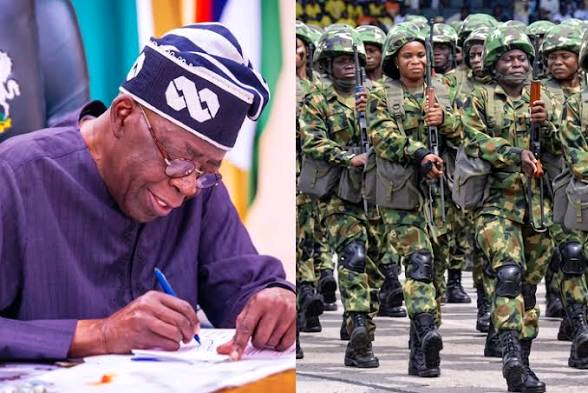
Alongside the structural expansion, President Tinubu approved the recruitment of 28,000 additional soldiers, as well as increased investment in equipment, operational readiness and troop welfare. The Chief of Army Staff, Lieutenant General Waidi Ibrahim Shuaibu, was commended for his leadership and commitment to defending the nation’s sovereignty.
The Army has also been reconfiguring formations and establishing new units. Recent additions include 15 Brigade in Anambra and Imo, 12 Battalion in Anyigba, 226 Battalion in Ganye, 247 Reconnaissance Battalion in Mubi, and new logistics bases in Gusau and Ilorin.
Why the Restructuring Matters Now
Nigeria continues to grapple with a 17-year Islamist insurgency in the Northeast, banditry and kidnappings in the Northwest, communal violence in the North Central, and separatist agitation in the Southeast. Security analysts and retired officers say the additional divisions will improve surveillance and sustained operations in forests and remote communities where armed groups operate.
Retired General Adewinbi described the expansion as “one of the best things that has happened to the Nigerian Armed Forces,” arguing that deploying more divisions to previously underserved areas will reduce terrorism and criminal activities drastically.
The Presidency linked the reform to a wider modernisation agenda that includes acquisition of critical military platforms, welfare improvements, and support for operational readiness. President Tinubu reaffirmed his administration’s resolve to ensure the Armed Forces remain “adequately equipped, highly motivated, and fully capable of protecting the nation”.
While no legislative approval is required for the internal restructuring, defence budget adjustments to accommodate the new divisions and personnel will be forwarded to the National Assembly in the coming weeks.With implementation already underway, the Army is expected to complete its transition to a 12-division force before the end of 2026.
For communities across Makurdi, Ilorin, Jalingo and Benin City, the presence of new divisional headquarters is expected to translate into quicker deployment times and stronger military presence.
For the Nigerian Army, the restructuring represents both a logistical and strategic shift, from a centralized command to a more distributed model designed to meet threats where they emerge. As Phase 1 nears completion in September, attention will turn to how quickly the new divisions can be made operational and how the 28,000 new recruits are integrated into an Army already stretched across multiple theatres.