
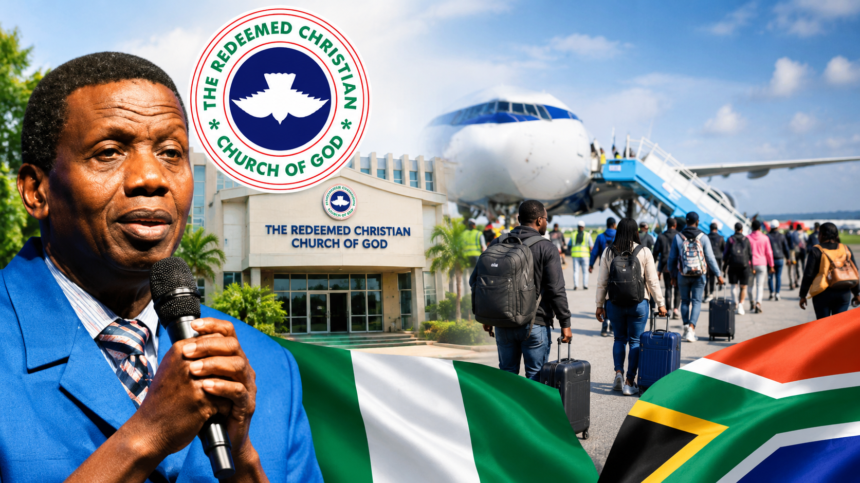
RCCG South Africa evacuation efforts have received a major boost after the Federal Government commended the Redeemed Christian Church of God (RCCG) for donating $265,854 to help distressed Nigerians return home amid renewed xenophobic and Afrophobic attacks.
The Ministry of Foreign Affairs said the contribution will fund 500 one-way air tickets for Nigerians seeking to leave South Africa. The government described the intervention, made under the leadership of Pastor Enoch Adejare Adeboye, as a significant demonstration of compassion, solidarity and commitment to Nigerians facing difficult circumstances abroad.
RCCG South Africa evacuation support draws FG praise
The Federal Government’s appreciation was contained in a statement issued by the Ministry of Foreign Affairs and signed by its spokesperson, Oluwafemi Adeniyi, on September 3, 2026.
According to the ministry, the $265,854 donation will be used to purchase 500 one-way tickets as part of the continuing effort to bring distressed Nigerians out of South Africa.
The government also said it looks forward to working with RCCG’s leadership in South Africa as the funds are deployed for the evacuation exercise.
Rather than presenting the donation simply as financial assistance, the ministry framed it as an example of how faith-based organisations and public institutions can work together when citizens are caught in difficult circumstances.
The ministry specifically welcomed partnerships involving private organisations, philanthropists, faith-based organisations, development partners and other stakeholders whose contributions can improve the welfare of Nigerians in the diaspora.
Why the RCCG donation matters
The intervention comes against the backdrop of renewed concerns over the safety of Nigerians and other African nationals in South Africa.
Nigeria began its current evacuation exercise on June 10, 2026, following a new wave of xenophobic and Afrophobic attacks targeting Africans and other foreign nationals.
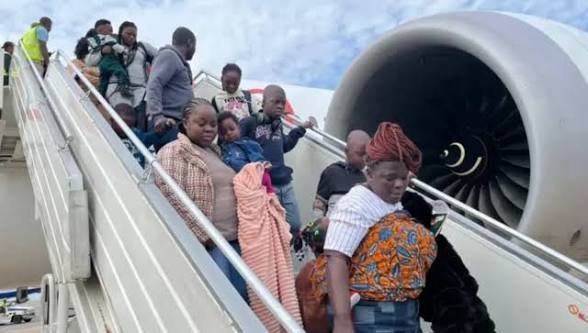
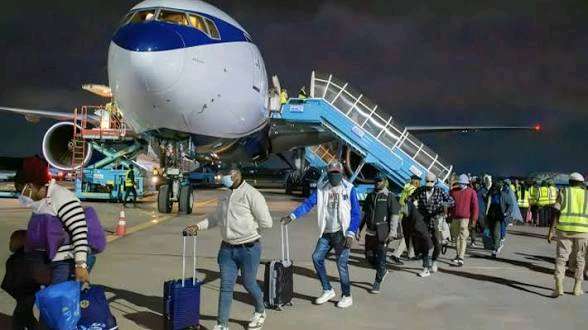
The operation has since brought a substantial number of Nigerians back home. The Ministry of Foreign Affairs said 1,640 Nigerian nationals had been evacuated as of its latest update.
Of that figure, 1,385 returnees were fully sponsored by the Federal Government, while the evacuation of another 255 Nigerians was supported through philanthropic donations.
The ministry also disclosed that 202 Nigerians were still awaiting final screening by South Africa’s Department of Home Affairs before they could be evacuated.
Those figures show that the government-led operation has been running for several months and that private and philanthropic support has become an important part of the wider response.
Nigerians still seeking a way home
For Nigerians who remain in South Africa and want to return, the evacuation process is not simply a matter of securing a flight ticket.
The Ministry of Foreign Affairs said Nigeria’s High Commission in Pretoria and Consulate General in Johannesburg remain active in reaching out to Nigerians through Nigerian Community Associations and other established channels.
The diplomatic missions are also assisting citizens who want to leave South Africa because of the security concerns linked to xenophobic and Afrophobic attacks.
The latest figures therefore underline an important point: while thousands of Nigerians have already returned, the evacuation process is still ongoing and some citizens remain subject to screening and other procedures before they can travel.
FG links evacuation to wider diplomatic efforts
The Federal Government has also continued to raise the issue of xenophobia and Afrophobia through diplomatic channels.
In its latest statement, the Ministry of Foreign Affairs linked the evacuation effort to President Bola Ahmed Tinubu’s broader commitment to the welfare of Nigerians living outside the country.
The ministry pointed to the 21st Extraordinary Session of the Assembly of Heads of State and Government of the African Union, held in Luanda, Angola, on August 30, 2026.
At that meeting, Vice President Kashim Shettima delivered President Tinubu’s statement, which expressed concern over recurring xenophobic and Afrophobic attacks in South Africa and called for urgent collective attention to the issue.
The government has therefore presented the evacuation as part of a wider response that combines diplomatic engagement, assistance to affected citizens and cooperation with organisations willing to support Nigerians in distress.
RCCG intervention adds a new dimension
RCCG’s contribution stands out because of its scale and the number of people it is expected to assist.
The $265,854 donation is specifically earmarked for 500 one-way tickets, giving the church’s intervention a direct connection to the evacuation effort.

The Federal Government’s decision to publicly acknowledge the contribution also highlights the growing role of non-governmental and faith-based organisations in responding to humanitarian situations involving Nigerians abroad.
At the same time, the Ministry of Foreign Affairs has not stated that the 500 Nigerians covered by the RCCG donation have already arrived in Nigeria. The ministry said the funds would be deployed toward the evacuation of 500 distressed Nigerians, meaning the contribution is supporting the ongoing process rather than confirming that the entire group has already been repatriated.
What happens next
The immediate priority is to put the donated funds to use and facilitate the return of the Nigerians covered by the intervention.
The Federal Government said it remains engaged with South African authorities over the issues surrounding xenophobia and Afrophobia, while Nigerian diplomatic missions continue to assist citizens who want to return.
For RCCG, the donation also places the church among the private and faith-based organisations contributing directly to the government’s response.
With 202 Nigerians still awaiting final screening and the wider evacuation exercise continuing, the latest development shows that the effort to bring distressed Nigerians home is far from over.
The government’s message is clear: protecting Nigerians abroad requires not only diplomatic action but also cooperation with organisations and individuals prepared to provide practical support when citizens need it most.