


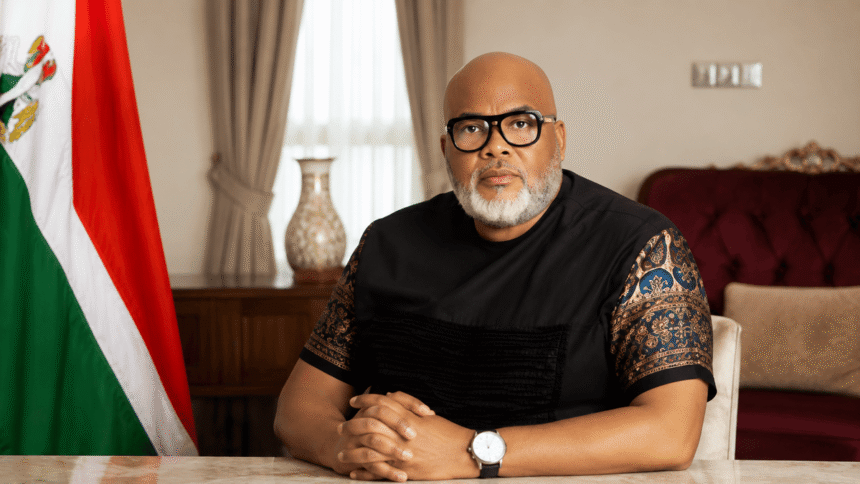
South Africa’s consul-general to Nigeria has rejected widespread claims of xenophobia in his country, attributing tensions between foreign nationals and South Africans to economic pressures, including unemployment and poverty, and calling on Nigerians to visit South Africa.

The diplomat made the position clear during an interview on Nigeria Info FM, pushing back against narratives that describe anti-foreigner violence in South Africa as a product of deep-seated hatred toward migrants from other African countries.
He said constitutional protections exist for all people living in South Africa and that the government has taken active steps to address violence directed at foreign nationals residing and doing business in the country, framing these measures as evidence of institutional commitment to the safety of migrants.
The Consul-General argued that tensions do not reflect the values of the South African state or the sentiments of ordinary citizens, insisting that economic strain, rather than ethnic hostility, drives outbreaks of violence against migrants in the country.
He also drew a historical parallel, pointing to Nigeria’s own past expulsions of Ghanaian nationals under conditions of similar economic hardship, framing the comparison as context for understanding how financial pressures shape attitudes toward migrants across the continent.

The reference to Nigeria’s expulsion of Ghanaians was positioned not as an accusation but as a regional illustration of the link between poverty, unemployment, and hostility toward foreign populations in economically strained societies.
On Monday, former South African minister Naledi Pandor added her voice to the discussion, addressing the subject on a podcast where she called for stronger regional cooperation between Nigeria and South Africa on migration challenges facing both nations.
Pandor, who previously served in senior cabinet positions in Pretoria, said the migration relationship between the two countries requires a coordinated approach, signaling that the diplomatic friction extends beyond the consular level into broader policy conversations about how both governments manage the movement of people across their borders.
Her comments came as officials and public figures from both countries continued to engage publicly with questions about the safety of Nigerians in South Africa and the status of bilateral relations between the two largest economies on the continent.
The Consul-General’s Nigeria Info FM interview represents one of the most direct public rejections by a South African official of the characterization of anti-foreigner incidents as state-tolerated or culturally driven xenophobia.
By linking the violence to unemployment and poverty, the envoy placed the responsibility on economic conditions rather than government policy, a framing that separates the conduct of South African citizens from the position of the South African state.

His call for Nigerians to visit South Africa signals an effort to preserve people-to-people ties and tourism links between the two countries, even as diplomatic tensions over the treatment of Nigerian nationals in South Africa have drawn official attention in both capitals.
The Nigeria Info FM interview served as a platform for the envoy to address Nigerian audiences directly, countering what he described as inaccurate portrayals of conditions on the ground in South Africa for African migrants and visitors.
Pandor’s podcast appearance expanded the conversation to include a call for institutional responses, suggesting that the current moment of friction between Nigeria and South Africa requires policy-level engagement rather than bilateral statements alone.
The Consul-General’s remarks and Pandor’s podcast comments together reflect a coordinated South African diplomatic posture that seeks to separate acts of violence by individuals from a broader characterization of South Africa as institutionally hostile to Nigerian nationals.
Both the Nigeria Info FM interview and Pandor’s podcast contribution point to an ongoing effort by South African voices to reframe the xenophobia narrative and encourage Nigerians to engage with South Africa as a destination, even as migration tensions between the two countries continue to shape diplomatic exchanges.