


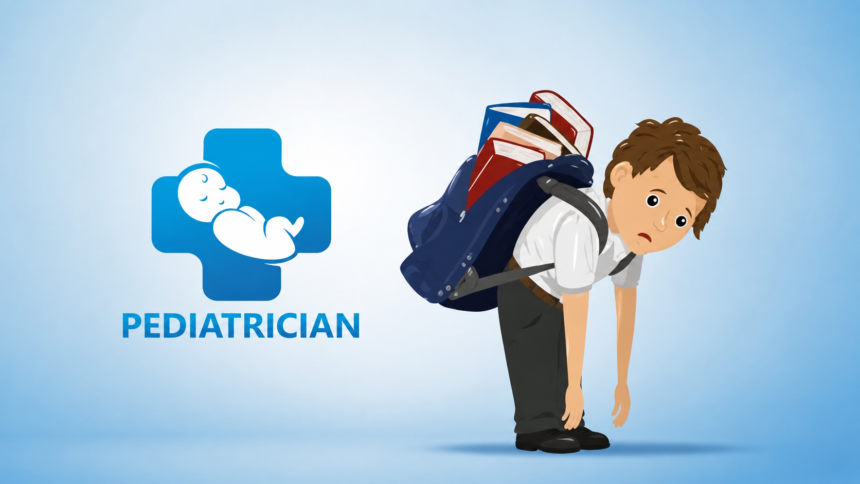
Pediatric health advocates are issuing an urgent back-to-school warning as doctors report a spike in back pain, posture problems, and ER visits in children caused by backpacks that are too heavy. The problem used to be textbooks, but now it’s worse. Kids are carrying books, lunch, water bottles, and on top of that laptops, tablets, and chargers.
Spine specialists say the extra weight, combined with hours spent hunched over phones, is putting serious strain on growing spines and sending thousands of kids to the doctor every year .
Every school morning, you’ll see children with heavy backpacks, looking strained and tied even before the day’s work commence. The U.S. Consumer Product Safety Commission estimates about 14,000 children are injured each year from overloaded backpacks. Between 2019 and 2021 there were roughly 1,200 backpack-related ER visits per year. Yale experts say up to 30,000 children and teens end up in a doctor’s office or ER annually with back and shoulder pain linked to backpacks.
Doctors have a clear guideline they keep repeating: a backpack should be no more than 10% to 15% of a child’s body weight. For a 60-pound child, that’s 6 to 9 pounds. Yet studies show more than half of kids carry bags heavier than 15%, and up to 25% carry more than 20% of their body weight. That’s like an adult hauling a small refrigerator to work every day.
In India, doctors at KGMU found over 60% of schoolchildren with heavy bags had backbone and muscle problems, neck pain, and slouched posture. Girls reported more discomfort than boys, and several were diagnosed with spinal curvature and muscle inflammation.
We thought digital learning would make bags lighter. For some schools it did. But most kids still carry physical books, plus a laptop or tablet, plus the charger. A single textbook already weighs about 3.5 pounds. Adding gadgets makes the weight more. And the damage doesn’t stop at the bag. Kids are spending hours looking down at phones and tablets. The average child’s head weighs about 12 pounds, but tilt it forward to look at a screen and it feels like 60 pounds to the neck. Over a school year that can mean 700 to 1,400 hours of extra strain.
Spine surgeons say this is a double hit. Prof Shah Walliulah notes that just 15 minutes with a heavy bag can cause shoulder pain, fatigue, and change how a child walks. Prof Ajai Singh warns that once a bag crosses 15% of body weight, the risk of posture problems and spinal stress climbs sharply. Combine that with “text neck” and you’ve got kids whose spines are under pressure all day, at school and at home.
The real pressure
This isn’t just “my back hurts and it will go away.”To manage the load, kids start to compensate. They lean forward. They arch their backs. They wear the bag on one shoulder. Over time that teaches the body bad posture. Dr. Avrom Gart at Cedars-Sinai says children carrying too much weight can develop serious back pain that needs treatment. Wearing one strap makes the spine lean to the opposite side, which stresses the neck and shoulders. In severe cases it can pinch nerves and lead to “scapular winging.”
Long term, some pediatricians are also concerned about growth. Dr. Nishant Verma says carrying heavy bags can affect the spine and potentially hinder height growth in a child. Low vitamin D makes it worse because weaker bones handle weight poorly.
What should be done
Doctors aren’t telling families to ditch backpacks. When worn correctly, a two-strap backpack is still the safest way to carry things because it spreads weight across both shoulders and the back muscles.
Weigh the bag weekly.: If it’s over 10-15% of your child’s weight, take things out. Ask teachers if heavy books and devices can stay at school. Some schools are already keeping classroom sets and moving assignments online to reduce what kids carry.
For younger children, trolley bags help a lot. Fit it right.Use both straps, always. The bag should sit high on the back, about 2 inches above the hips, and not hang more than 4 inches below the waist. Straps should be wide and padded.
Build strength and better habits. Physical education, stretching, and limiting hours hunched over devices all help. Calcium and vitamin D support bone strength, which matters when kids are carrying weight.
Dr. Patrick Mularoni at Johns Hopkins All Children’s puts it plainly. If your child comes home with new back pain in September, check the backpack first. “Often it’s that they’re carrying around a 40-pound backpack.”
This isn’t just happening in one city or one country. Spine specialists call it a global issue, but the fixes are local. Better bag policies, better classroom furniture, and parents doing a quick check at home.
As Prof Saini said it: no child should have to choose between learning and their health. Before the first week is over, take two minutes. Weigh the bag. Adjust the straps. Ask what can stay at school. It’s a small step. But for a growing spine, it makes all the difference.