Nigeria’s House of Representatives will question Accountant-General Shamseldeen Ogunjimi Monday over how the fake PFIPC secured a N1.32bn budget code.
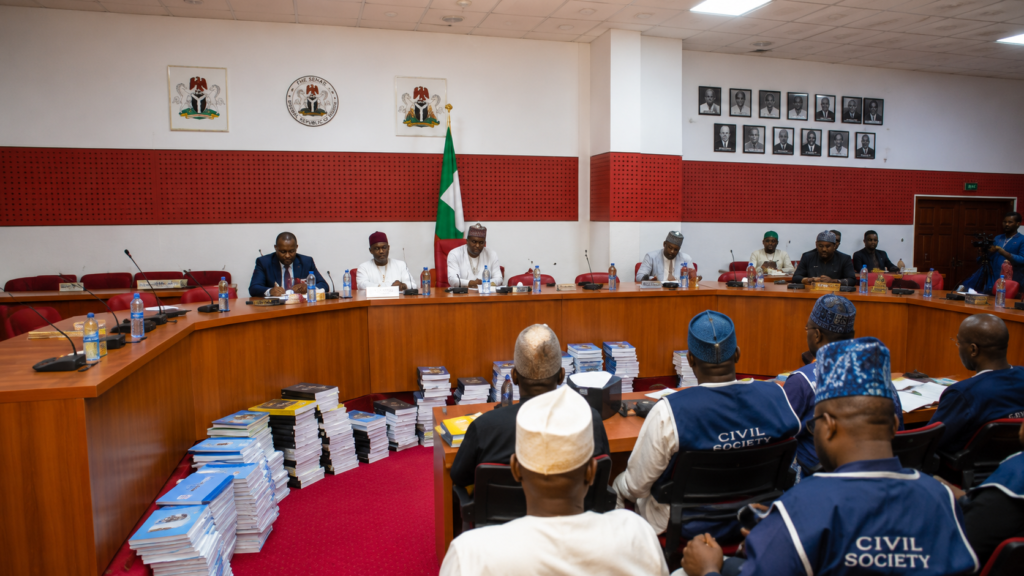
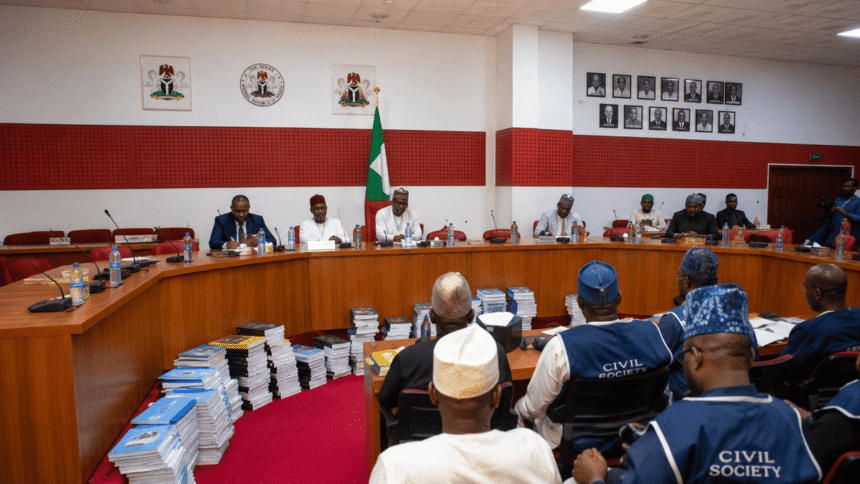
The House of Representatives ad hoc committee investigating the Presidential Foreign Investment Promotion Council enters its third week Monday, with the accountant-general of the federation, Mr. Shamseldeen Ogunjimi, called to appear before the panel in Abuja.
Ogunjimi is expected to explain how the PFIPC obtained a government budget code, a step that allowed the agency to appear inside the national budget despite the federal government’s position that the organization has no legal existence under Nigerian law.
Yusuf Gagdi, who represents the Kanke/Kanam/Pankshin Federal Constituency of Plateau State, chairs the committee. His panel is probing how an organization the government describes as non-existent secured office accommodation inside the Federal Secretariat Complex in Abuja.
Beyond the office space, the agency received a budgetary allocation of more than N1.32 billion inside the 2026 Appropriation Act. Lawmakers want to know how that figure cleared every checkpoint inside the federal expenditure process before anyone raised a flag.
Three senior officials have already appeared before the committee. Head of the Civil Service of the Federation Mrs. Didi Walson-Jack; Director of Banking Services at the Central Bank of Nigeria Abdullahi Hamisu; and Budget Office of the Federation Director-General Mr. Tanimu Yakubu each gave testimony in the weeks prior.
Their submissions outlined the sequence of events that enabled the PFIPC to navigate bureaucratic procedures, obtain official documentation, and become embedded inside the federal administrative system despite the unresolved questions over its legal standing.
The investigation gained further momentum following the arrest of Mr. Adeyemi Adeniyi, who presented himself to government officials and institutions as the Director-General of the PFIPC. Nigeria Police Force operatives arrested Adeniyi after he allegedly claimed to have paid N400m through an intermediary to the chief of staff to the president, Mr. Femi Gbajabiamila, to facilitate his appointment as head of the council.
Both the Presidency and Gbajabiamila denied any connection to Adeniyi or to those claims. The presidency described Adeniyi as an impostor. Gbajabiamila dismissed the allegations as false and maintained that neither he nor the presidency had any involvement in establishing or operating the purported council.
Government officials have consistently maintained that the PFIPC is not a legally established federal agency. That position has deepened questions over how the organization obtained office space inside a government complex, processed official documentation, and secured a line in the national appropriations framework.
The committee is working to determine whether administrative failures, institutional negligence, or deliberate misconduct enabled the agency to operate inside the federal bureaucracy. Lawmakers have stated that anyone found culpable will face accountability in line with existing law.
Several senior officials are yet to testify. Secretary to the Government of the Federation George Akume, Inspector-General of Police Olatunji Disu, and Minister of Foreign Affairs Bianca Odumegwu-Ojukwu are all scheduled to appear before the panel.
Minister of Finance and Coordinating Minister of the Economy Mr. Taiwo Oyedele, along with the Attorney-General of the Federation and Minister of Justice Prince Lateef Fagbemi, also remains on the committee’s list of witnesses yet to be heard.
Their testimonies are expected to help the committee establish whether due process was observed at various stages of the agency’s emergence and whether any public officials played a role in enabling its activities.
Lawmakers on the panel have reiterated their commitment to a thorough, transparent, and non-partisan investigation. The stated objective of the probe is to safeguard public funds, identify weaknesses inside government systems, and restore public confidence in federal institutions.
Monday’s session with the accountant-general represents a central moment in the inquiry. Control of budget codes sits at the heart of the question the committee is trying to answer: how a body the government says never existed ended up with a funded line inside Nigeria’s 2026 national budget.