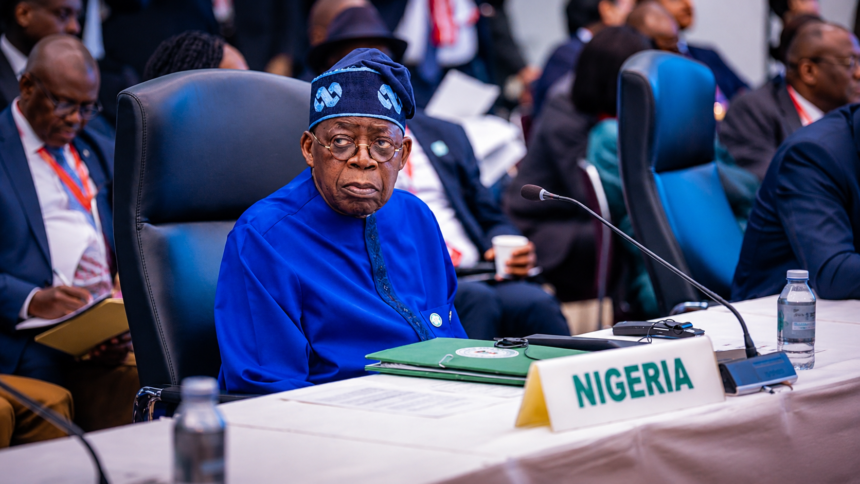
President Bola Tinubu has officially declared that Nigeria’s economy is “gradually stabilising” and that the tough reforms introduced since 2023 are beginning to yield visible results. Speaking to stakeholders in Abuja and Lagos this month, the President said the country has moved from a period of painful adjustments to one of consolidation, with early gains showing in revenue, investor confidence and macroeconomic stability.
The statement comes three years into an administration that bet big on structural change. From subsidy removal to exchange-rate unification, the government has argued that short-term pain was necessary to avoid long-term collapse.
Reforms Driven By Necessity, Not Convenience
In his Democracy Day address and subsequent meetings, Tinubu framed the reforms as unavoidable. “The reforms we are undertaking were not chosen for ease, but for necessity,” he said, recalling that three years ago public finances were under severe strain, investment was discouraged and economic uncertainty threatened the future.
According to the President, the measures have “restored stability and credibility to economic management”. Key actions cited include the removal of the petrol subsidy, unification of multiple FX windows into a single market-driven system, and a tax and revenue overhaul.
The government says these steps were designed to advance what Tinubu calls “Nigeria’s economic freedom”, moving from subsidy dependence and FX distortions to a system where prices reflect reality and public funds are better directed.
Early Signs Of Stability
Officials point to several indicators to back the claim of stabilisation.
Revenue and fiscal discipline
Federation revenues have risen significantly, enabling states and local governments to access more resources for infrastructure, education, healthcare, and security. The administration also says fiscal transparency has improved and leakages have been reduced.
Inflation and monetary policy
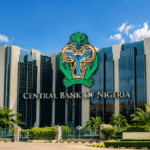
Headline inflation moderated marginally to 15.91% year-on-year in June 2026 after months of pressure. Central Bank Governor Olayemi Cardoso noted nearly 11 months of continuous disinflation, arguing that the bank’s tightening campaign is working. The CBN held its monetary policy rate at 26.50% in July, citing the need for caution amid global uncertainties.
Growth and investment
The government projects annualised GDP growth exceeded 4% in 2025. The Nigerian Stock Exchange posted a 48.12% gain in 2025, and foreign reserves stood at $45.4bn as of December 29, 2025. Investor confidence, officials say, has returned with growing investments across agriculture, energy, manufacturing, technology, mining, transportation and creative industries.
Exchange rate and trade
The Budget Office noted the naira strengthened from a low of ₦1,800/$ in early 2024 to ₦1,525/$ by August 2025, after the government floated the currency and cleared a $4 billion FX backlog. Nigeria also maintained trade surpluses and exited the FATF Grey List in 2025.
From Stabilisation To Shared Prosperity
The administration acknowledges that macroeconomic stability alone is not enough. Finance Minister Taiwo Oyedele said the government will now track “shared prosperity” using three measures: reductions in multidimensional poverty, increases in real income per capita, and lower inequality.
This scorecard is a direct response to criticism that gains in revenue and investor confidence have not yet translated into relief for households facing high food and transport costs. The IMF said in June that while reforms were improving stability, 63% of Nigeria’s 200 million population remained in poverty.
To bridge that gap, Tinubu linked economic policy to social programmes. At the launch of the $552 million HOPE-EDU basic education initiative, he said the reforms are part of “one coordinated national strategy for poverty reduction, human capital development and community resilience”. The programme is expected to benefit 29 million children and 500,000 teachers.
Other pillars include infrastructure spending, over ₦5.9 trillion for projects in the Northwest alone, and power sector interventions like the revival of the 255MW Kaduna Power Plant.
2026: The Year Of Consolidation
The government has branded 2026 as the “Budget of Consolidation, Renewed Resilience and Shared Prosperity”. The Minister of Information said 2025 was about reinforcing foundations, while 2026 will focus on translating those gains into sustained growth and improved security.
Tinubu himself pledged a stronger rebound in 2026, with plans to drive inflation further down and sustain GDP growth. “Yes, reforms are difficult. It has not been a McDonald’s customer relationship but a harvester of good things, if implemented well, and that is what we are about,” he told a Deloitte Africa delegation.
Senate leaders echoed the tone, describing the past two and a half years as “painful but necessary” and saying Nigeria is now transitioning to consolidation.
The Road Ahead
The President’s declaration does not erase the challenges. Food inflation, energy costs and unemployment remain high, and the benefits of reform are uneven across regions and income groups. Cardoso warned that external shocks, including geopolitical tensions, had disrupted disinflation projections.
But within government circles, the narrative has shifted. The focus is no longer just on fixing imbalances, but on locking in gains. As Tinubu put it, “democracy must be felt in the quality of people’s lives – in opportunities for youth, in prosperous farmers, successful entrepreneurs and the dignity of our workers”.
Whether that translates to cheaper markets and better jobs will determine if 2026 becomes the year Nigerians feel the stabilisation the President is now claiming.
For now, the administration is asking for patience, pointing to stronger revenues, a more credible currency, and an economy that, in its words, is finally standing on firmer ground.