As public debt hits N159.28tn, FG defends borrowing strategy and pushes for tax reforms
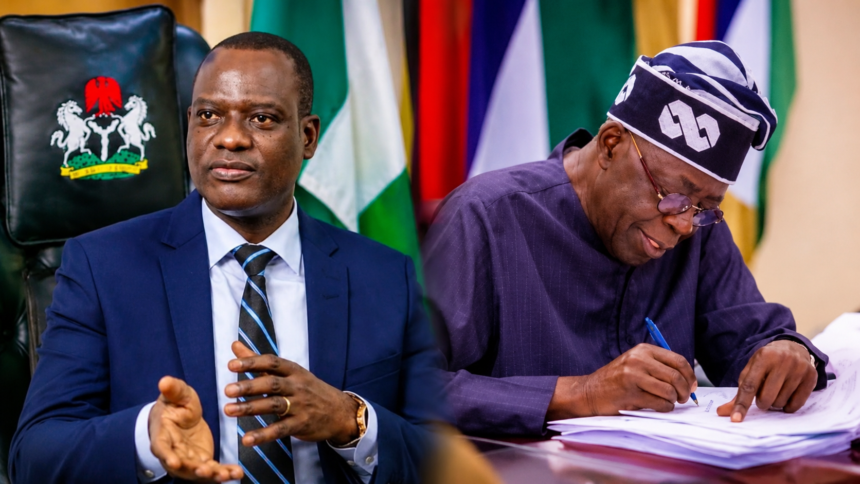
Nigeria’s public debt has climbed to N159.28 trillion as of December 31, 2025, sparking fresh debate over the country’s borrowing habits. But according to the Minister of Finance and Coordinating Minister of the Economy, Prof. Taiwo Oyedele, the conversation should not be about the size of the debt alone. It should be about purpose, cost, and returns.
Speaking at the Fellowship Award Ceremony and 2nd Biennial Conference of the Capital Market Academics of Nigeria in Abuja, Oyedele defended the Federal Government’s borrowing policy and faulted critics for reducing a complex fiscal tool to a “moral failing”.
Debt Numbers Keep Rising
Data from the Debt Management Office shows Nigeria’s total public debt grew by N5.98 trillion, or 3.9 per cent, quarter-on-quarter from N153.29 trillion in September 2025. On a year-on-year basis, it rose by N14.61 trillion, or 10.1 per cent, from N144.67 trillion in December 2024.
The increase is driven by both fresh domestic and external borrowings. With the government also projecting N17.89 trillion in borrowings for 2026 and seeking National Assembly approval for an additional $6 billion in external loans, analysts expect the debt stock to rise further.
For context, when President Bola Tinubu assumed office on May 29, 2023, total public debt stood at N87.38 trillion. That means about 45 per cent of Nigeria’s entire debt accumulation has occurred under the current administration.
Oyedele: Borrowing Is a Financial Tool, Not a Sin
Oyedele argued that the public discourse around debt in Nigeria is often misplaced. “When analysts go on TV and join the populist view to accuse the government of borrowing, you are doing a disservice,” he said.
According to him, the relevant questions are not just “how much debt,” but “debt for what and at what cost, against what return, and repaid on what terms”.
“A nation, a state, or a business that borrows to finance a productive asset generating returns above the cost of that capital is not behaving recklessly; it is behaving rationally”.
He added that Nigeria’s negative perception of debt has become a “cultural barrier to economic growth”. “In most of our public discourse, debt is spoken of as a moral failing rather than a financial instrument. People go to churches and mosques to pray that they may never be in debt. A government that borrows is accused of mortgaging the future”.
Refinancing High-Cost Debt and Bridging Deficits
Beyond new borrowing, the government is also looking to restructure existing obligations. Oyedele disclosed in a Bloomberg TV interview that Nigeria is considering refinancing some of its expensive legacy debts to take advantage of improved investor confidence and higher crude oil prices.
“We think that this timing is good for us to be able to maybe even refinance some of our expensive past debts, but also to raise more funding for our development at this critical time”.
Despite improvements in revenue, the minister noted Nigeria still faces a budget deficit of about N30 trillion this year, which necessitates additional financing. The premium demanded by investors to hold Nigerian dollar-denominated bonds has also fallen, reflecting growing confidence.
Shift Towards Tax Reforms and Sustainable Revenue
While defending borrowing, Oyedele also warned that Nigeria cannot continue to rely primarily on debt to fund development. He said the country must build a fiscal system capable of sustainably supporting infrastructure, education, healthcare, security, and social protection.
Speaking at the 28th Annual Tax Conference of the Chartered Institute of Taxation of Nigeria, the minister said ongoing tax reforms are designed to make the economy more investment-friendly and reduce overdependence on a narrow revenue base.
“Nigeria cannot continue to finance development primarily through borrowing. We must build a fiscal system capable of sustainably supporting critical infrastructure”.
The reforms, according to Oyedele, will address long-standing structural weaknesses like multiple taxation, fragmented administration, and weak compliance.
Capital, Trust, and Growth
Oyedele stressed that investors care more about trust, policy consistency, and the rule of law than just tax incentives. “Capital hates uncertainty more than taxation,” he noted.
He also urged Nigerian entrepreneurs to embrace external investment instead of holding onto 100 per cent ownership of small businesses, arguing that owning a large stake in a well-capitalised company creates more value.
The government is also moving to resolve over N4 trillion in outstanding obligations to contractors through what Oyedele described as a “fair, transparent, and structured” process, saying it is important for confidence, job creation, and economic stability.
The Finance Minister’s message is clear: borrowing itself is not the problem. The problem is borrowing without productivity. With debt servicing already consuming a large share of government revenue, the administration says it will focus on ensuring that every borrowed naira is tied to projects that generate returns above their cost.
At the same time, the push for tax reforms and refinancing suggests a dual strategy: borrow smarter in the short term, earn more in the long term.
As Nigeria navigates a complex reform cycle, Oyedele insists the goal is not to “borrow our way to prosperity”, but to build an economy where capital chooses Nigeria because it is safe, predictable, and profitable.