
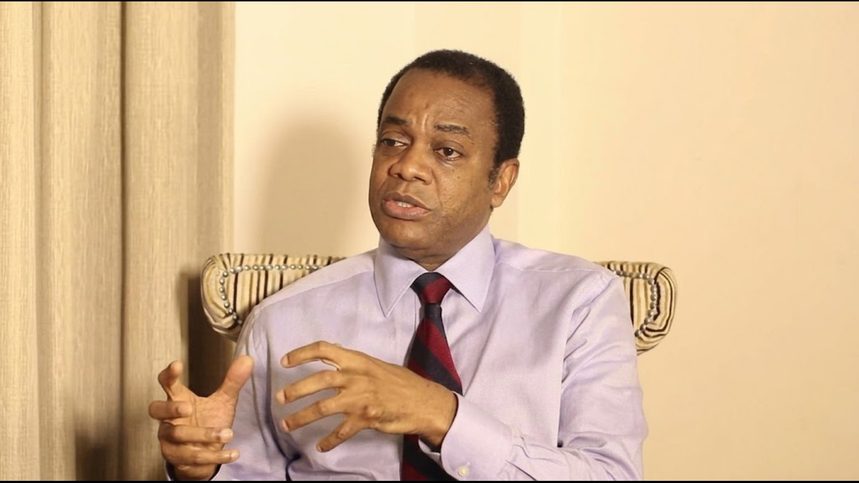
“The people were better off under the military,” Duke said. “At least governance was not that expensive.” He said the only fair measure of any system of government is what it delivers to citizens, and by that measure, Nigeria’s democracy has fallen short since 1999.
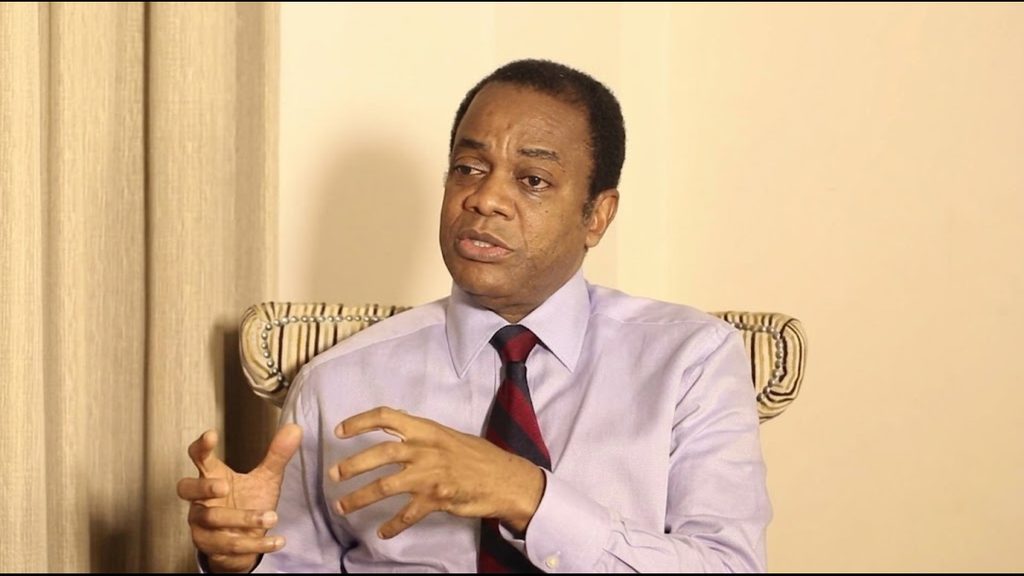
Duke, who served as Cross River governor before returning to presidential politics, said the country’s core problems had not only persisted since the end of military rule but had grown worse. Children out of school, a deteriorating healthcare system, and crumbling infrastructure were the examples he reached for first.
“We’re still having the same problems we had 27 years ago,” Duke said. “The number of children out of school has not improved; it’s deteriorating. The healthcare system is not improving; it’s deteriorating.” He said the question every Nigerian should be asking is whether life in 2026 is better than life in 1999.
His answer was blunt. “Are we better off today than we were in 1999? Hardly so. Hardly so,” Duke said. The former governor said power supply, unemployment, and infrastructure gaps that existed before 1999 remain unresolved, with no clear government strategy for fixing any of them.
“There’s no problem we cannot resolve,” Duke said, noting that Nigeria is not unique among countries that have faced and overcome similar crises. He said successive governments had failed to study what worked elsewhere and apply those lessons at home, a failure he described as a structural problem of thinking rather than resources.
Duke blamed a weakened opposition for much of Nigeria’s governance crisis. “The opposition is terribly weakened and self-centered,” he said. He also argued that disputed elections had severed the link between voters and those who govern them, leaving political officeholders with little reason to respond to public needs.
“Most people don’t vote because they believe their votes don’t count,” Duke said. He argued that once that belief takes hold, politicians feel free to ignore those who elected them. The result, he said, is a system that produces officeholders with no accountability to anyone.
Nigeria, the PRP candidate said, does not have a functioning democracy despite the form of one. “We don’t have a democracy,” he said. “We are pretending democracy.” He described the National Assembly and the judiciary as institutions that exist without providing meaningful checks on executive power.
As evidence, Duke pointed to how quickly the National Assembly approved the return to Nigeria’s former national anthem. “We changed the national anthem in a week,” Duke said. “Nobody was asking questions.” He said lawmakers who should have scrutinized the proposal instead treated it as an opportunity for loyalty display rather than serious legislative deliberation.
He cited the Chief Justice of Nigeria singing in support of the administration as further proof that judicial independence had collapsed. “There’s no judiciary,” Duke said. “We all know it. But are we prepared to deal with it?” He framed both institutions as symptoms of a deeper failure of the Nigerian elite.
“It’s a failure of the elite more than anything else,” Duke said. He argued that educated, capable Nigerians had abandoned the political space to people who treat public office as a permanent livelihood rather than a public service, and that dislodging them had become nearly impossible.
The widening gap between rich and poor, Duke warned, carries consequences the wealthy have not yet fully reckoned with. He recalled a warning from Professor Aluko in the National Economic Intelligence Committee that a time would come when the rich would not sleep because the poor had not eaten.
“I think the time is coming,” Duke said. He said Nigeria’s failure was made more painful by the country’s enormous human and material wealth, which he said should have made development far more achievable. “Nigeria is exceedingly blessed,” Duke said. “It’s sad. It’s painful that we are where we are.”