



The Nigeria Police Force issued the warning in a wireless message dated September 13, from the Force Department of Operations in Abuja, marked “Security General” and tagged “Treat as Very Important.” The message had not been publicly confirmed by police as of Sunday.
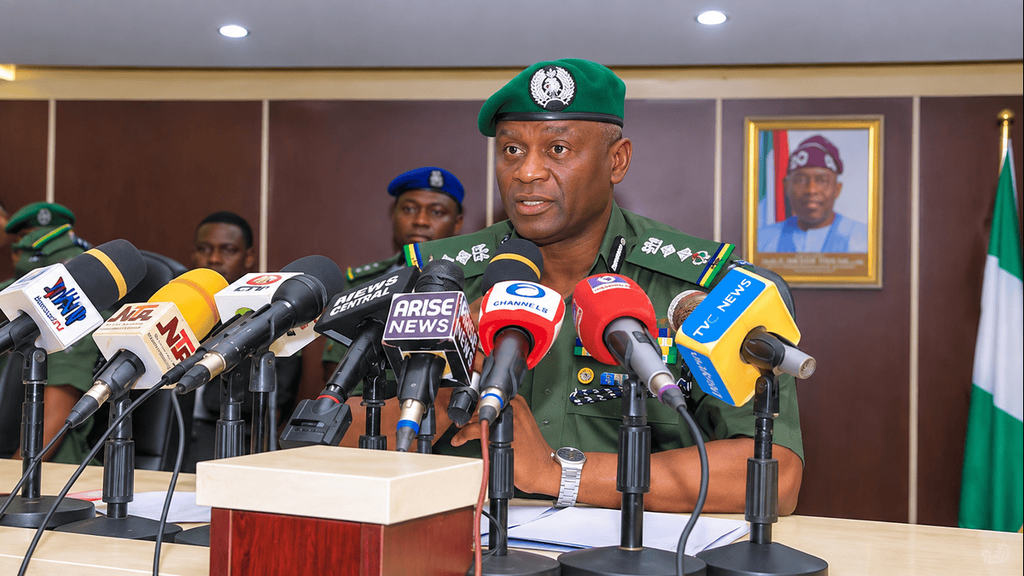
It was circulated to Assistant Inspectors-General of Police overseeing Zones 1 to 17, Mobile Police units, counter-terrorism and other specialized formations, as well as Commissioners of Police across all states.
The intelligence available to the Department of Operations indicates an “increased mobilization of terrorist elements for possible coordinated attacks” on the identified locations. The threat level, according to the alert, had moved from intent to preparatory activity, suggesting the window for pre-emptive intervention may be narrowing.
Schools were identified as a particular concern, with the police warning that terrorists could exploit the resumption of the 2026/2027 academic session, when large numbers of students and staff would be present, to cause mass casualties. NYSC camps and places of worship were also named as potential targets, given their capacity to draw concentrated gatherings of civilians with limited perimeter security.
The Northeast, Northwest, North-Central, and parts of the Southwest are areas of particular concern, according to the directive. The advisory did not name specific locations, citing national security reasons.
Intelligence also disclosed the movement of armed elements from Katsina through Kaduna towards Plateau, a north-central state that continues to witness ethno-religious and resource-based crises. The corridor has historically been used by armed groups to move fighters and weapons between the North-West and the Middle Belt.
The Force further disclosed that suspected Islamic State West Africa Province operatives and their local collaborators were carrying out surveillance and reconnaissance of potential targets. ISWAP is more active in the Northeast and the Lake Chad basin but has previously claimed attacks in other regions.
The intelligence assessment also indicated that attacks could be planned ahead of the 2027 general elections, with the aim of creating fear, disrupting communities, and causing instability. Security analysts have long warned that electoral cycles in Nigeria tend to coincide with heightened militant activity, as armed groups seek to exploit political tensions.
A Premium Times analysis shows that over 2,000 students have been kidnapped by armed groups in about 30 incidents since 2014. Commanders were ordered to increase intelligence gathering, surveillance, patrols, stop-and-search operations, access control, and rapid-response measures.
Security was also to be reinforced along state borders, entry and exit routes, and other strategic corridors. Commissioners of Police were directed to coordinate with neighboring state commands on the movement of armed groups.
The alert further directed police commands to strengthen cooperation with other security and intelligence agencies, school authorities, religious leaders, and the NYSC to improve intelligence sharing and early-warning systems. The directive emphasized that timely information flow between agencies would be critical to disrupting any planned attack before it could be executed.
Personnel were instructed to remain vigilant and promptly report suspicious persons, vehicles, movements, and objects through established channels. Police commands were also directed to immediately report credible threats or security incidents to the Inspector General of Police and the Department of Operations.
Inspector-General of Police Olatunji Rilwan Disu became Nigeria’s 23rd Inspector-General after President Bola Tinubu appointed him in February 2026. Police spokesperson Ani Iniedu, when contacted for comment, said he would get back to reporters but had not responded as of the time of this report.
The intelligence had not been publicly confirmed by the police, and no arrests linked to the specific threat have been announced. The alert on terrorist attacks targeting schools, NYSC camps, and places of worship remains active as the 2026/2027 academic session begins nationwide.