
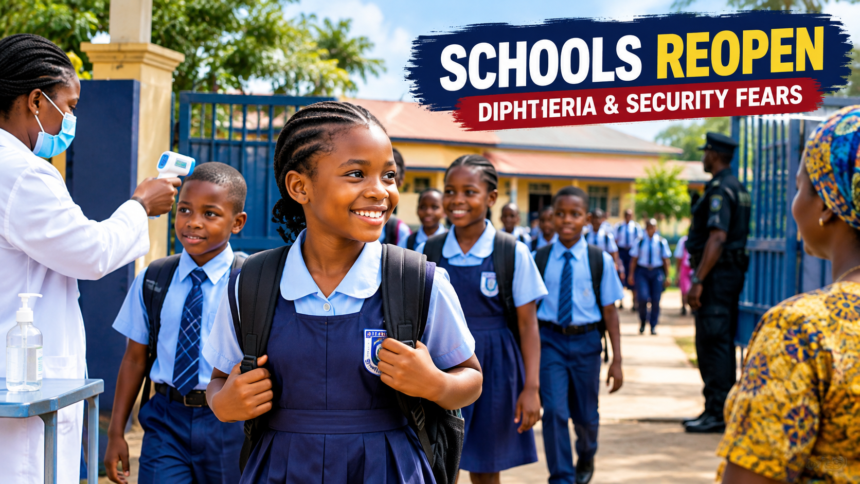
School resumption begins across Nigeria today, September 14, as more than 45 million pupils are expected to return to classrooms for the 2026/2027 academic session, even as concerns over school security and a diphtheria outbreak remain in focus.
The nationwide return marks the beginning of another academic year for millions of children, with schools and families preparing for normal learning activities after the long holiday. But in Plateau State, the new session is starting under additional health precautions after the government temporarily shut schools over suspected diphtheria cases.
The situation has placed both safety and public health at the centre of this year’s school resumption, with education authorities expected to keep a close watch on pupils and staff as academic activities restart.
School resumption begins across Nigeria

September 14 has been adopted as the resumption date in several parts of the country. Lagos State, for instance, approved September 14 as the start of the first term of its 2026/2027 academic calendar for public and private primary and secondary schools.
The Lagos calendar provides for a first term running from September 14 to December 21, followed by a second term beginning in January 2027. The state said the calendar was developed after consultations with education stakeholders and urged schools to comply with the approved schedule.
The return of pupils comes at a time when school safety remains a major national concern. Recent reporting has highlighted renewed anxiety over attacks, abductions and other security threats affecting schools in parts of Nigeria.
According to The Guardian, more than 45 million pupils in basic and secondary schools are expected to resume, while school owners and administrators are strengthening security arrangements because of concerns over learners’ safety.
The report also noted that the country has experienced two particularly difficult academic years marked by attacks on school facilities, abductions and deaths involving students and teachers.
For parents, the beginning of a new session is therefore about more than school uniforms, books and transport. Safety remains an important part of the return to the classroom.
Plateau school resumption follows one-week closure

The situation is particularly significant in Plateau State, where school resumption comes after an emergency interruption.
The Plateau State Government ordered all public and private primary and secondary schools to close from September 7 following reports of suspected diphtheria infections in parts of the state. The affected areas included Jos North, Jos South, Bassa and Wase local government areas.
The closure was described as a preventive measure intended to give health authorities time to assess the situation and strengthen surveillance and response efforts. Schools that had already resumed academic activities were also directed to shut.
After the one-week closure, the government announced that schools would reopen on September 14, allowing the academic calendar to continue while additional health precautions are maintained.
The decision means Plateau pupils are returning to school at the same time as children in many other parts of the country, but with a stronger emphasis on disease monitoring.
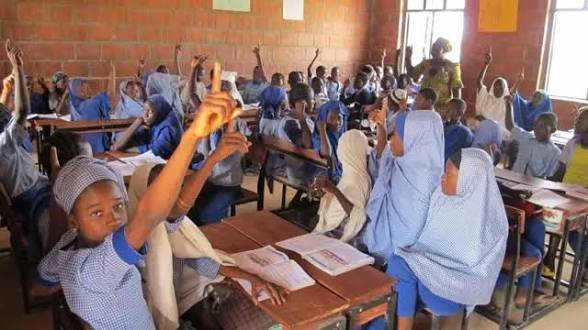
Diphtheria precautions remain in place
Diphtheria has become a serious public health concern in several Nigerian states. The disease is a contagious bacterial infection that can spread through respiratory droplets and close contact, making crowded environments such as schools particularly important in efforts to prevent transmission.
The Nigeria Centre for Disease Control and Prevention has identified Kano, Kaduna, Katsina, Borno, Bauchi, Plateau, Sokoto and Zamfara as accounting for 98 per cent of confirmed diphtheria cases in the data cited in early September. About 68 per cent of confirmed cases were reported among people who were unvaccinated.
Recent reporting has also shown the seriousness of the situation in Plateau. Punch reported 303 suspected cases and 27 fatalities in the state, while noting that vaccination gaps have contributed to diphtheria outbreaks in several northern states.
Against that background, the Plateau government has told schools to maintain clean and hygienic learning environments and observe basic precautionary measures.
Teachers and school administrators have also been advised to remain alert to symptoms that could suggest diphtheria and report suspected cases promptly to health authorities. Parents have similarly been urged to take hygiene seriously and seek medical attention when a child develops concerning symptoms.
What parents and schools need to watch

The reopening does not mean the health concern has disappeared. Rather, the government is attempting to keep schools operating while strengthening surveillance and response measures.
School authorities have a central role to play in that effort. Maintaining clean surroundings, paying attention to possible symptoms and quickly reporting suspected cases can help health officials respond before infections spread further.
Parents also remain an important part of the process. The Plateau government specifically warned against concealing suspected cases or relying on self-medication, stressing the importance of early medical assessment and appropriate treatment.
The wider national picture also shows why the return to school requires continued attention to safety. While children are heading back to classrooms with the expectation of a productive academic year, schools in vulnerable areas must continue to balance learning with security and health concerns.
A new session under heightened attention
The September 14 school resumption is therefore more than the routine beginning of another academic calendar. Across Nigeria, millions of pupils are returning to classrooms amid renewed attention to school security. In Plateau, the reopening follows a deliberate health intervention after suspected diphtheria cases prompted a temporary shutdown.
For now, the focus is on keeping schools open while protecting the children and staff inside them.
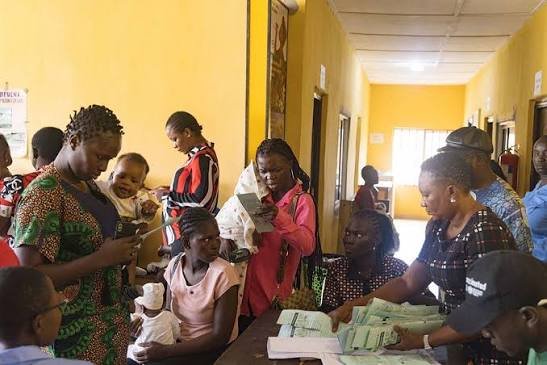
The success of the new academic session will depend not only on attendance and teaching but also on how effectively schools, parents and authorities respond to the health and security challenges surrounding the return.
With the first day of the 2026/2027 session now underway, the message from authorities is clear: education must continue, but safety cannot be treated as an afterthought.