
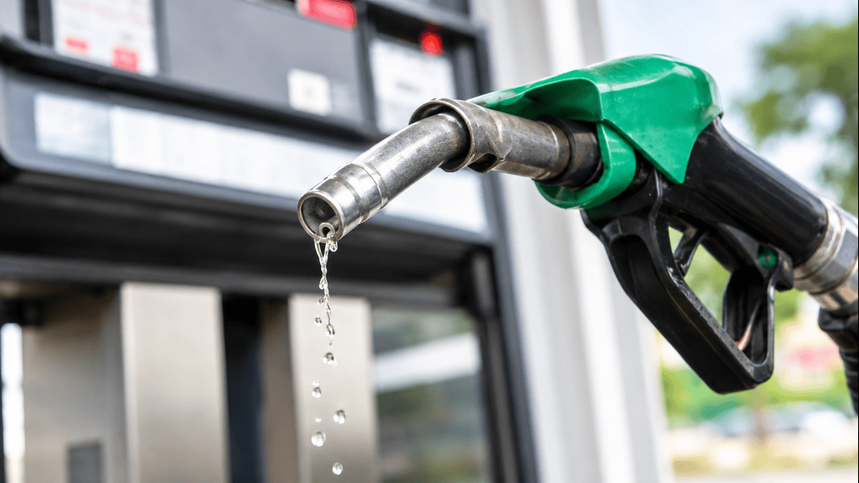
Petrol will cost Nigerians nothing above NNPC Retail’s actual landing price within the next 30 days, after the national oil company agreed to absorb its entire profit margin on fuel sales to cushion the effect of a global crude price crisis on ordinary households.
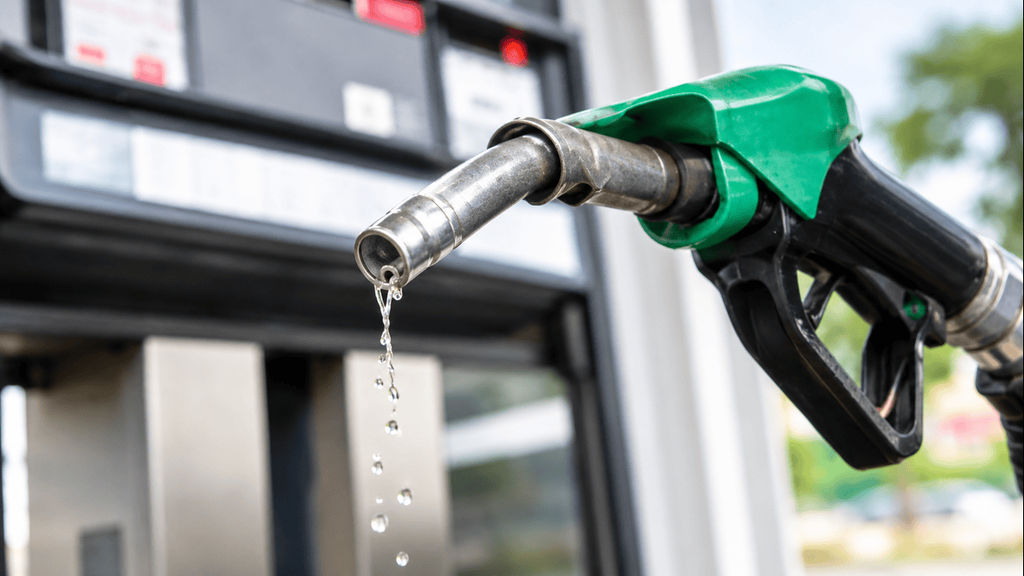
Thursday’s announcement means that if NNPC Retail’s cost of bringing a litre of petrol into the market stands at N1,300, it will sell that litre at exactly N1,300. No markup. No margin. The company, which already sells at the lowest pump price nationally, confirmed the gesture applies especially to commercial vehicles.
President Bola Ahmed Tinubu backed the decision, according to a State House statement signed by Special Adviser on Information and Strategy, Bayo Onanuga. Finance Minister and Coordinating Minister of the Economy Taiwo Oyedele announced the NNPC measure alongside a broader set of government interventions on the same day.
Oyedele, who addressed the public after the announcement, said other private marketers should follow NNPC Retail’s example. The spike in global crude and petrol prices, he noted, is not expected to last long, and the window for market-wide relief remains open if competitors move.
The minister was direct on one point: NNPC selling below cost is not a return to petrol subsidy. That programme ended on May 29, 2023, and Oyedele said nothing announced on Wednesday reverses that. The distinction, he said, is between a targeted, time-limited gesture and a blanket, open-ended fiscal commitment.
Beyond NNPC’s margin waiver, the Federal Government is negotiating a price ceiling of N1,350 per litre on the ex-gantry or landing cost of petrol. Where import costs breach that ceiling, refiners and importers will absorb the difference and recover it later, when crude prices or the exchange rate ease, without the ceiling being broken.
“This is neither a subsidy nor a price control,” Oyedele said at the briefing. “It is designed to smooth prices over time rather than suppressing them.” He added that N1,400 per litre held stable across two days is better for households and transport operators than prices swinging between N1,500 and N1,300.
The ceiling will be reviewed monthly, Oyedele confirmed, with figures published for public transparency. Alongside this, the Federal Government announced forward sales of crude oil to domestic refineries, a measure designed to shield pump prices from the kind of global volatility that triggered Wednesday’s intervention.
Under the 2025 tax reform laws, the government is also moving against road taxes and levies collected by states and security agencies, which Oyedele said inflate transport fares and logistics costs independently of fuel prices. Increased cash transfers to the most vulnerable households and subsidized credit for small businesses were also confirmed.
Compressed natural gas deployment is being accelerated in partnership with state governments. CNG is 60 to 70 percent cheaper than petrol, and the Federal Government expects transport operators who switch to pass those savings to passengers through reduced fares.
An excess profit tax is being considered for any operator found to be exploiting consumers along the energy supply chain. Revenue from that tax, Oyedele disclosed, will go directly toward transport support or fuel vouchers for urban minimum-wage earners.
The government also announced a National Strategic Fuel Reserve, which will release refined products into the market under published rules whenever hoarding or a global supply shock threatens price stability. The State House statement described it as a supply-security tool, not a price-fixing mechanism.
Traffic management agencies, Oyedele said, will be directed to improve vehicle flow in major cities to cut fuel consumption. NIPOST’s newly launched address codes are also expected to reduce logistics inefficiency and bring delivery costs down.
The State House statement acknowledged directly that removing the fuel subsidy had been painful. “Government is not out to reverse a necessary reform,” it read, adding that the goal is to ensure the gains of that reform reach more Nigerians faster. A package of fiscal measures targeting single-digit inflation was also confirmed as work in progress.