



Atiku urges Tinubu to cut fuel prices as Nigerians face rising petrol, transport and food costs, while the former vice president calls for lasting economic solutions instead of relying mainly on palliatives.
Atiku Abubakar has urged President Bola Tinubu to cut fuel prices, saying immediate action is needed to ease pressure on households and businesses struggling with higher energy, transportation and food costs.
The former vice president made the call on Friday, September 18, 2026, during a world press conference in Abuja focused on petrol prices, government palliatives and the rising cost of living.
Atiku argued that the effects of expensive petrol go far beyond filling stations. According to him, higher fuel costs increase transportation and logistics expenses, which then feed into the prices of food and other essential goods.
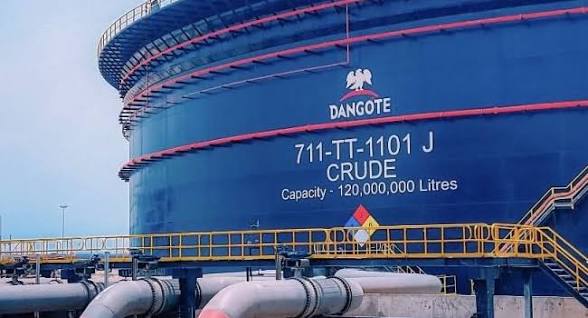
His intervention comes as petrol prices have climbed sharply in September. The Dangote Petroleum Refinery raised its petrol gantry price from N1,265 to N1,350 per litre on September 12, while retail prices subsequently moved above N1,300 in several locations.
Atiku Calls for Fuel Price Relief
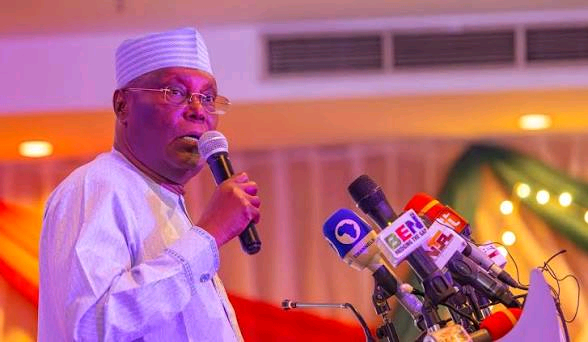
Atiku told the Tinubu administration that Nigerians should not have to wait for another government before seeing relief from the current economic pressure.
He urged the President to consider measures capable of reducing petrol prices, even if those ideas came from a political opponent. He said the priority should be the amount Nigerians ultimately pay for fuel and other necessities.
The former vice president also offered to make his policy framework available to the government if it could help reduce the cost burden on citizens.
His comments came as the country continues to adjust to the removal of petrol subsidies introduced by the Tinubu administration in 2023. The policy shifted petrol pricing toward market forces and resulted in a significant increase in pump prices compared with the subsidised era.
Reuters has reported that Nigeria’s petrol market has remained exposed to international crude oil prices despite the expansion of domestic refining, with the Dangote refinery having to source significant volumes of crude from abroad.
Petrol Prices Add to Cost-of-Living Pressure
The latest fuel-price increases have renewed concerns about their effect on transportation and household expenses.
In September, the Dangote refinery increased its petrol gantry price four times between August 21 and September 12, taking the price from N1,165 to N1,350 per litre. PUNCH reported that the latest adjustment represented an N85 increase and brought the total increase during the period to N185 per litre.
Retail prices have varied by location and filling station. PUNCH reported prices around N1,395 per litre at some Lagos stations following the September 12 adjustment, while other outlets were selling at lower rates. Nairametrics also reported that petrol was selling between roughly N1,400 and N1,450 per litre in some major cities.
The situation highlights the difficulty of separating fuel prices from the wider cost of doing business in Nigeria. Transport operators require petrol to move passengers, farmers and traders depend on transportation to move goods, while many small businesses also rely on petrol-powered generators when electricity supply is inadequate.
Inflation Has Slowed, But Prices Are Still Rising

Atiku’s demand also comes against the background of Nigeria’s latest inflation figures.
The National Bureau of Statistics reported that headline inflation slowed slightly to 15.39 per cent in August 2026, compared with 15.43 per cent in July. Month-on-month inflation also declined from 1.57 per cent in July to 0.71 per cent in August.
Food inflation stood at 19.57 per cent year-on-year in August, while the monthly food inflation rate fell sharply to 1.02 per cent from 5.56 per cent in July.The figures indicate that the pace at which prices are increasing has moderated. They do not mean that prices have returned to previous levels, however. The Consumer Price Index itself increased from 145.3 points in July to 146.3 points in August, showing that the general price level continued to rise.
That distinction is important for households whose incomes have already been affected by years of higher food, transport, energy and other living expenses.
Atiku Rejects Reliance on Palliatives Alone
A major part of Atiku’s message was his criticism of using temporary palliatives as the main response to economic hardship.
He argued that emergency support can provide short-term assistance but cannot replace policies designed to address the causes of high prices.
Atiku said government intervention should instead focus on measures that can lower production and energy costs and improve purchasing power.
He also criticised what he described as a pattern of imposing economic pain before searching for compensatory measures. His argument was that assistance such as food distribution or cash transfers cannot permanently solve the problem when transportation, energy and production costs continue to rise.
The former vice president’s position places the debate beyond the immediate question of petrol pump prices and into the broader issue of how Nigeria should manage economic reforms while protecting households.
Proposed Production Subsidy for Nigerian Refiners
Atiku also outlined what he said would be his approach to petrol pricing if elected president in 2027.
He proposed a transparent production subsidy for petroleum products refined in Nigeria and sold to Nigerian consumers.
According to his proposal, imported products would not qualify.
He said such support should have a defined spending limit, receive National Assembly approval and be subject to independent audits.
The proposal is different from simply returning to the previous petrol subsidy system. Atiku presented it as support tied to domestic production, with the stated objective of lowering production costs and passing the benefit to consumers.
Whether such an approach would reduce pump prices would depend on its design, funding, implementation and the wider conditions in the international oil market.
Fuel Prices Remain a Major Economic Issue

Nigeria’s fuel-price debate is unfolding at a time when the country is also becoming more dependent on domestic refining.
The Dangote refinery has significantly changed Nigeria’s petroleum market since it began supplying locally refined petrol. Reuters reported in September that the refinery had also become an important exporter of refined products, while domestic gasoline imports had fallen substantially compared with 2024.
Yet domestic refining has not insulated Nigerian consumers completely from international oil-market movements. The price of crude, refinery economics, exchange-rate conditions and supply arrangements continue to influence the cost of refined petroleum products.
For households, the immediate concern remains straightforward: how much it costs to fill a vehicle, travel to work, transport goods and put food on the table.
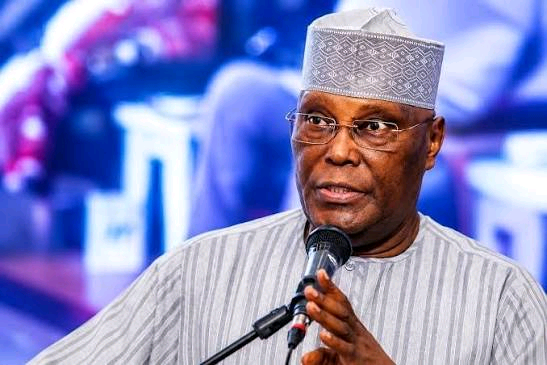
Atiku’s latest intervention has therefore added fresh political pressure to the government’s handling of petrol prices and the wider cost-of-living challenge. His central argument is that temporary relief should not replace measures aimed at lowering the underlying costs faced by Nigerians.
The debate is likely to remain closely tied to fuel pricing, domestic refining, inflation, electricity costs and the government’s broader economic reform programme as Nigerians continue to adjust to the changing energy market.