
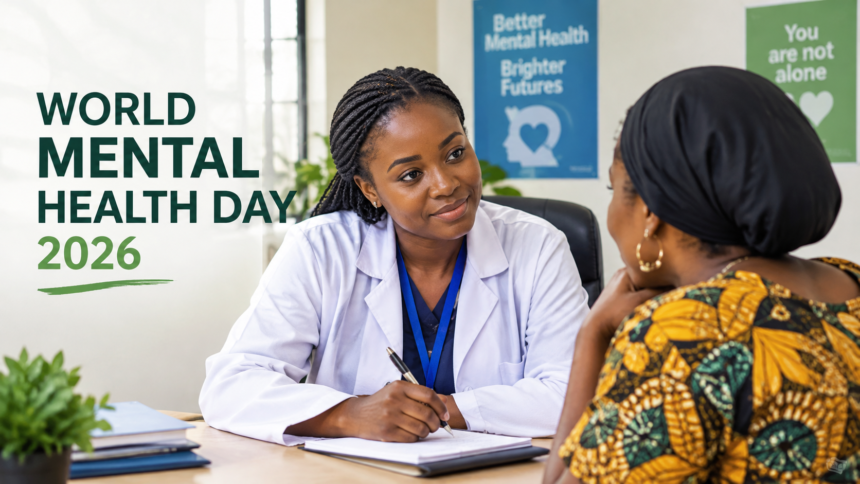
World Mental Health Day 2026 is putting mental healthcare in Nigeria under the spotlight, with the World Health Organization (WHO) urging governments and health institutions to listen to people living with mental health conditions and involve them in decisions about their care. Observed on October 10, this year’s campaign comes as Kaduna State reports progress in integrating mental health services into its healthcare system.
The global theme, “Lived experiences heard: real voices, real change,” calls for more than public awareness. It challenges health authorities to ensure that people who have experienced mental health conditions can influence the policies, services and decisions affecting their lives.
World Mental Health Day 2026: What the WHO Wants Changed
According to the WHO, people with lived experience are often asked to share their stories but are excluded from decisions about their treatment and support.
The organisation argues that meaningful participation requires giving these individuals opportunities to help design services, shape policies, strengthen peer-support programmes and hold healthcare systems accountable.
Their experiences can reveal practical problems that may not be obvious to policymakers or healthcare professionals. These include difficulties accessing treatment, concerns about the quality of care and the effects of stigma on people’s willingness to seek support.
The WHO says mental health systems can become more responsive when people who use them participate in planning, delivering and evaluating services.
The campaign also highlights the importance of community-based care that allows people to receive appropriate support while remaining connected to their families and communities.
The organisation is calling for a shift towards person-centred, rights-based care that respects people’s dignity, freedom and choices.
For Nigeria, the message raises an important question: how can increased awareness translate into services that people can actually access and influence?
Nigeria’s Mental Healthcare Efforts: Kaduna Reports Progress

A development announced ahead of this year’s observance offers a practical example of how mental healthcare delivery is changing in Nigeria.
According to TheCable, Kaduna State Governor Uba Sani said on Friday, October 9, that the state had integrated mental healthcare into its primary and secondary healthcare systems.
Speaking through the state Commissioner for Health, Umma Ahmad, at an event marking World Mental Health Day at the Federal Neuro-Psychiatric Hospital in Barnawa, Kaduna, the governor announced that the first cohort of 100 doctors, nurses and pharmacists from 10 general hospitals had been certified under the WHO’s Mental Health Gap Action Programme (mhGAP).
The programme trains non-specialist healthcare workers to identify and manage priority mental, neurological and substance-use conditions.
The governor also said mental health screening had been incorporated into routine maternal and child health services in the state.
These measures could help bring mental healthcare closer to people who might otherwise need to travel to specialist facilities to obtain support.
However, the announcement does not establish that every community in Kaduna already has comprehensive mental health services.
Sani said the state was extending services to all 30 general hospitals and primary healthcare facilities across its 23 local government areas, while strengthening care at the tertiary level.
The planned expansion is significant, but its eventual reach will depend on implementation and the availability of trained personnel and other necessary resources.
Mental Health Day: Telepsychiatry and Community-Based Care
Kaduna has also introduced telepsychiatry through the Federal Neuro-Psychiatric Hospital in Barnawa, according to the governor’s statement reported by TheCable.
The programme allows patients to receive specialist psychiatric care remotely and enables specialists to support healthcare workers in primary and secondary facilities.
For people living in hard-to-reach communities, remote consultations could reduce the need for some journeys to specialist hospitals.
Nevertheless, telepsychiatry is not a complete replacement for in-person treatment. Its usefulness depends on access to suitable technology, reliable connectivity, qualified professionals and appropriate follow-up care.
The wider objective is to build a healthcare system in which people can receive support at different levels, with referrals to specialists when necessary.
Kaduna’s reported efforts provide a concrete example of this approach, although further evidence would be needed to assess the programme’s coverage, outcomes and affordability.
World Mental Health Day 2026: Why Listening Matters
The WHO’s message also draws attention to the relationship between treatment and patients’ rights.
People receiving mental healthcare should have opportunities to express their concerns, participate in decisions about their treatment and receive care that respects their dignity.
Their involvement should not end after they have shared personal experiences at awareness events. They should also have meaningful opportunities to influence how services are developed and assessed.
This matters because mental health conditions affect people differently. A person’s experience cannot automatically represent everyone else’s, making inclusive consultation essential when policies and services are designed.
For Nigeria, the challenge is to connect public awareness with practical improvements in access, quality of care and patient participation.
Government announcements and training programmes are important developments, but their impact must ultimately be assessed through the services people receive and their experiences of using them.
From Mental Health Awareness to Action
World Mental Health Day provides an opportunity to examine whether mental healthcare is accessible, respectful and responsive to the people who need it.
Kaduna’s reported integration of mental health services into general hospitals and maternal and child health programmes demonstrates one approach to expanding access. Its planned extension of services across the state will be an important development to monitor.
The WHO’s 2026 campaign adds another requirement: people living with mental health conditions must have a meaningful role in shaping the systems intended to support them.
As the observance takes place around the world, its message for Nigeria is clear. Raising awareness matters, but progress also requires accessible services, respect for patients’ rights and decisions informed by the people receiving care.
The measure of success is not simply whether mental health is discussed more openly, but whether people can obtain appropriate support and have a voice in how that support is delivered.