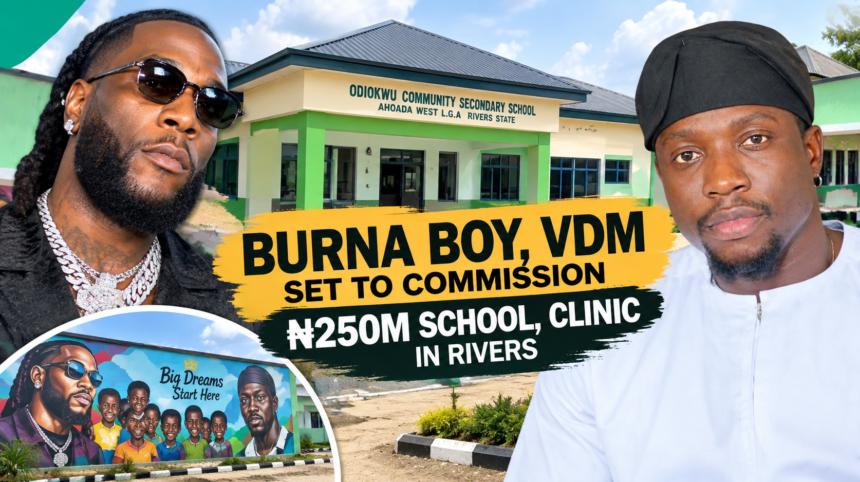
Grammy-winning singer Burna Boy and social media activist VeryDarkMan (VDM) are set to commission a ₦250 million school and clinic project in Odiokwu, Rivers State, on Saturday, October 10, following the unveiling of murals valued at ₦50 million at the school premises.
The facilities, located in Odiokwu community in Ahoada West Local Government Area, were funded by Burna Boy, while VDM supervised the project and Fego Works Limited handled construction.
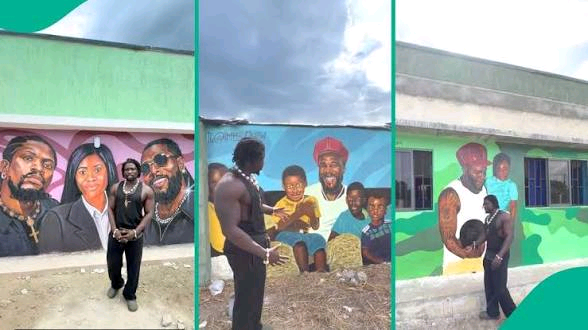
Attention shifted to the development on Friday, October 9, after VDM shared a video of the colourful murals featuring Burna Boy, children and members of the project team. His disclosure of the artwork’s reported cost sparked mixed reactions online, bringing fresh attention to the wider community project ahead of the scheduled commissioning.
Burna Boy’s ₦250m School and Clinic Project

The school and clinic project is intended to improve access to education and basic healthcare in Odiokwu, Burna Boy’s hometown.
According to reports published ahead of the commissioning, the two facilities have a combined reported value of ₦250 million. The initiative has attracted attention because it brings a prominent Nigerian musician and a social media activist together around a community development project.
VDM’s involvement has centred on supervising the work, while Fego Works Limited was identified as the construction company responsible for the facilities.
The project is expected to provide a better learning environment for pupils and additional healthcare access for residents. However, the long-term benefits will depend on the facilities’ equipment, staffing, maintenance and continued availability to the community.
The scheduled commissioning marks the next major stage of the initiative, giving residents and other attendees an opportunity to witness the formal opening of the facilities.
VDM Unveils ₦50m Murals Ahead of Commissioning
On Friday, VDM took to Instagram to showcase the murals and graffiti created within the school compound ahead of the planned ceremony.
The artwork features Burna Boy, children, VDM, whistleblower Winnie and other members of the project team. In his post, VDM disclosed that ₦50 million was spent on the murals, expressing satisfaction with the finished work.
The revelation quickly became a talking point because of the amount involved and the prominent placement of the images within a school environment.
VDM also explained why Burna Boy’s image was featured prominently. According to remarks reported by Legit.ng, he wanted children in the community to know that a Grammy Award-winning musician came from their area and that they, too, could aspire to achieve great things.
The explanation framed the artwork as more than decoration: it was intended to connect the children with a successful figure from their community and encourage them to believe in their own potential.
Nevertheless, the mural expenditure prompted questions from some social media users, particularly about whether the amount was justified and whether the artwork was suitable for a school setting.
Nigerians React to Burna Boy’s School Murals
Reactions to the unveiling were divided, with some commenters praising Burna Boy for investing in his hometown and others questioning the cost and design choices.
Supporters described the initiative as a meaningful way for a successful entertainer to give back to the community. They argued that the school and clinic could provide lasting benefits beyond the singer’s music career.
Other commenters focused on the murals, asking whether the money could have been allocated differently or whether the artwork’s style was appropriate for pupils.
One recurring point of discussion was the balance between celebrating Burna Boy’s achievements and ensuring that the school environment remains centred on children’s learning needs.
The debate highlights the public attention that can accompany high-profile philanthropic projects. While the artwork has become a talking point, the broader initiative involves educational and healthcare facilities whose practical value will be measured by how well they serve residents.
The online reactions do not, by themselves, establish whether the reported expenditure represents the full cost of the artwork or how the budget was determined. Those details would require further documentation from the project organisers.
Football Match Planned for Commissioning Day
A football match between Ahoada West and Ahoada East was also announced as part of the activities planned for Saturday’s commissioning.
The event was expected to bring community members together around the opening of the facilities. VDM’s announcement placed the ceremony at Odiokwu Community Secondary School, with the programme scheduled to begin at 9 a.m.
As of the time of writing, the reports reviewed confirmed the planned date and programme but did not independently establish the ceremony’s completion or confirm which public figures attended.
The distinction matters because an announced event and a completed commissioning are not the same. Details from the ceremony, including any formal handover, speeches or additional announcements, would provide a fuller account of what took place.
What the Project Could Mean for Odiokwu
Beyond the murals and online debate, the main issue for residents is whether the new facilities will improve access to essential services.
For pupils, a functional school requires more than a new building. Classrooms, learning materials, qualified teachers, safe surroundings and regular maintenance all contribute to an environment where children can learn effectively.
The clinic will likewise need appropriate staffing, medical supplies and reliable day-to-day operations to serve residents consistently.
Burna Boy’s reported ₦250 million investment has brought national attention to the project, while VDM’s involvement has helped keep the development in the public conversation.
The scheduled commissioning represents an important milestone, but the project’s lasting impact will depend on how the facilities are managed and used after the opening.
For Odiokwu, the central question is whether the school and clinic will translate the attention surrounding their construction into sustained improvements in education and healthcare for the community.