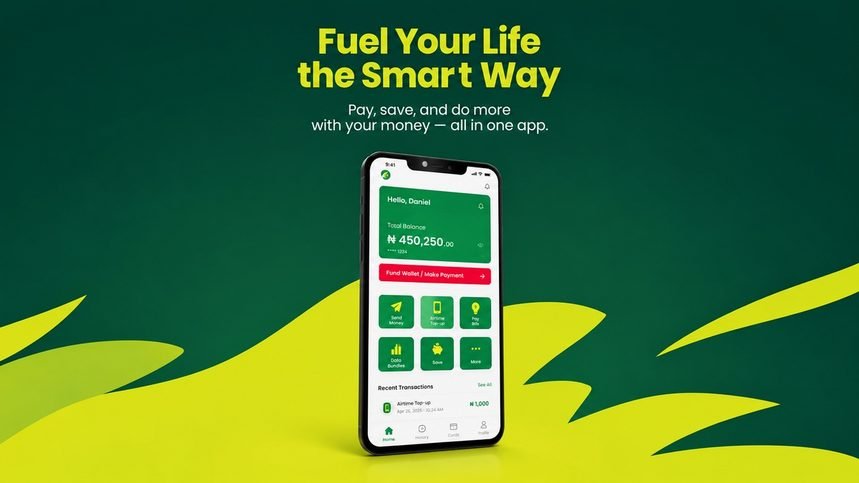
The reduction applies only at NNPC Retail stations, requires payment through the NNPC Fuel App, and is funded from the company’s retail margin. Motorists paying directly at the pump get nothing off.
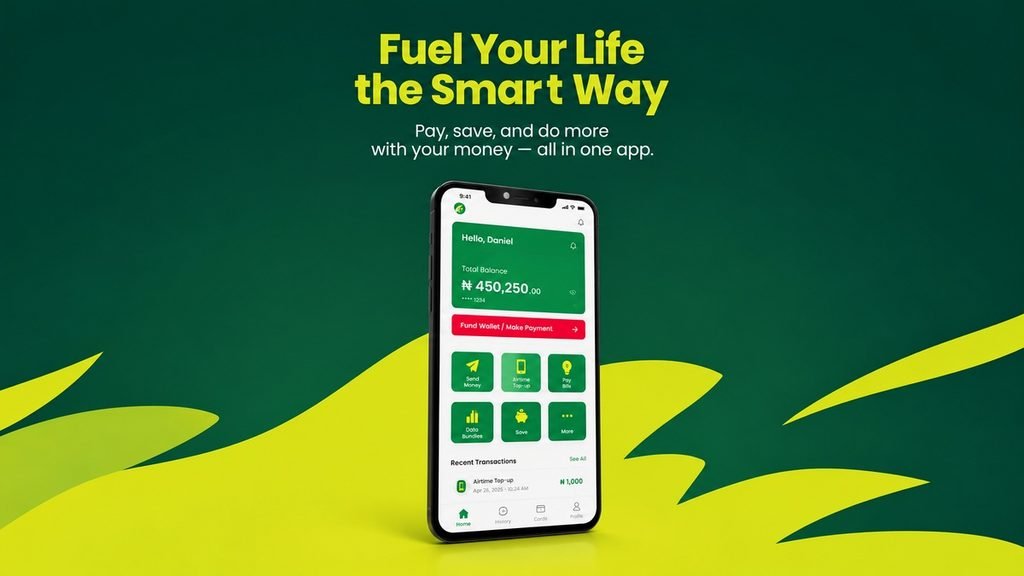
At NNPC retail outlets in Abuja, petrol was selling at N1,405 per litre to customers paying directly at the pumps, while those using the company’s mobile application paid N1,339 per litre. The gap is visible, measurable, and depends entirely on whether the customer owns a smartphone and has a stable internet connection.
NNPC confirmed the restriction, with Communications Officer Andy Odeh saying the N66-per-litre discount is accessible only via its mobile apps. No app, no reduction. The offer is not automatically applied to customers who pay directly at the filling station.
At the NNPC mega station along Obasanjo Way, a fuel attendant confirmed the arrangement. “You can only qualify for the N66 discount if you download the app,” the attendant said. “You would also make payment via the application. So, it is not yet directly when you come to our pump stations.”
The attendant added, “You just download the app and follow the procedure. We are still selling at N1,405, but in the app it is N1,339.” That attendant spoke on condition of anonymity.
NNPC, through its retail arm NNPC Retail, announced the N66-per-litre discount on petrol purchases at its stations across Nigeria to mark the country’s 66th Independence anniversary. The promotion was positioned as a goodwill gesture tied directly to the symbolic significance of the independence milestone.
Originally launched on October 1, the promotion has since been extended through October 31, 2026.
The federal government said public transport operators would receive priority under the discount initiative, but because the offer is app-based, commercial drivers, transport unions, and fleet operators must download and register on the NNPC Fuel App to access the benefit. Priority access with an extra barrier is still a barrier.
The app-only payment requirement creates an access barrier: customers without smartphones or data cannot benefit from the discount. Nigeria’s National Bureau of Statistics has reported that smartphone penetration remains uneven across income groups and rural areas, meaning a significant share of fuel buyers are structurally excluded.
Nigerians have questioned the model, given that not all motorists have access to smartphones or know how to make payments via apps.
One user on X captured the mood plainly. “So because of the 66 naira discount, I go download the app,” one user wrote, questioning whether the saving justified the additional steps. That comment drew wide engagement after NNPC’s announcement circulated on the platform.
The limitation to NNPC retail stations, which represent a fraction of Nigeria’s fuel retail network dominated by independent marketers, also restricts the reach of the discount. Most filling stations Nigerians use daily are outside the scheme entirely.
NNPC firmly rejected claims that the discount marks a return of the fuel subsidy, clarifying that the arrangement represents a temporary customer-relief initiative rather than a change to the nation’s deregulated, market-driven pricing policy. The company has been consistent on that point since October 1.
The discount is described as “not a subsidy” because it does not lower the price below NNPC’s cost of supply; it merely waives the retail margin.
NNPC could forgo an estimated N4.62 billion in gross revenue if all its average monthly petrol sales qualify for the reduction.
NNPC noted that the extension aligns with federal economic interventions announced on October 8 by Taiwo Oyedele, the Minister of Finance and Coordinating Minister of the Economy, to cushion citizens against rising fuel costs. That announcement came one week after the promotion launched.
Motorists who want to access the saving must download the NNPC Fuel App, register, and pay through it before October 31.
The app also includes a station locator feature to find eligible outlets near the user. For now, the N66 NNPC fuel discount remains a digital-only offer in a country where digital access is far from universal.