

Shell Nigeria gas distribution operations are set for a change of ownership after energy giant Shell agreed to sell its entire interest in Shell Nigeria Gas Group to Vaaris Energy, a privately held Nigerian energy company.
The agreement, announced on October 13, 2026, marks another major development in Shell’s changing business structure in Nigeria and raises questions about the future of domestic gas distribution, industrial energy supply and the country’s wider gas ambitions.
According to Reuters, the companies have not disclosed the financial terms of the transaction. The announcement concerns Shell’s domestic gas distribution business, not an exit from all its oil and gas operations in Nigeria.
Shell Nigeria Gas Sale: What Has Been Announced?
Shell has signed an agreement to sell its full interest in the Shell Nigeria Gas Group to Vaaris Energy. The transaction would transfer ownership of the domestic gas distribution business from the international energy company to a Nigerian energy firm.
The sale forms part of Shell chief executive Wael Sawan’s efforts to simplify the company’s portfolio and concentrate on areas where it expects stronger returns.
Shell’s Nigerian operations cover several parts of the energy industry, including offshore oil and gas production, integrated gas and domestic gas distribution. The latest agreement concerns the last of these activities.
The distinction matters because the announcement should not be interpreted as Shell abandoning Nigeria’s entire energy sector. The company continues to pursue investments in deepwater production and integrated gas projects.
Shell Nigeria Country Chair Elohor Aiboni reaffirmed the company’s direction, saying: “Shell continues to focus on strategic Deepwater and Integrated Gas positions in Nigeria.”
Her statement provides important context for the transaction: Shell is changing the composition of its Nigerian portfolio rather than withdrawing from every part of the country’s energy industry.
What Shell Nigeria Gas Does
Shell Nigeria Gas Limited, established in 1998, distributes natural gas to industrial and commercial customers in Nigeria. Its business provides manufacturers and other industrial users with an alternative to liquid fuels.
According to Shell’s published company information, the business operates a gas transmission and distribution network of more than 138 kilometres.
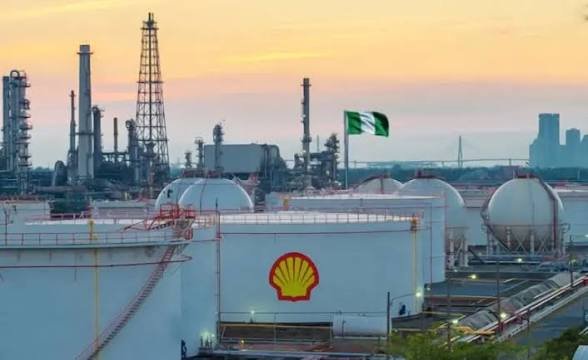
Its distribution systems include the Agbara-Ota network in Ogun State, the Aba Cluster in Abia State and the Port Harcourt Cluster in Rivers State.
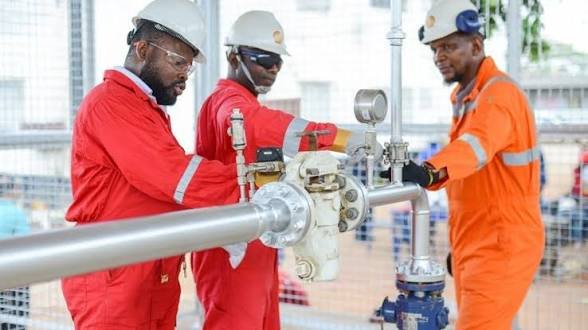
These networks connect industrial customers to gas supplies, supporting operations that require a dependable source of energy. Shell has also reported that the network has the capacity to distribute more than 150 million standard cubic feet of processed gas daily, with over 100 industrial customers already connected.
The business therefore occupies a specific position in Nigeria’s energy chain. Rather than focusing solely on producing gas, it operates infrastructure that helps deliver the fuel to businesses that need it.
That role makes the ownership change significant for industrial energy users, particularly companies operating in locations served by the existing distribution networks.
Who Is Vaaris Energy?
Vaaris Energy is the Nigerian company that has agreed to acquire Shell’s interest in the gas distribution business.
Reuters describes Vaaris as a privately held Nigerian energy company with interests across the oil and gas value chain and an existing operational presence in the country.

Its acquisition would place the domestic gas distribution operations under a different owner, marking a notable shift in the structure of this segment of Nigeria’s energy industry.
However, several details remain unavailable. The companies have not publicly disclosed the purchase price, and the announcement does not establish how the transaction will affect individual customers, employees, management arrangements or future investment plans.
Those questions will become clearer as further details emerge and the transaction progresses.
For now, the confirmed development is the agreement between Shell and Vaaris Energy, rather than a completed transfer of ownership.
Why the Gas Distribution Deal Matters to Nigerian Industries
Natural gas is an important energy source for manufacturers and other industrial businesses. Reliable access can support production processes, including activities that require continuous heat or power.
Shell Nigeria Gas was established to provide industrial customers with an alternative to liquid fuels, while its distribution infrastructure has expanded across several industrial locations.
A change in ownership could therefore attract attention from manufacturers that depend on the network for their operations.
The immediate question is whether the new ownership will maintain the existing service arrangements and invest further in distribution capacity. The available announcement does not provide enough information to establish what Vaaris plans to do after the transaction.
The deal also comes as Nigeria continues to pursue greater use of its natural gas resources. The country has promoted gas as part of its strategy to expand domestic energy availability and support industrial development.
However, owning gas resources does not automatically guarantee reliable supply to end users. Infrastructure, commercial agreements, investment and operational performance all influence whether gas reaches the businesses that need it.
The future direction of Shell Nigeria Gas will therefore be relevant beyond the ownership change itself.
Shell’s Wider Strategy in Nigeria
The gas distribution agreement follows an earlier restructuring of Shell’s Nigerian operations.
In March 2025, Shell completed the sale of the Shell Petroleum Development Company of Nigeria Limited to Renaissance, following the necessary government approvals. That transaction transferred Shell’s former onshore oil production business to the new ownership group.
Shell said the move aligned with its intention to simplify its Nigerian portfolio and concentrate future investment on deepwater and integrated gas activities. Shell Nigeria Gas was explicitly excluded from that earlier transaction.
The latest agreement represents a separate transaction involving a different part of Shell’s Nigerian business.
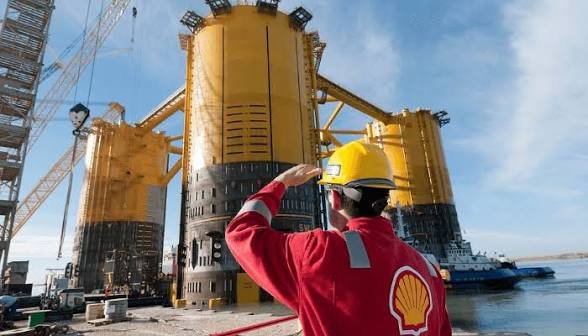
Shell has also continued to invest in offshore gas development. In October 2025, the company announced a final investment decision on the HI gas project, undertaken by Shell Nigeria Exploration and Production Company and Sunlink Energies and Resources.
Shell said the project was expected to supply up to 350 million standard cubic feet of gas per day at peak production to Nigeria LNG when completed, with production expected to begin before the end of the decade.
These developments illustrate why the proposed sale of the distribution business should be viewed in the context of a broader restructuring rather than as evidence of a complete departure from Nigeria’s gas industry.
What Happens Next?
The next major development will be the progression of the agreement towards completion. The financial terms remain undisclosed, and further information will be needed to establish the final ownership arrangements and the practical implications for the business.
Industrial customers will be watching for clarity on service continuity, commercial agreements and any changes to the way gas is delivered through the existing networks.
The transaction could also draw attention to the role Nigerian energy companies can play in owning and operating infrastructure previously controlled by international firms.
Nevertheless, the agreement alone does not establish that gas prices will fall, supply will increase or industrial customers will immediately experience changes.
Those outcomes will depend on the terms of the transaction and the decisions made as the business moves into its next phase.
For now, Shell’s agreement to sell its Nigerian gas distribution business to Vaaris Energy marks a significant ownership change in a sector that supports industrial activity across parts of the country.
The key question is no longer simply who owns the business today, but how the transition will shape the reliability, reach and future development of Nigeria’s domestic gas distribution network.