
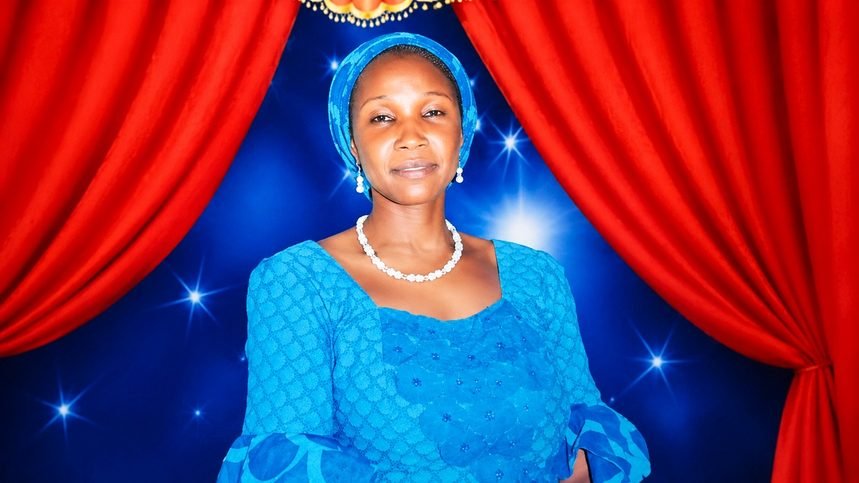
Liyatu Samuel Dawa was sentenced to 14 years in prison in Borno State after sharing her faith with an adult Muslim woman who voluntarily chose to convert to Christianity. No fine was offered as an alternative. No suspended sentence. The maximum penalty, applied in full.
Prosecutors charged Dawa under Section 210 of the Penal Code Laws of Borno State, a provision that concerns depriving a parent of lawful custody of a child, a charge legal analysts say has no application to sharing faith with a consenting adult. Constitutional law scholars have noted that no comparable prosecution under this statute has been recorded in Borno State’s recent legal history.
In court, the convert testified clearly and without coercion that she acted entirely of her own free will and that no one forced, induced, or cheated her. That testimony did not alter the outcome.
A certified copy of the judgment obtained by TruthNigeria shows that Dawa pleaded for leniency before sentencing. “I’m a mother,” she told the court. “I did not intend to cheat the victim. I only advised her.”
Her appeal was rejected. Justice A. B. Kumdila imposed the maximum penalty, sentencing Dawa to 14 years imprisonment on Count 1, a charge brought under Section 210 of the Penal Code Laws of Borno State, which concerns depriving a parent of the lawful custody of a child. The court offered no option of a fine.
The charge itself is the detail that separates this case from a straightforward religious freedom dispute. Preaching to a Muslim is not a criminal offense under either the Nigerian constitution or Borno State’s Sharia provisions. Section 210, the provision used, concerns depriving a parent of lawful custody of a child, not the conversion of adults. No child was named in the proceedings sourced by TruthNigeria.
Gavvs Katiya, Chairman of the Gwoza Refugees Resettlement Initiative, told TruthNigeria that the ruling “weaponized her Christian conviction” and imposed a punishment far beyond anything justified by Nigerian law. Katiya further stated that the sentencing sets a dangerous precedent for religious minorities living in northeastern Nigeria.
The judgment has sparked outrage among human rights advocates who say it breaches Section 38 of Nigeria’s Constitution, which guarantees freedom of thought, conscience, and religion, including the freedom to change religion. Advocacy groups across multiple Nigerian states have called for the federal government to intervene and review the case at the national level.
The Christian Emergency Alliance said in a post on X that Dawa is behind bars and that her family is in hiding after threats and called the sentence by Judge A. B. Kumdila a gross miscarriage of justice.
Following the court ruling, members of Dawa’s immediate family were forced into hiding after receiving death threats from local religious extremists, raising concerns over their safety and security in the region. The source material identified her husband as Evangelist Amos Suleman and noted that he reportedly provided photographs of Dawa that were used in the case against her.
Her husband, Evangelist Amos Suleman, who was earlier detained in the case, is now in hiding after receiving death threats.
Legal analysts say the judgment raises serious questions about proportionality, statutory interpretation, and whether the court applied religious considerations rather than constitutional standards in determining guilt and punishment. Those questions remain unanswered. No appellate action had been confirmed at the time of publication.
Human rights advocates and community leaders have condemned the ruling as a gross miscarriage of justice, urging appellate courts and relevant authorities to review and overturn the judgment to ensure Dawa’s safe reunion with her family. The Open Doors advocacy network, which tracks Christian persecution globally, confirmed it was monitoring the case closely.
Liatu Samuel Dawa remains in prison. Her children remain in hiding. The charge under which she was convicted, unlawful deprivation of a child’s custody, named no child.