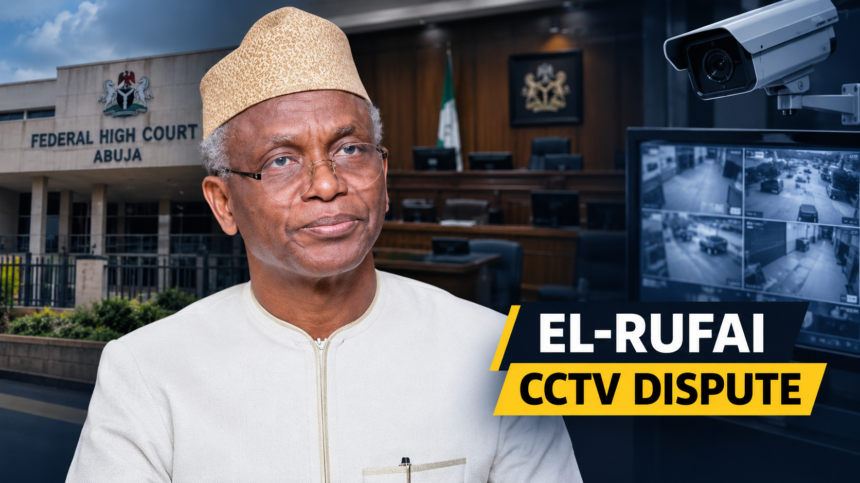
Nasir El-Rufai’s dispute with the Independent Corrupt Practices and Other Related Offences Commission (ICPC) over CCTV footage has taken a new turn after the Federal High Court in Abuja rejected his request to have more than six hours of recordings played in full during an open-court hearing.
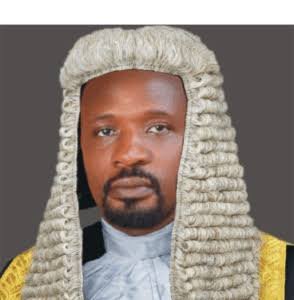
Justice Chigozie Onah, who delivered the ruling on Thursday, October 22, 2026, allowed the parties to play selected portions of the recordings but declined El-Rufai’s request for the complete footage to be screened publicly.
Explaining the decision, the judge reportedly said the court could not be turned into a “viewing centre,” adding that it did not have the luxury of time to watch recordings lasting more than six hours.
The ruling came during proceedings in El-Rufai’s ₦10 billion fundamental rights suit against the ICPC, its chairman, Musa Aliyu, and the Attorney-General of the Federation.
The former Kaduna State governor is challenging the commission’s alleged restriction of access to him by his wife, Aichatou Asabe, and his son, Abba El-Rufai, while he was in custody.
Why El-Rufai Wants the Complete ICPC CCTV Footage
At the centre of the dispute is El-Rufai’s demand for the complete, unedited CCTV recordings covering events at the ICPC facility on June 7, July 4 and July 7, 2026.
The former governor argued that the commission had submitted selected clips without providing the full recordings needed to establish what happened during the disputed incidents.
In his court submission, El-Rufai stated: “It has produced none of the recording of June 7, none of the recording of July 4 and only extracts of July 7.”

The recordings are significant to his case because they relate to allegations surrounding visits by his wife and son while he was being held by the commission.
El-Rufai wants the complete footage examined in court, arguing that the selected clips do not necessarily represent everything captured by the surveillance cameras.
He also requested the production of visitor registers, entry and exit records, and other documents relating to visits by members of his family.
What Justice Onah Said About the CCTV Recordings
While rejecting the request to screen the entire footage publicly, Justice Onah permitted both parties to play selected portions within a 20-minute limit each.
According to the report of the proceedings, the judge stated: “Both parties only have 20 minutes each to play part of the footage at 1pm in open court.”
The judge’s decision followed arguments over the length of the recordings and concerns that playing the complete material publicly could expose sensitive information about the commission’s facility.
ICPC’s lawyer, Yetunde Mosunmola, argued against the unrestricted public screening of the footage on security grounds. The judge reportedly accepted the concern, indicating that the complete recordings could be viewed in his chambers if necessary.
Justice Onah also declined El-Rufai’s request to compel two ICPC officials to appear for cross-examination over the recordings and the affidavits filed in the case.
The judge observed that fundamental rights enforcement proceedings are determined through affidavit evidence, and the request to compel the officials’ attendance was not granted.
The decision did not establish whether the disputed footage supported either party’s account. Instead, it determined how the recordings could be presented during the proceedings.
El-Rufai Alleges Missing Footage Shows His Son Being Dragged
One of the most contentious aspects of the case concerns the events of July 7, when El-Rufai’s son reportedly attempted to visit him at the ICPC facility.
The commission’s account, contained in an affidavit deposed to by its security officer, John Uche, alleged that Abba was prevented from entering the building and subsequently lay in a gutter, repeatedly rubbing his leg against its edge.
El-Rufai challenged that account, arguing that portions of the CCTV footage omitted from the commission’s evidence could show a different sequence of events.
In his submission, he stated: “The omitted portion of July 7 at about 14:53 shows the applicant’s son being dragged, and his leg trapped in the gutter.”
He further alleged: “The clip at about 14:54:55 shows the officer falling at a ditch. Those images contradict the account in the Counter Affidavit.”
These are allegations made in El-Rufai’s court submission and should not be treated as findings established by the judge.
The disagreement highlights why the completeness of the recordings has become a central issue. While El-Rufai wants the court to examine the broader footage, the ICPC has sought permission to present selected clips it considers relevant to the disputed events.
El-Rufai Cites Constitution and Evidence Act
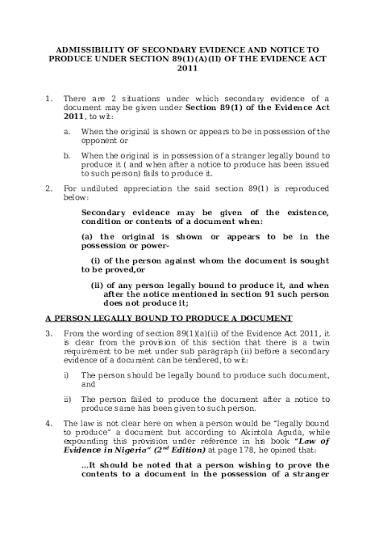
El-Rufai also relied on constitutional provisions and the Evidence Act to support his request for the complete recordings to be produced and played publicly.
Citing Section 36(3) of the Constitution, his submission stated: “Section 36(3) of the Constitution requires that proceedings be held in public.”
He also referred to the Supreme Court decision in Dickson v. Sylva (2017), arguing that a video exhibit should be demonstrated in open court.
Another part of his application invoked Section 167(d) of the Evidence Act 2011, which concerns the possible inference a court may draw when relevant evidence that could be produced is withheld.
His submission stated that the provision “permits the court to presume that evidence which could be, and is not, produced would, if produced, be unfavourable to the person who withholds it.”
El-Rufai asked the court to apply that principle if the commission failed to produce the recordings and other records he requested. Whether such an inference is warranted remains a matter for the court to determine.
ICPC Defends Its Handling of the Footage
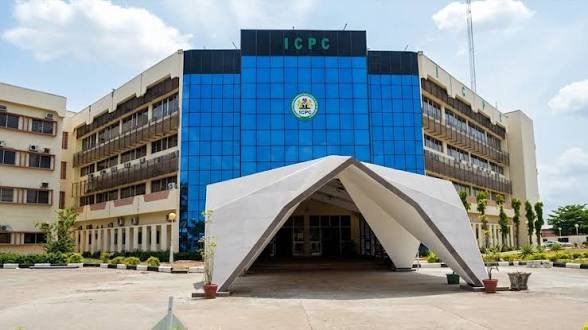
The ICPC opposed the request for the entire footage to be played publicly, arguing that the recordings contained sensitive information that could expose its facility to security risks.
In an affidavit supporting the commission’s application, litigation officer David Efut said the footage contained three recordings with portions considered material to the issues before the court.
The commission identified the selected clips as “The Scuffle,” “The Son Being Taken Away,” and “Unauthorized Entry.”
John Uche, who deposed to the commission’s counter-affidavit, also maintained that the CCTV recordings had not been altered or tampered with.
He further alleged that the commission had introduced temporary access-control measures after security concerns arose around visits to El-Rufai.
The ICPC’s explanations remain the commission’s position in the case, just as El-Rufai’s claims remain allegations to be considered alongside the available evidence.
Justice Onah adjourned the substantive hearing of the applications until November 3, 2026, at 1 p.m.
The Separate ₦8.68 Billion CCTV Contract Case

The dispute over access to CCTV footage at the ICPC facility is separate from the criminal case involving an alleged ₦8.68 billion CCTV contract awarded during El-Rufai’s tenure as Kaduna State governor.
In a separate proceeding, the ICPC announced that El-Rufai, his former adviser Jimi Adebisi Lawal and other defendants had been arraigned on an amended 11-count charge involving alleged corruption, money laundering and related offences.
The commission alleged that the contract for the procurement and installation of a CCTV surveillance system in Kaduna metropolis was awarded to Singularity Network Security Limited in violation of public procurement laws.
El-Rufai and Lawal pleaded not guilty to the charges, according to the commission.
The criminal case concerns the alleged contract and related financial transactions, while the Abuja suit focuses on El-Rufai’s claims about access to his family and the handling of CCTV evidence at the commission’s facility.
The latest ruling therefore concerns the presentation of evidence in the fundamental rights case. It does not, by itself, resolve the disputed allegations about the visits or determine the outcome of the separate contract case.