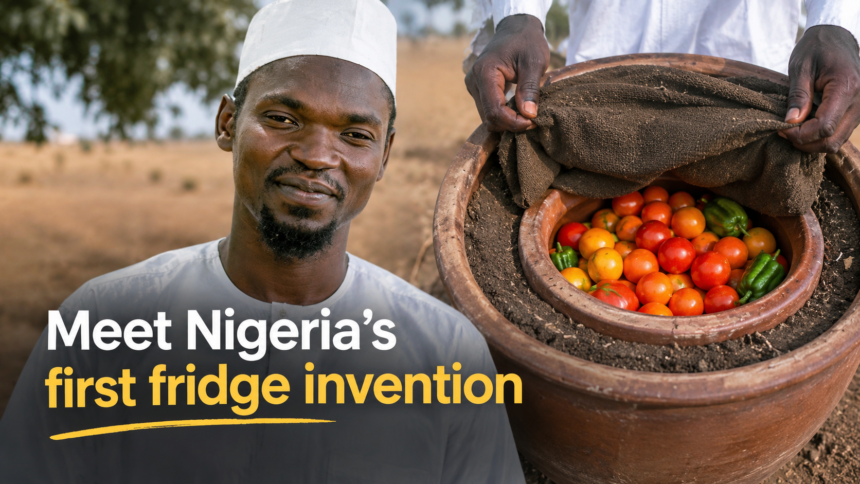
Mohammed Bah Abba, a Nigerian teacher and inventor, developed a refrigerator that works without electricity, compressors or conventional cooling equipment. His invention, known as the Pot-in-Pot Preservation Cooling System, uses two clay pots, wet sand and water to keep food fresh for considerably longer. Developed in 1995, when he was approximately 31, the innovation addressed a problem affecting rural farmers in northern Nigeria: losing valuable harvests because they had no reliable way to preserve fresh produce.
What makes his story particularly interesting is that the solution came from knowledge he had acquired long before becoming an inventor. Born into a family of traditional pot makers, Bah Abba grew up familiar with clay pottery and its practical uses. He eventually combined that knowledge with scientific principles to develop a cooling system that attracted international recognition.
Who Was Mohammed Bah Abba?

Bah Abba was a Nigerian educator from northern Nigeria whose background in traditional pottery played an important role in his invention.
According to the World Intellectual Property Organization (WIPO), he was born into a family of clay-pot makers and understood from childhood that traditional clay pots could retain water even when they appeared dry.
He later acquired knowledge of biology, chemistry and geology, which helped him understand the scientific principles behind the cooling properties of the containers.
His work brought together two things that are not always associated with technological innovation: traditional craftsmanship and scientific education.
Rather than discard an old household technique in favour of expensive machinery, he recognised that the properties of clay could be used to solve a modern problem.
His motivation came from the difficulties experienced by farming communities. In many parts of northern Nigeria, access to electricity was limited, making conventional refrigeration unavailable to numerous households.
Fresh vegetables and fruits could spoil within days, leaving farmers with little time to find buyers. Those unable to sell their produce quickly risked losing their income.
Bah Abba decided to find a practical alternative.
How a Traditional Clay Pot Inspired His Invention
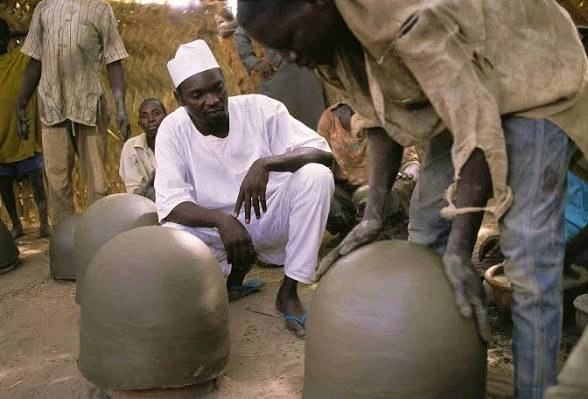
In 1995, Bah Abba developed the Pot-in-Pot Preservation Cooling System, sometimes called the desert refrigerator.
The idea was remarkably simple. He placed a smaller clay pot inside a larger one and filled the space between them with wet sand. Fruits and vegetables were stored in the inner pot, which was covered with a damp cloth.
The outer pot was left in a dry, ventilated environment.
As water gradually evaporated through the porous outer clay pot, it carried heat away from the surrounding sand and inner container. This lowered the temperature inside the smaller pot, creating a cooler environment that slowed food deterioration.
The system required no electricity, refrigerants or complicated mechanical components. It only needed water to keep the sand moist.
However, its effectiveness depended on environmental conditions, particularly low humidity and adequate ventilation.
Bah Abba spent approximately two years refining the invention between 1995 and 1997 before expanding its production.
The Remarkable Food Preservation Results
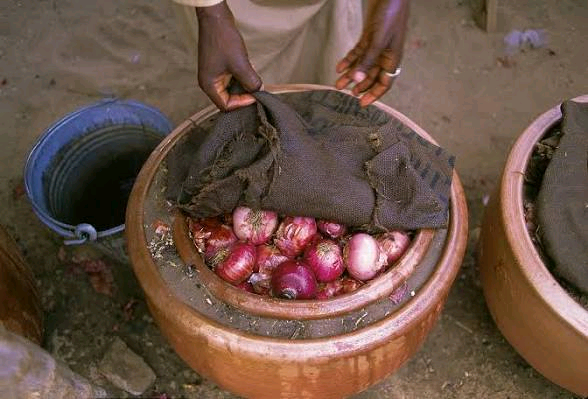
The results from his early trials demonstrated why the invention mattered.
According to the Rolex Awards, eggplants stored in the pot-in-pot system remained fresh for up to 27 days, compared with approximately three days under ordinary conditions.
Tomatoes and peppers could last for up to three weeks.
These improvements offered farmers something they previously lacked: time.
Instead of rushing to sell their harvests before they spoiled, they could preserve their produce for longer and wait for better opportunities in the market.
The Rolex Awards captured this benefit in a statement about the farmers:
“Farmers are now able to sell on demand rather than rush sell because of spoilage.”
The invention therefore addressed more than food storage. It offered a way to reduce agricultural waste and protect the earnings of rural households.
How He Turned the Idea Into a Wider Project
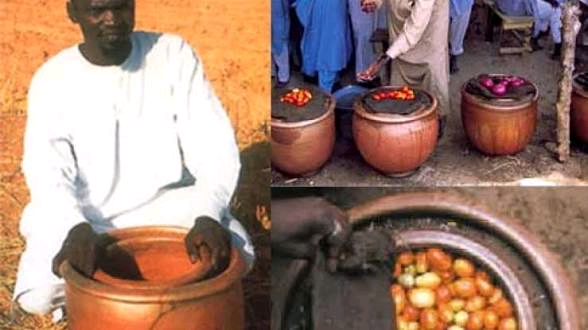
Developing the Cooling System was only the beginning. Bah Abba also had to convince people to use it.
A major challenge was introducing an unfamiliar preservation technique to rural communities that were accustomed to traditional methods of storing food.
He addressed this by organising demonstrations and using educational videos featuring local actors to explain how the system worked.
He also involved traditional pot makers in its production, creating an opportunity for local artisans to earn money while manufacturing the cooling containers.
His first production efforts included thousands of pots distributed to farming communities in Jigawa State.
The project eventually expanded beyond its initial locations.
By 2005, nearly 100,000 pot-in-pot systems had been distributed across 11 northern Nigerian states and parts of Cameroon, Chad, Eritrea, Niger and Sudan, according to the Rolex Awards.
The International Recognition That Followed

Bah Abba’s invention attracted international attention in 2000 when he received the Rolex Award for Enterprise.
The award came with $75,000 in funding, which supported efforts to expand production and make the cooling system available to more communities.
In November 2001, TIME magazine included the invention in its list of notable inventions of the year. Its report identified Bah Abba as a 37-year-old inventor at the time, placing his age when he developed the system at approximately 31.
The technology also found an application beyond agricultural food storage.
In 2008, Médecins Sans Frontières used an adaptation of the pot-in-pot concept in Guinea to store antimalarial medicines for children.
This demonstrated the potential of the underlying cooling principle in other settings, although specialised medical storage requires appropriate temperature controls.
Mohammed Bah Abba’s Legacy

Mohammed Bah Abba died in 2010, but his invention remains an important example of practical innovation.
He did not develop a complicated electrical appliance or introduce an entirely new material. Instead, he recognised the potential of something familiar and applied scientific knowledge to make it more useful.
His work demonstrated how traditional knowledge can contribute to solving problems involving food preservation, rural livelihoods and access to basic technology.
For farmers who cannot afford conventional refrigeration, the pot-in-pot system offered an affordable alternative made from locally available materials.
The story of Bah Abba is ultimately about seeing possibilities where others might see ordinary objects.
Two clay pots, wet sand and water became the foundation of an invention that reached thousands of households and earned recognition beyond Nigeria.